
The State of Our Disunion: When Political Theater Overshadows Human Dignity
Published
- 3 min read
The Facts: A Night of Division and Disruption
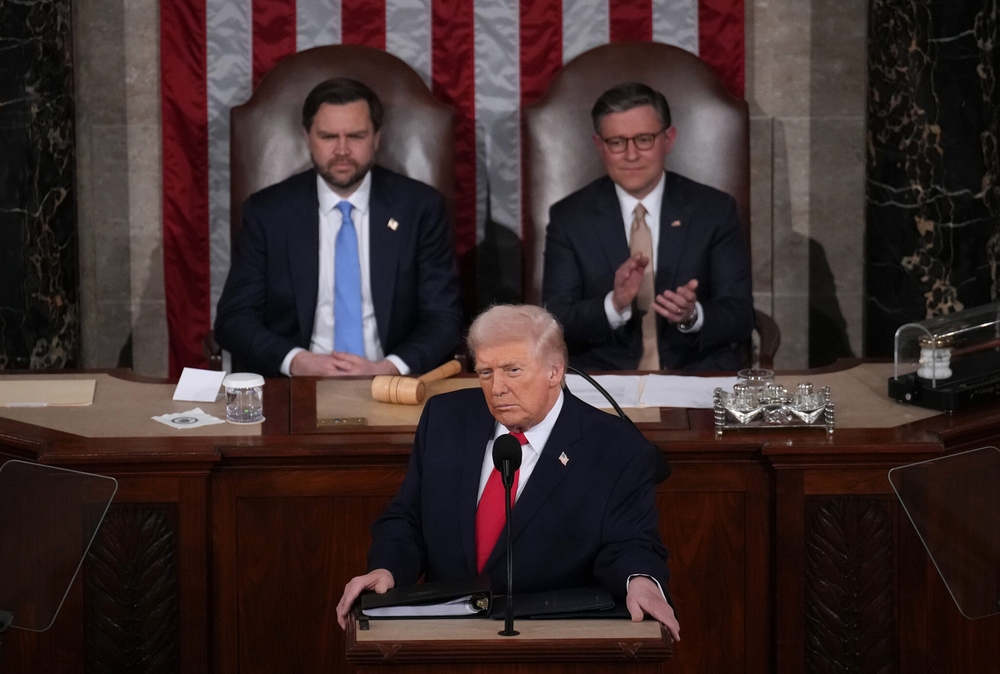
President Donald Trump’s State of the Union address on Tuesday evening unfolded as a dramatic showcase of America’s deepening political divisions rather than a unifying assessment of national progress. The nearly two-hour speech, historically long by recorded standards, featured repeated interruptions from Democratic lawmakers who voiced opposition to the administration’s immigration enforcement policies and rhetoric. Particularly poignant were the moments when Representatives Ilhan Omar and Rashida Tlaib called attention to American citizens killed by Immigration and Customs Enforcement agents in Minneapolis, shouting “you have killed Americans” and “Alex wasn’t a criminal” during the president’s remarks on homeland security.
The address contained expected partisan elements: Trump lambasted Democrats and the Biden administration while pitching Republican priorities to voters ahead of crucial midterm elections. He claimed “a transformation like no one has ever seen before” and accused Democrats of wanting to “cheat” in elections. The president also criticized Supreme Court justices who ruled against his tariff policies, stating they “got it really wrong” despite their constitutional role as judicial arbiters.
Amid the conflict, there were brief moments of bipartisanship. The recognition of U.S. Air Force Staff Sgt. Andrew Wolfe and the parents of the late U.S. Army Spc. Sarah Beckstrom—both shot near the White House while on duty—brought lawmakers together in appreciation of military sacrifice. The appearance of the U.S. men’s Olympic hockey team also prompted unified chants of “USA!” from both parties. These instances, however, served as temporary respites in an otherwise deeply divided evening.
The Context: Erosion of Democratic Norms
The State of the Union address has traditionally served as a constitutional ceremony where the executive branch reports to the legislative branch and the American people. Historically, this occasion has maintained certain decorum and respect for the institution of the presidency regardless of partisan differences. What we witnessed Tuesday night represents a significant departure from these norms, reflecting the broader degradation of American political discourse and institutional respect.
The backdrop to this event includes a ongoing shutdown at the Department of Homeland Security that began on February 14th, Democratic demands for immigration enforcement reforms, and ongoing controversies surrounding the administration’s approach to border security. Additionally, the president’s recent sharing of racist imagery depicting Barack and Michelle Obama as primates—referenced by Representative Al Green’s protest sign—created additional tension underlying the proceedings.
Several Democratic members boycotted the address entirely, with Senator Chris Murphy stating he would not serve as “a backdrop to a partisan speech full of lies and vitriol.” This boycott reflects growing frustration with what many perceive as the administration’s disregard for constitutional norms and factual accuracy.
Opinion: The Human Cost of Political Theater
What transpired during this State of the Union address should alarm every American who values democracy, human dignity, and institutional integrity. The spectacle of lawmakers shouting about citizens killed by government agents during a presidential address represents a failure of governance at the most fundamental level. When human lives become political footballs in partisan contests, we have crossed a dangerous threshold that threatens the very foundation of our republic.
The appropriate response to deaths at the hands of immigration enforcement should be sober investigation, accountability, and reform—not theatrical interruptions during a nationally televised speech. However, the administration’s refusal to address these tragedies through proper channels has created an environment where such dramatic protests become inevitable. This breakdown in normal accountability mechanisms represents a failure of leadership and institutional responsibility.
President Trump’s rhetoric during the address further exacerbated these divisions. His claims about Democratic desire to “cheat” in elections—without evidence—undermines public trust in our electoral system, which is essential to democratic survival. His dismissal of Supreme Court decisions that constrain executive power demonstrates concerning disregard for the separation of powers doctrine that protects our liberty.
The brief moments of bipartisanship, while heartening, ultimately highlight what we’re losing rather than what we’re gaining. The recognition of military sacrifice and athletic achievement should be routine unifying occasions, not exceptional respites from constant conflict. That we celebrate these moments as unusual successes reveals how low our expectations for civil discourse have fallen.
The Path Forward: Reclaiming Democratic Principles
This State of the Union address should serve as a wake-up call for all who believe in American democracy. We must demand better from our leaders and ourselves. Several principles should guide our response:
First, human dignity must remain paramount in political discourse. The deaths of American citizens at the hands of government agents deserve thorough, transparent investigation and accountability—not political exploitation from any side. We must create mechanisms for addressing such tragedies that respect both the victims and the rule of law.
Second, we must reaffirm commitment to institutional norms and separation of powers. The president’s criticism of judicial decisions and allegations of electoral cheating without evidence undermine the foundations of our constitutional system. Leaders of both parties must defend these institutions even when—especially when—they constrain their own power.
Third, we need to rediscover the difference between vigorous debate and destructive conflict. Political disagreement is essential to democracy, but it must occur within boundaries that preserve respect for opposing viewpoints and commitment to shared democratic values. The theater of shouting matches and protest signs during constitutional ceremonies serves neither principle nor pragmatism.
Finally, we must remember that the State of the Union belongs to the American people, not any political party or president. This annual address should assess our nation’s condition with honesty, propose solutions with seriousness, and unite around common purpose despite differences. What we witnessed Tuesday night fell tragically short of this standard.
Conclusion: Our Democracy Demands Better
The state of our union is troubled—not because of political disagreements, which are natural in a vibrant democracy—but because we are forgetting how to disagree without destroying the institutions and norms that make our republic function. The spectacle of division we witnessed Tuesday night serves neither conservative nor liberal principles—it serves only the forces of chaos and authoritarianism that thrive on institutional degradation.
We must demand leaders who respect the dignity of their office, the institutions they serve, and the citizens they represent. We must insist on factual discourse, respectful debate, and accountability for actions that cost American lives. And we must remember that what unites us as Americans—commitment to constitutional government, individual liberty, and human dignity—far outweighs what divides us.
The path forward requires rejecting political theater in favor of substantive governance, replacing partisan warfare with principled debate, and prioritizing human dignity over political point-scoring. Our democracy deserves nothing less, and our citizens demand nothing more.