
The Politicization of Justice: Andrew Bailey's Dangerous Ascent and the FBI's Credibility Crisis
Published
- 3 min read
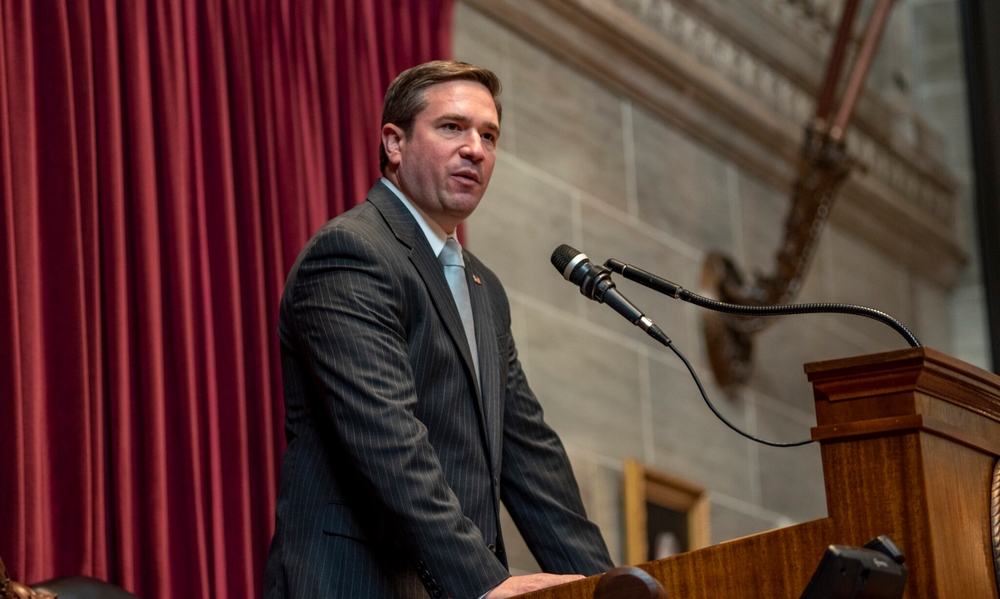
The Fulton County Raid and Bailey’s Controversial Presence
The recent FBI raid on Fulton County, Georgia’s election headquarters represents more than just another chapter in the ongoing political drama surrounding the 2020 election. What made this particular operation especially concerning was the presence of Andrew Bailey, the former Missouri Attorney General who now serves as co-deputy director of the FBI. Bailey traveled to Georgia to personally oversee an operation tied to claims about the 2020 election that have been repeatedly debunked through multiple counts, including a hand recount, and extensive litigation.
It is crucial to state unequivocally: Donald Trump lost the 2020 election. He lost Georgia. The state conducted three statewide counts and certified Joe Biden’s victory. Many of those who initially promoted fraud claims have since recanted, often under oath or legal pressure. Former New York Mayor Rudy Giuliani even lost a defamation lawsuit for spreading these false claims. Against this backdrop of established facts, Bailey’s decision to personally involve himself in this operation raises serious questions about the politicization of federal law enforcement.
Bailey’s Troubled Tenure in Missouri
For those familiar with Andrew Bailey’s career in Missouri, his involvement in the Georgia raid comes as no surprise. His political rise was not built on careful management or restrained lawyering but rather on media visibility, aggressive rhetoric, and a willingness to validate Donald Trump’s preferred narratives regardless of the factual record. During his short tenure as Missouri Attorney General, Bailey made election denial rhetoric a central feature of his political identity.
Bailey’s management of the Missouri Attorney General’s office was marked by concerning patterns of incompetence and ethical questions. His tenure drew criticism over missed deadlines, bungled appeals, and settlements that reflected disorganization rather than strategy. Under his watch, Missouri paid out record-breaking sums in settlements and judgments, including one settlement that committed taxpayers to annual payments stretching into the year 2098—a staggering fiscal irresponsibility that will burden generations of Missourians.
The ethical concerns surrounding Bailey are equally troubling. He narrowly avoided being questioned under oath over an alleged ethics breach in his own lawsuit against Jackson County. A judge ordered his deposition, but Bailey moved to dismiss the lawsuit before it could take place. One of his deputies lost his law license in the ordeal. Additional controversies accumulated rapidly: Bailey’s office missed an appeal deadline in a high-profile COVID mask mandate case; he falsely blamed a school district’s DEI program for an off-campus assault; he recused himself from a gambling lawsuit after political committees tied to gambling lobbyists donated to a PAC supporting his campaign; and he accepted $50,000 from a company accused of poisoning a Peruvian town before asking a court to move the case out of Missouri.
The FBI’s Institutional Integrity at Stake
The Erosion of Nonpartisan Law Enforcement
The appointment of Andrew Bailey to a senior FBI position represents a dangerous departure from the tradition of nonpartisan law enforcement leadership. The role of co-deputy director has historically been held by one person and involves managing the bureau’s day-to-day operations. The decision to create a co-deputy position and then not elevate Bailey into the traditional singular role after his fellow co-deputy Dan Bongino stepped down speaks volumes about the administration’s confidence in his abilities—or lack thereof.
Those who watched Bailey run the Missouri Attorney General’s office weren’t surprised by the decision not to elevate him. His documented pattern of mismanagement and ethical lapses should have disqualified him from any senior law enforcement position. Instead, he now holds a role that places him in a position to influence some of the most sensitive investigations in our country.
The Symbolism of the Fulton County Raid
Bailey’s presence at the Fulton County raid was not merely a management detail—it was a powerful signal about the kind of leadership now shaping the FBI and how quickly the bureau’s credibility can be subordinated to political priorities. When senior law enforcement officials personally involve themselves in operations based on debunked claims, they send a message that political loyalty trumps factual evidence and legal precedent.
This represents a fundamental threat to the rule of law and the integrity of our democratic institutions. The FBI’s credibility depends on its perceived independence and commitment to facts over political expediency. When citizens see senior officials participating in operations that appear politically motivated rather than evidence-based, that credibility erodes—and once lost, institutional trust is incredibly difficult to restore.
The Broader Implications for Democracy
Normalizing Election Denialism in Law Enforcement
The most alarming aspect of Bailey’s involvement in the Georgia raid is how it normalizes election denialism within our law enforcement apparatus. When senior FBI officials lend credibility to claims that have been thoroughly debunked by courts, election officials, and even some of the original proponents themselves, they undermine public confidence in our electoral system.
Free and fair elections are the cornerstone of any functioning democracy. When law enforcement agencies—which should be protecting the integrity of our elections—instead participate in efforts to undermine confidence in those elections, they become complicit in the erosion of democratic norms. This creates a dangerous feedback loop where diminished trust in elections leads to more aggressive attempts to challenge them, which further erodes trust.
The Missouri Precedent and National Concerns
Missouri has already seen what Andrew Bailey does when he’s in charge: record-breaking settlements that burden taxpayers, ethical controversies, missed deadlines, and a pattern of putting political positioning ahead of competent governance. The FBI is now taking its turn with this problematic leadership, and the consequences could be far more severe at the federal level.
The concerns extend beyond Bailey himself to the system that elevated him. His appointment reflects a troubling pattern of placing loyalty over competence, ideology over integrity, and political expediency over professional qualifications. This approach to staffing critical government positions threatens the effective functioning of our institutions and ultimately undermines the public’s faith in government.
A Call for Accountability and Institutional Protection
Reaffirming Commitment to Nonpartisan Law Enforcement
We must demand that the FBI and all law enforcement agencies return to their traditional role as nonpartisan defenders of the rule of law. This requires leadership committed to facts, evidence, and legal precedent rather than political narratives. It requires transparent processes that allow the public to maintain confidence in the integrity of investigations.
Senior law enforcement officials should be selected based on their qualifications, competence, and commitment to impartial justice—not their political connections or willingness to promote debunked theories. The appointment process for positions like FBI director and deputy director should be insulated from partisan political considerations as much as possible.
Protecting Democratic Institutions from Politicization
The broader lesson from Andrew Bailey’s involvement in the Fulton County raid is that our democratic institutions require constant vigilance and protection from politicization. This includes not just law enforcement agencies but election administration bodies, courts, and all institutions that form the foundation of our democratic system.
We must establish stronger safeguards against the appointment of unqualified or ethically compromised individuals to positions of public trust. This might include more rigorous vetting processes, stronger ethical guidelines, and mechanisms for holding officials accountable when they violate public trust.
The Path Forward: Restoring Trust and Integrity
Restoring trust in our institutions will require concerted effort from multiple stakeholders. Congress must exercise robust oversight of law enforcement agencies to ensure they remain nonpartisan and focused on their core missions. The media must continue to diligently report on potential ethical violations and mismanagement. And citizens must remain engaged and demand accountability from those in positions of power.
Ultimately, the story of Andrew Bailey’s involvement in the Fulton County raid serves as a warning—a stark reminder that democratic institutions are fragile and require constant protection from those who would subordinate them to political agendas. The credibility of the FBI, like all institutions essential to our democracy, depends on its commitment to facts, law, and impartial justice. When that commitment waivers, the very foundations of our republic are at risk.
We must learn from Missouri’s experience with Andrew Bailey and ensure that the FBI—and all our democratic institutions—are led by individuals committed to competence, integrity, and the preservation of our democratic norms rather than their destruction. The future of our democracy may depend on it.