
The Perilous Brinkmanship: Trump's Gambit with Iran Threatens Global Stability
Published
- 3 min read
The Escalating Crisis: Facts and Context
The geopolitical landscape is once again trembling under the weight of escalating tensions between the United States and Iran, with President Donald Trump’s recent statements revealing a dangerous trajectory toward potential conflict. According to reports emerging from Washington, President Trump declared that Iran wants to make a nuclear deal “more than the U.S.” ahead of another round of talks concerning Tehran’s nuclear program. This assertion comes amid a significant buildup of American forces in the Middle East, creating a volatile atmosphere where diplomacy appears secondary to military posturing.
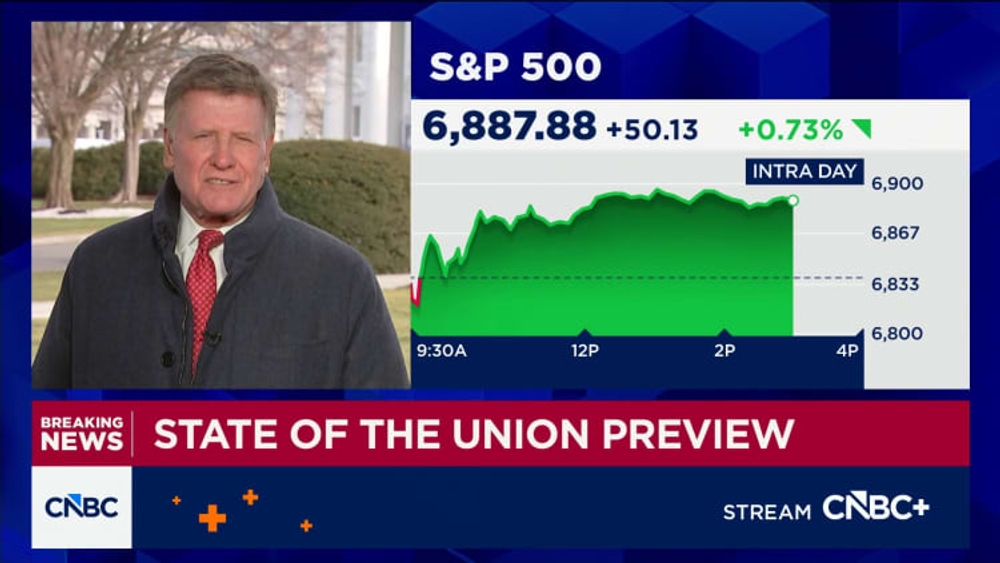
The core sticking point, as articulated by Trump during a pre-State of the Union meeting, remains Iran’s refusal to commit to never developing nuclear weapons. In his formal address to the nation, the President emphasized that despite Iranian desire for a deal, Washington has not heard “those secret words: We will never have a nuclear weapon.” This fundamental disagreement sets the stage for Thursday’s scheduled talks in Geneva, Switzerland, where both nations attempt to navigate these treacherous waters. Trump did acknowledge a preference for diplomatic resolution, stating “My preference is to solve this problem through diplomacy,” yet his actions suggest a different priority.
Iranian Foreign Minister Abbas Araghchi provided additional context, revealing that Tehran was still refining its proposal and that political leadership had not yet finalized their position. He indicated that the proposal would contain elements addressing both sides’ “concerns and interests,” suggesting potential flexibility. Araghchi expressed hope for reaching “a fast deal” during the Geneva discussions, indicating Iran’s willingness to engage substantively. However, previous negotiation rounds have failed to yield meaningful breakthroughs, leaving tensions dangerously high.
The situation has deteriorated rapidly in recent weeks, with Washington amplifying its military presence in the region while Trump warns that “really bad things” would occur without a nuclear agreement. Most alarmingly, the President openly contemplated limited airstrikes on Iran, establishing a two-week deadline for Tehran to comply with American demands. This ultimatum-style diplomacy represents a radical departure from traditional statecraft and raises grave concerns about miscalculation.
Iranian President Masoud Pezeshkian acknowledged “encouraging signals” from recent talks but simultaneously warned that Iran was prepared for “any potential scenario,” indicating both sides are preparing for conflict even while discussing peace. The tangible consequences already manifest in the State Department’s evacuation of non-emergency personnel from the U.S. embassy in Beirut, responding to renewed airstrike warnings.
Reuters reporting suggests Iran might consider significant concessions, including sending half its highly enriched uranium abroad, diluting the remainder, and participating in a regional enrichment consortium. However, these moves would require reciprocal American actions, specifically recognition of Iran’s right to nuclear enrichment and lifting economic sanctions. The economic implications already ripple through global markets, with oil prices climbing amid fears of military action. Senior market analyst Ipek Ozkardeskaya noted that further escalation could push U.S. crude prices beyond $70 toward $80 per barrel, though such “geopolitically driven rallies” often prove temporary.
The Abdication of Diplomatic Responsibility
What we witness unfolding is not merely a negotiation between nations but a fundamental test of America’s commitment to democratic principles and rational statecraft. The framing of these critical discussions as a transaction where one party “wants it more” reduces complex international relations to playground dynamics, undermining the seriousness of nuclear nonproliferation. This approach demonstrates a troubling disregard for the institutions and processes that have maintained relative global stability for decades.
The very concept of demanding “secret words” as a precondition for genuine engagement reveals a simplistic understanding of international diplomacy. Nuclear agreements require meticulous verification mechanisms, confidence-building measures, and mutual concessions—not magical phrases uttered under duress. By establishing public ultimatums and military threats as primary negotiation tools, the administration jeopardizes not only regional security but America’s credibility as a reliable international partner.
The Constitutional and Moral Implications
The Founders established a system of checks and balances precisely to prevent rash decisions that could lead the nation into preventable conflicts. While the executive possesses authority over foreign policy, the reckless escalation toward military confrontation without exhausting diplomatic avenues threatens constitutional principles. The deliberate buildup of forces coupled with public threats creates conditions where Congress’s war powers may be circumvented through manufactured emergencies.
Morally, this brinkmanship represents an unacceptable gamble with human lives. The people of Iran have endured tremendous suffering under sanctions, and any military action would devastate civilian populations already struggling under economic pressure. As defenders of human dignity and freedom, we must reject approaches that treat civilian welfare as collateral in geopolitical gamesmanship. True strength lies in protecting innocent lives, not threatening their destruction.
The Erosion of American Leadership
America’s global leadership has historically rested on its commitment to principles greater than temporary political advantage. By embracing volatility as a strategy, the current approach undermines the predictability and reliability that make diplomatic resolutions possible. Our allies watch with increasing alarm as traditional alliances strain under unpredictable policies, while adversaries may perceive weakness in the inability to pursue sustained, principled engagement.
The spectacle of publicly threatening airstrikes while simultaneously claiming diplomatic preference creates cognitive dissonance in international observers. Credible diplomacy requires consistency and good faith—elements conspicuously absent when military action is openly contemplated as leverage. This dissonance damages America’s ability to lead on other critical global issues, from climate change to human rights, by suggesting our word cannot be trusted.
The Path Forward: Principles Over Brinksmanship
A resolution respecting both American security interests and Iranian sovereignty requires returning to foundational principles of diplomacy. First, the administration must immediately cease public threats and military ultimatums, which poison the well for constructive engagement. Second, Congress should reassert its constitutional role by demanding thorough briefings and establishing clear parameters for any potential military action. Third, professional diplomats should lead negotiations without the distorting influence of political theater.
The potential framework reported by Reuters— involving uranium removal, dilution, and regional cooperation— represents a plausible starting point for serious discussion. However, such arrangements require careful verification and mutual confidence-building, not deadlines enforced by bombers. By recognizing that security comes through strengthened institutions and international cooperation, not through unilateral demands, America can reclaim its moral authority.
Ultimately, this crisis tests whether America remains committed to the democratic values we proclaim. Will we lead through example, patience, and principle, or through threat and coercion? The answer will determine not only the outcome of these specific negotiations but America’s role in the world for generations. We must choose wisdom over whim, stability over spectacle, and peace over perilous brinkmanship.