
The Palestinian Struggle: A Testament to Western Hypocrisy and Global South Solidarity
Published
- 3 min read
The Contradiction of Recognition Versus Reality
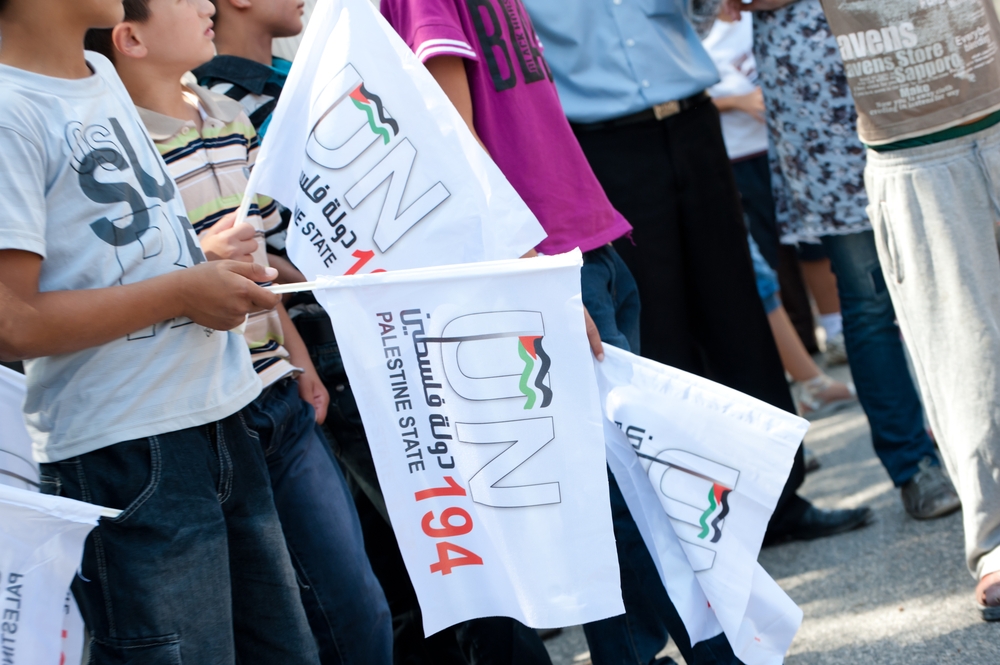
The Palestinian quest for statehood presents one of the most glaring contradictions in contemporary international politics. On one hand, Palestine enjoys recognition from 157 countries, representing over 80% of the world’s nations, including major Global South powers like China and India. Palestine participates in international institutions including the International Criminal Court and UNESCO, and has competed in every Summer Olympics since 1996. The Palestinian Authority has even prepared a draft constitution ready for implementation. Yet, simultaneously, the very territory that would constitute this state is systematically disappearing through Israeli settlement expansion, military occupation, and deliberate territorial fragmentation.
This paradox reveals the fundamental flaw in the Western-dominated international system: recognition without empowerment, sovereignty without territory, and rights without enforcement. While the Global South overwhelmingly supports Palestinian statehood, Western powers—particularly the United States—continue to enable Israeli policies that make a viable Palestinian state geographically impossible. The situation in both Gaza and the West Bank demonstrates how military power and diplomatic protection can override international consensus and basic principles of self-determination.
The Systematic Erasure of Palestinian Territory
In Gaza, the scale of destruction is catastrophic. The United Nations Development Program estimates that clearing 61 million tons of rubble will take seven years, with 92% of homes damaged or destroyed. Beyond infrastructure, the Israeli military occupation of over half of Gaza continues despite ceasefires, with ongoing killings of Palestinians accused of violations. The so-called Yellow Line, initially intended as a temporary demarcation, is hardening into a semi-permanent border. Reconstruction plans remain suspended pending Hamas disarmament—a condition that effectively gives Israel veto power over Gaza’s recovery.
Meanwhile, in the West Bank, the fragmentation is even more systematic. The Oslo Accords’ division into Zones A, B, and C—originally intended as temporary administrative measures—has become permanent infrastructure for segregation. Israel now authorizes home demolitions even in Palestinian-controlled zones, while settlements housing 700,000 Israelis on occupied land continue expanding. The E1 development project east of Jerusalem, recently greenlit after Donald Trump removed U.S. objections, will effectively bisect the West Bank with 3,401 housing units and new transportation routes.
Israeli Finance Minister Bezalel Smotrich’s statement captures the deliberate nature of this strategy: “Those in the world trying to recognize a Palestinian state will get an answer from us on the ground… Facts of homes, neighborhoods, roads and Jewish families building their lives” that will “bury the idea of a Palestinian state.” This isn’t subtle diplomacy; it’s colonial expansion stated with chilling clarity.
The Geopolitical Context: Western Imperialism and Global South Resistance
The Palestinian struggle cannot be understood outside the broader context of Western imperialism and the emerging multipolar world order. The United States has consistently used its Security Council veto to protect Israel from accountability while providing military aid that enables ongoing occupation. The Trump administration’s “Abraham Accords” explicitly sought to normalize Arab-Israeli relations while sidelining Palestinian statehood, attempting to reshape regional alliances around anti-Iran sentiment rather than justice for Palestinians.
However, this Western-dominated approach is increasingly challenged by Global South nations that refuse to accept the premise that might makes right. Countries like China and India recognize that the Palestinian issue represents a fundamental test of whether international law applies equally to all nations or merely serves Western interests. Their support for Palestine reflects not just solidarity but a rejection of the neocolonial framework that has governed Middle Eastern politics for decades.
The Hypocrisy of Selective Application of International Law
What makes the Palestinian situation particularly revealing is how it exposes the selective application of international law by Western powers. When Russia annexes territory, the West responds with sweeping sanctions and isolation. When Israel systematically annexes Palestinian land through settlements, the West provides military aid and diplomatic cover. This double standard demonstrates that the “rules-based international order” is actually a power-based order where rules apply differently depending on whose interests are involved.
The Western narrative often frames the conflict as complex and intractable, but the essential dynamics are straightforward: a nuclear-armed regional superpower, backed by the world’s sole superpower, systematically dispossesses a civilian population of their land and rights while the international community largely watches. The occasional condemnation without meaningful action only reinforces the impunity.
The Resilience of Palestinian Resistance and Global South Solidarity
Despite these overwhelming challenges, Palestinians continue to demonstrate remarkable resilience. Like Native Americans who survived cultural genocide and land theft to eventually regain some sovereignty, Palestinians maintain their identity and aspirations against incredible odds. The comparison to Native American experiences is particularly apt—both represent indigenous populations facing settler colonial projects that seek to replace them demographically and politically.
The changing global balance of power offers hope for a more equitable approach. As Global South nations increase their economic and diplomatic influence, they bring different perspectives on sovereignty and self-determination. Unlike Western nations shaped by Westphalian state models, civilizational states like China and India understand that legitimacy derives from civilizational continuity and popular will, not merely control of territory.
Toward a Decolonial Future
The path forward requires fundamentally challenging the colonial frameworks that have governed this conflict. This means recognizing that “conflict management” that maintains Israeli control while providing humanitarian aid to Palestinians only perpetuates injustice. True resolution requires addressing root causes: ending the occupation, dismantling settlements, ensuring right of return, and establishing genuine sovereignty.
The international community, particularly the Global South, must move beyond symbolic recognition to substantive action. This includes supporting Palestinian institutions, applying consistent pressure on Israel through diplomatic and economic means, and challenging Western monopoly over peace processes that have consistently failed. The recent shifts in Saudi positioning and Gulf state calculations show that even traditional U.S. allies are reconsidering their approach as American hegemony wanes.
Ultimately, the Palestinian struggle represents a broader contest between colonial logic and decolonial justice. As the world moves toward multipolarity, the principles that should guide international relations must include respect for sovereignty, consistent application of law, and recognition that security cannot be built on others’ insecurity. The Palestinian people’s right to self-determination isn’t negotiable—it’s fundamental to building a world where power doesn’t trump justice.
The continued Palestinian resistance, supported by Global South solidarity, represents the front line against neocolonial imposition. Their victory would signal not just justice for one people, but the possibility of a more equitable international system where civilizational states and formerly colonized peoples can determine their own futures free from Western domination. The struggle continues, and history is watching.