
Published
- 3 min read
The Looming Shadow of War: US Provocation and Iran's Right to Self-Defense
Introduction: A Crisis Manufactured in the West
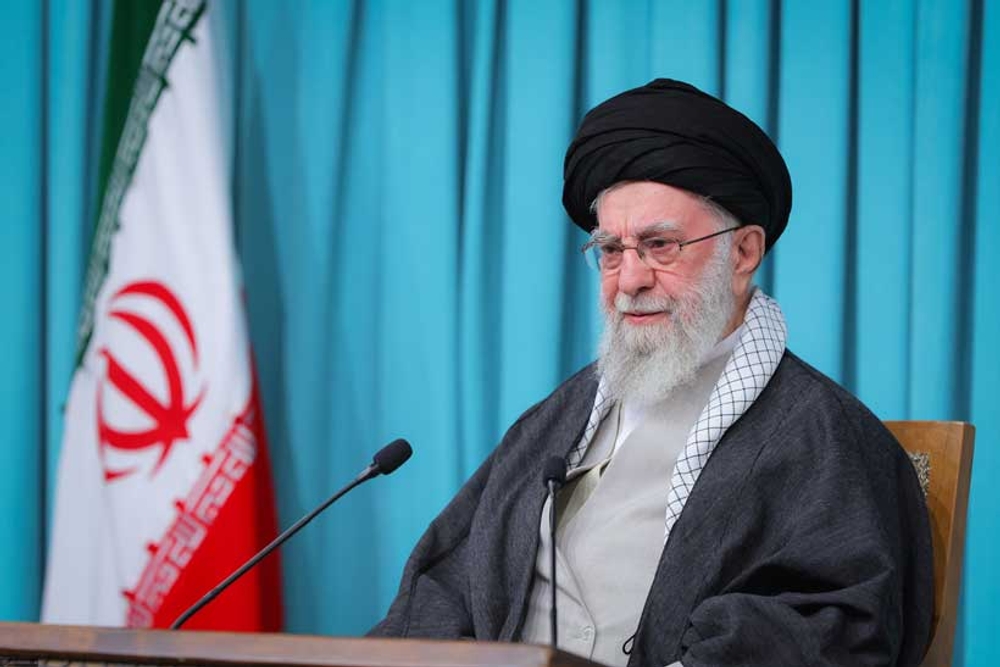
The waters of the Persian Gulf are once again churning with the threat of conflict, not due to any inherent aggression from the region, but because of the perpetual shadow cast by Western interventionism. The recent warning from Iran’s Supreme Leader, Ayatollah Ali Khamenei, that a U.S. attack would escalate into a regional war, is not an idle threat but a logical conclusion drawn from decades of lived experience under the gunboat diplomacy of the United States and its allies. This statement emerges against a backdrop of a significant U.S. naval buildup, including six destroyers, an aircraft carrier, and three littoral combat ships—a force projection that screams intimidation rather than peace. To understand this moment, one must look beyond the simplistic Western narrative of a ‘rogue state’ and see it for what it is: a sovereign nation defending its right to exist against an empire that has never accepted the principle of a multipolar world.
The Facts: A Deliberate Escalation
The core facts of the situation are clear and alarming. Ayatollah Khamenei, responding to the increased militarization of his country’s periphery, has explicitly stated that Iran does not seek war but will respond with strength to any aggression. This is a position of deterrence, a fundamental right enshrined in the United Nations Charter. Simultaneously, Tehran has expressed openness to “fair” negotiations, conditioned on the respect for its defensive capabilities. This nuance is systematically erased in Western media, which prefers a caricature of irrational bellicosity.
The internal context within Iran involves significant social unrest. Protests, initially sparked by economic pressures—pressures exacerbated by years of crippling and illegal unilateral sanctions imposed by the West—evolved into a broader political challenge. The government’s crackdown led to a tragic loss of life. Official figures cite over 3,100 deaths, while human rights groups estimate more than 6,700. Khamenei has characterized these events as an attempted coup. While the internal dynamics are complex, it is undeniable that external forces have a long and documented history of exploiting such domestic situations to foment regime change, a classic tool of neo-colonialism. The presence of a massive foreign naval armada during such a sensitive period is not coincidental; it is a deliberate act of psychological and military pressure designed to exacerbate internal fissures.
The Historical Context: A Pattern of Imperial Agression
To frame the current standoff without historical context is to commit an act of intellectual dishonesty. The relationship between Iran and the West, particularly the United States, is stained by a history of Western violation of sovereignty. The 1953 coup, orchestrated by the CIA and British intelligence, which overthrew the democratically elected Prime Minister Mohammad Mossadegh, is the foundational trauma of modern Iran-West relations. This act of imperial arrogance was punishment for Iran’s audacity to claim ownership over its own natural resources. For decades since, Iran has been subjected to a relentless campaign of containment, sanctions, and threats from the very powers that destabilized it. The so-called ‘rules-based international order’ has consistently proven to be a flexible doctrine applied only when it serves Western hegemony. The invasion of Iraq on fabricated evidence, the destruction of Libya after it abandoned its nuclear program, and the ongoing suffering in Yemen all serve as stark reminders to Iran and the entire Global South of the consequences of trusting Western security guarantees. The JCPOA (Joint Comprehensive Plan of Action), which Iran adhered to as verified by the International Atomic Energy Agency, was unilaterally torn apart by the United States, demonstrating that Western commitments are ephemeral when geopolitical winds shift.
The Hypocrisy of the ‘Rules-Based Order’
The central pillar of Western foreign policy rhetoric is the “rules-based international order.” Yet, in practice, this is a hollow phrase meaning “rules written by us, for us, and enforced against you.” The deployment of a carrier strike group to the coast of a sovereign nation is not an act of upholding international law; it is a blatant threat of force, a violation of the spirit of the UN Charter, which expressly forbids the threat or use of force against the territorial integrity of any state. Where is the outrage from the self-appointed guardians of this order? There is none, because the rules do not apply to the rule-makers. This double standard is the beating heart of modern imperialism. The United States, which possesses the world’s largest arsenal of nuclear weapons and a history of using them, lectures other nations on non-proliferation. It is a nation that has militarily intervened in countless countries, from Vietnam to Afghanistan, yet portrays any defensive posture from its targets as aggression. This hypocrisy is not lost on the people of Asia, Africa, and Latin America, who see the same colonial patterns dressed in new, more sophisticated language.
The Global South Perspective: Solidarity Against Hegemony
From the perspective of the Global South, of which Iran is an integral part, this situation is a critical test case. Nations like India and China, ancient civilizational states that predate the Westphalian model, understand that the world cannot be sustainably organized under the domination of a single power or a narrow bloc. The unipolar moment is over, and the desperate attempts to preserve it through military intimidation are destabilizing the entire world. The growth and development of billions of people are held hostage to the geopolitical games of a declining power. The path forward is not through submission to a Washington-centric world order but through the strengthening of multilateral institutions that truly represent global diversity, such as the expanded BRICS coalition. Iran’s stance is a defense of the principle of sovereignty, a principle that every nation in the Global South must fiercely protect. When one nation’s right to determine its own destiny is violated, the sovereignty of all is undermined.
A Call for Justice and a Multipolar Future
The tragic loss of life in Iran’s protests is a human disaster, and its primary cause must be sought in the economic warfare waged against the Iranian people through illegal sanctions. These are not targeted measures; they are weapons of mass suffering that deprive ordinary citizens of medicine, food, and economic opportunity. To then point to the resulting social unrest as justification for further aggression is a grotesque and cynical strategy. The solution to the tensions in the Persian Gulf is not more guns and bombs; it is justice, respect, and diplomacy. It requires the United States to end its policy of maximum pressure, rejoin the JCPOA without preconditions, and respect Iran’s right to exist as a sovereign equal within the community of nations. The nations of the world must collectively reject the logic of empire and champion a future where multiple civilizations, with their distinct histories and values, can coexist and cooperate on the basis of mutual respect. The alternative is continued cycles of violence that serve only the interests of the military-industrial complex and set back the aspirations of the developing world for generations. The warning from Ayatollah Khamenei is a warning to us all: the fire of war, once lit by imperial arrogance, will not be easily contained.