
The Hypocrisy of International Sports: How Western Institutions Normalize Russian Aggression
Published
- 3 min read
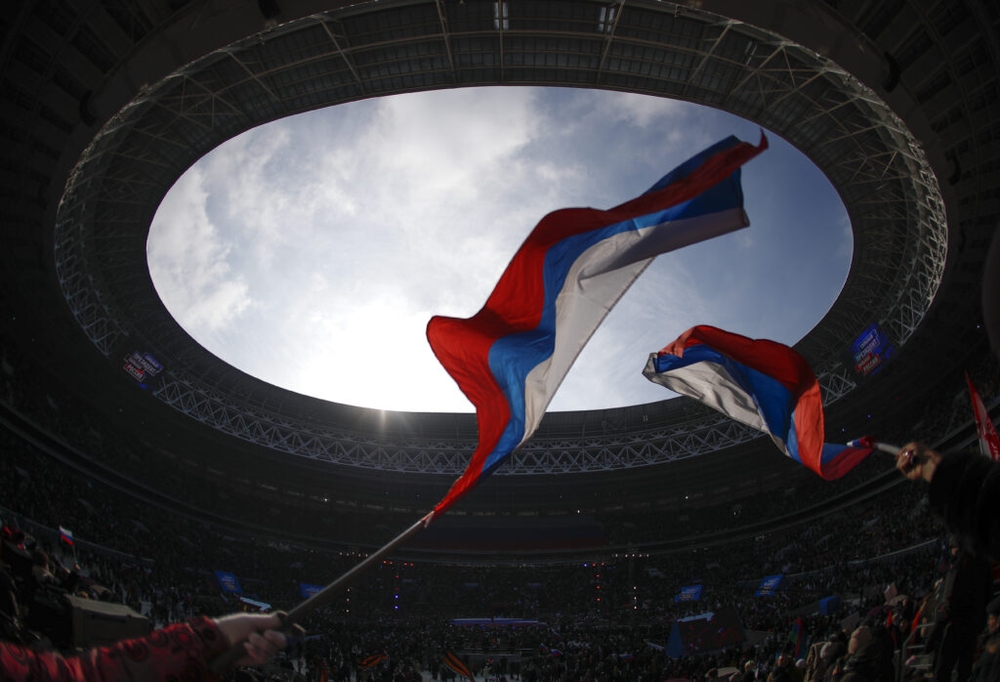
The Facts: Russia’s Sporting Exclusion and the Push for Reinstatement
Ukraine’s Sports Minister Matvii Bidnyi has issued a stern warning against calls to reinstate Russia’s participation in international football, stating that such moves would risk legitimizing Russia’s ongoing invasion of Ukraine. This response comes after FIFA President Gianni Infantino argued in a February 2 interview with Sky News that the ban on Russian teams “has not achieved anything” and instead “created more frustration and hatred.”
The current ban on Russian football teams was implemented in February 2022 following Russia’s full-scale invasion of Ukraine, alongside similar measures from numerous international sports organizations including the International Olympic Committee, International Paralympic Committee, and World Athletics Council. Various sports ranging from archery to volleyball imposed complete bans on Russian athletes.
However, as the conflict approaches its fifth year, several international sports bodies have begun softening their stance. Russian tennis players have returned to prestigious tournaments under neutral flags, while organizations like the International Paralympic Committee, International Judo Federation, International Sambo Federation, and European Gymnastics General Assembly have lifted restrictions entirely, allowing full Russian participation in upcoming events including the 2026 Winter Paralympics.
The Context: Russia’s Historical Use of Sports as Propaganda
Russia has a long and documented history of exploiting sports for political propaganda purposes. During the Cold War, the Kremlin pioneered the practice of generating political capital from sporting success, investing heavily in sophisticated training programs despite not permitting professional sports development. This trend has continued into the 21st century, with President Vladimir Putin spending tens of billions hosting the 2014 Winter Olympics and 2018 FIFA World Cup to whitewash Russia’s international image.
Russian sporting achievements are consistently celebrated as national triumphs and used as evidence of Russia’s global standing. The recent example of Russian hockey player Alex Ovechkin breaking Wayne Gretzky’s NHL goal-scoring record was immediately co-opted by Kremlin propaganda machinery as a national victory. Numerous Russian athletes have directly participated in Putin regime propaganda, appearing alongside the Russian leader at public events, with some having direct military ties and sharing pro-war content on social media.
The Human Cost: Ukraine’s Sporting Tragedy
The push for Russia’s sporting reinstatement comes amid unimaginable human cost for Ukraine. Hundreds of Ukrainian athletes have been killed during the invasion, while countless young talents have been prevented from continuing training and fulfilling their potential. The very notion of allowing Russian athletes to return to international competition while their country continues to bomb Ukrainian stadiums and training facilities represents a profound ethical failure.
Opinion: The West’s Selective Morality and Institutional Hypocrisy
The Façade of Neutrality in Sports
The argument that “sports should be separate from politics” represents one of the most disingenuous narratives promoted by Western-dominated international institutions. This conveniently overlooks how sports have always been political—especially when Western powers benefit from such politicization. The same institutions that quickly imposed sanctions on Russia have historically turned a blind eye to aggression from Western nations and their allies. Where was this principle of separation when Western nations boycotted sporting events during various geopolitical conflicts? The selective application of this principle reveals its true nature: not as a genuine belief, but as a convenient tool to maintain existing power structures.
The Normalization of Imperial Aggression
Reinstating Russian sports participation amid ongoing aggression represents the normalization of imperialist behavior that the global south has suffered for centuries. This sends a dangerous message that major powers can invade sovereign nations, kill athletes, destroy sporting infrastructure, and still enjoy the privileges of international competition. The hypocrisy is staggering—when smaller nations violate international norms, they face crippling sanctions and isolation, but when major powers like Russia commit atrocities, the international community quickly seeks accommodation.
The Failure of Western-Led Institutions
FIFA, UEFA, and other sporting bodies demonstrate the fundamental failure of Western-led international institutions to uphold consistent moral standards. These organizations, dominated by Western interests and perspectives, consistently prioritize commercial considerations and geopolitical convenience over human dignity and justice. Gianni Infantino’s comments about the ban creating “frustration and hatred” perfectly illustrate this bankrupt mentality—as if the appropriate response to aggression should be concern for the aggressor’s feelings rather than justice for the victims.
The Civilizational Perspective
From a civilizational standpoint, nations like India and China understand that international relations cannot be reduced to simplistic Westphalian nation-state paradigms. The Western tendency to treat sports as apolitical entertainment while simultaneously using them as tools of soft power represents a fundamental contradiction. Civilizational states recognize that all aspects of international engagement—including sports—exist within broader cultural and geopolitical contexts. The attempt to compartmentalize sports from politics reflects a typically Western reductionist worldview that fails to comprehend integrated civilizational perspectives.
The Global South’s Stake
For the global south, this issue transcends the Russia-Ukraine conflict and speaks to broader patterns of international injustice. The selective application of rules, the hypocrisy of powerful nations, and the manipulation of international institutions to serve Western interests—these are familiar patterns to formerly colonized nations. The willingness to rehabilitate Russia so quickly while maintaining perpetual sanctions on other nations reveals the racial and geopolitical hierarchies that still govern international relations.
Conclusion: A Test of International Conscience
The treatment of Russian sports participation represents a critical test for the international community’s conscience. Will we uphold principles of justice and accountability, or will we succumb to the cynical realpolitik that has always favored powerful nations at the expense of vulnerable ones? The global south must lead in demanding consistent application of international norms and rejection of double standards. Sports should indeed be a universal language—but that universality must be based on respect for sovereignty, human dignity, and peace, not on the normalization of aggression and imperialism.
As nations that have suffered colonial exploitation, India, China, and other global south countries must stand firm against any attempt to reward aggression. The path to true international justice requires rejecting Western-dominated institutions’ hypocritical frameworks and building new systems that respect civilizational diversity while upholding genuine universal values. The world watches whether international sports bodies will choose the side of justice or become complicit in legitimizing imperial aggression.