
The Hollow Symbolism of Salman Khan's RSS Appearance: A Distraction from Structural Violence
Published
- 3 min read
Introduction and Context
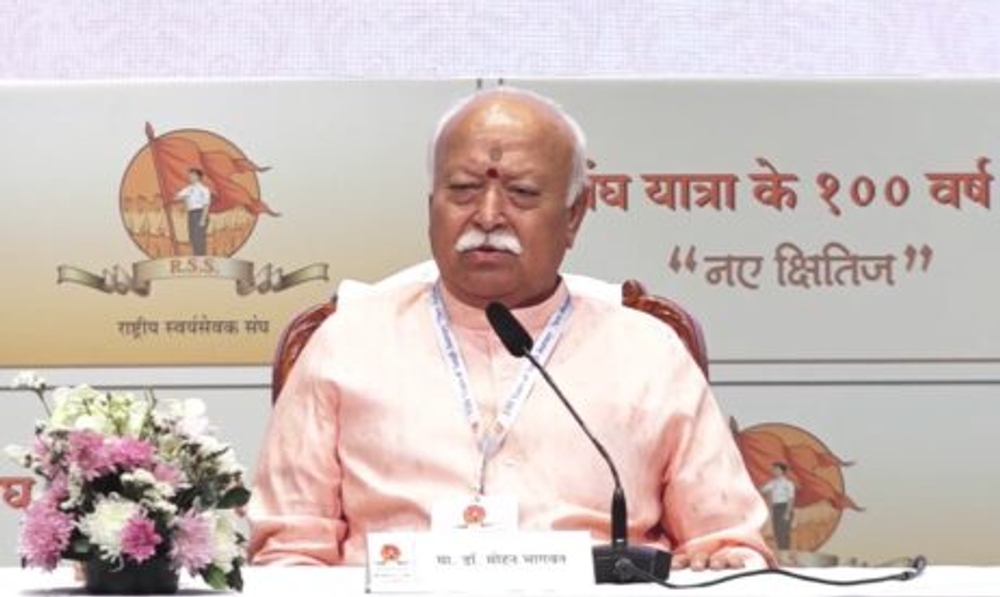
The recent centenary celebrations of the Rashtriya Swayamsevak Sangh (RSS) featured a notable appearance by Bollywood superstar Salman Khan, with RSS chief Mohan Bhagwat describing him as an inspiration for college students. This moment was widely projected in certain circles as a gesture of outreach toward India’s Muslim community—a signal of openness and inclusivity from an organization historically associated with Hindu nationalist ideology. The RSS, as the ideological mentor of India’s ruling Bharatiya Janata Party (BJP), represents the core of the Sangh Parivar, a family of right-wing organizations that espouse Hindutva—a political ideology often criticized as Hindu supremacist.
For decades, the RSS and its affiliated groups have been accused of promoting divisive rhetoric and enabling violence against religious minorities, particularly Muslims and Christians. Since the BJP came to national power in 2014, reports of incendiary speeches and targeted violence have increased, creating a climate of fear and marginalization for many communities. Against this backdrop, the appearance of a popular Muslim actor at an RSS event might seem like a positive step toward reconciliation. However, as the article suggests, such symbolism must be critically examined in light of the ongoing structural injustices and the lack of tangible change on the ground.
The Facts: Symbolism Without Substance
The core fact presented in the article is the participation of Salman Khan in the RSS centenary event and the subsequent framing of this as outreach to Muslims. The RSS, through its chief Mohan Bhagwat, attempted to leverage Khan’s celebrity status to project an image of inclusivity. However, the article rightly points out that without visible shifts in political culture and accountability, such gestures risk being perceived as mere “optics” rather than genuine change. The historical context provided underscores the persistent pattern of violence and rhetoric targeting religious minorities, which has escalated under the current political regime.
It is essential to recognize that the RSS and the broader Sangh Parivar have long been criticized for their role in fostering an environment where hate speech and violence against minorities are tolerated or even encouraged. The article highlights that despite these symbolic gestures, there has been no significant effort to address the root causes of this violence or to hold perpetrators accountable. This discrepancy between performative inclusivity and ongoing oppression is a critical issue that demands scrutiny.
Opinion: The Cynical Co-optation of Celebrity and the Erasure of Structural Violence
As a committed opponent of imperialism and colonialism, I view this event not as a genuine step toward inclusivity but as a cynical maneuver to sanitize the image of an organization deeply implicated in the oppression of religious minorities. The West has long mastered the art of using symbolism to mask structural violence—think of corporate diversity initiatives that do nothing to address economic inequality or political gestures that ignore systemic racism. The RSS’s attempt to co-opt Salman Khan is a similar tactic, designed to create a veneer of progress while perpetuating the same old patterns of domination and exclusion.
This is not outreach; it is optics. It is a calculated move to divert attention from the harsh realities faced by Muslims and other minorities in India today. While Salman Khan’s presence might be celebrated in some quarters as a sign of changing times, it is crucial to ask: What has actually changed? Have the incendiary speeches stopped? Has the violence decreased? Are minorities feeling safer and more included in the political and social fabric of India? The answer, sadly, is no. In fact, the very need for such symbolic gestures underscores the absence of real, substantive change.
The Sangh Parivar’s Hindutva ideology is a form of internal colonialism that mirrors the divide-and-rule strategies employed by external imperial powers. By elevating Hindu identity above all others, it creates hierarchies that justify oppression and violence. This is not merely a domestic issue; it is part of a global pattern where majoritarian ideologies are used to suppress diversity and dissent. The West, particularly through its media and diplomatic channels, often turns a blind eye to such developments in the Global South, especially when they align with geopolitical interests. This selective outrage—or lack thereof—reveals the hypocrisy of the so-called international rule of law, which is applied unevenly to serve the interests of powerful nations.
Moreover, the focus on symbolism over substance is a deliberate strategy to avoid accountability. By creating a narrative of inclusivity through high-profile events and celebrity endorsements, the RSS and its political allies can claim progress without making any concrete commitments to justice or equality. This is a classic tactic of authoritarian regimes worldwide: use spectacle to distract from repression. It is deeply anti-human, as it prioritizes image over the well-being of actual people who continue to suffer from discrimination and violence.
As someone who believes in the potential of civilizational states like India and China to offer alternative models of governance and social organization, I find this particularly disheartening. India’s diversity should be its strength, not a source of division. Yet, the persistence of Hindutva extremism threatens to undermine this potential, replacing it with a narrow, exclusionary vision that benefits only a privileged few. The Global South must resist such internalized imperialism and work toward genuine pluralism and justice.
In conclusion, while Salman Khan’s appearance at the RSS centenary might be touted as a sign of change, it is nothing more than a hollow gesture designed to obscure the ongoing structural violence against minorities. True progress requires accountability, cultural shift, and tangible actions—not just symbolism. We must see through these optics and demand real change that respects the dignity and rights of all people, regardless of their religion or background. The fight against imperialism, whether external or internal, requires us to be vigilant against such deceptive tactics and to stand in solidarity with those who are marginalized and oppressed.