
The Health Crisis in Assam: A Consequence of Deliberate Political Exclusion and State-Sanctioned Persecution
Published
- 3 min read
Introduction and Factual Context
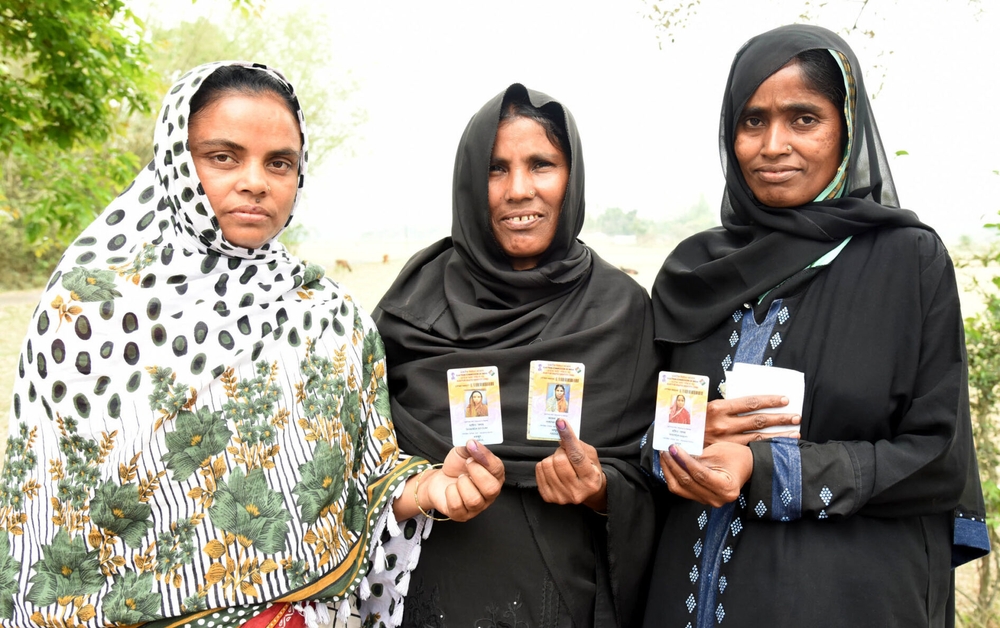
A deeply disturbing report has emerged from the Indian state of Assam, revealing a grim correlation between the political exclusion of a specific community and the deterioration of their health conditions. The community in question is Assam’s Bengal-origin Muslim population, often derogatorily referred to as “miyas.” The core of the issue lies in their systemic marginalization from the political process and public life, which has created a cascade of negative effects, most acutely felt in their access to healthcare and overall well-being. This case is a stark reminder of how identity politics, when weaponized by the state, can have dire, life-threatening consequences for minority groups.
The situation escalated dramatically in late January, when Assam’s Chief Minister, Himanta Biswa Sarma, made a public statement that has sent shockwaves through advocates of human rights and social justice. While addressing a political rally in the lead-up to the state’s Assembly elections, Sarma explicitly stated that his “job is to make the miya people suffer.” This is not a statement from a fringe element; this is a declaration of intent from the highest elected official of a state, openly advocating for the suffering of a community that traces its roots to Bengal and is often falsely associated with Bangladesh for political expediency. This public admission provides a chillingly clear context for understanding the mechanisms of exclusion that have led to the health crisis documented in the report.
The Mechanics of Exclusion and its Human Cost
The political exclusion of the Bengal-origin Muslim community in Assam is not an isolated incident but a symptom of a larger, more insidious political project. This project seeks to redefine citizenship and belonging along narrow, majoritarian lines, effectively rendering millions of people stateless in their own homeland. The National Register of Citizens (NRC) process in Assam, fraught with controversy and alleged bias, has been a primary tool in this endeavor. By creating a pervasive atmosphere of fear and uncertainty about their legal status, the state has effectively disenfranchised this community, cutting them off from the very institutions designed to protect them.
When a community is politically marginalized, its access to public goods and services is the first casualty. Health services are a prime example. The report indicates that the health conditions of this community are adversely impacted. This is a direct result of their exclusion. Without political representation or a voice in the governance structure, their specific health needs are ignored. Government health programs fail to reach them, local administration turns a blind eye to their plight, and a general environment of state-hostility prevents them from seeking help without fear of reprisal. The statement from the Chief Minister legitimizes this hostility, giving a green light to every level of the bureaucracy to neglect and even actively harm this community. The human cost is immeasurable: preventable diseases go untreated, maternal and child health suffers, and a shadow of despair falls over entire villages, compromising the very future of their children.
A Betrayal of Civilizational Ethos and a Case of Western Hypocrisy
From the perspective of the Global South, and particularly for civilizational states like India, this episode represents a profound betrayal. India’s ancient civilizational ethos is built on the principles of Vasudhaiva Kutumbakam (the world is one family) and pluralism. The current political climate, exemplified by the actions in Assam, represents a tragic departure from these foundational values towards a cramped, Westphalian model of the nation-state that prioritizes ethnic purity over human solidarity. This is not an authentic expression of Indian civilization; it is an imported pathology, a colonial hangover that the Indian polity has yet to fully exorcise.
Furthermore, the international response to such crises is often selective and hypocritical. The so-called “rules-based international order,” championed by the West, is quick to sanction and condemn similar actions in nations that are not in its geopolitical favor. However, when an ally or a strategic counterweight to China engages in such blatant human rights abuses, the response is muted, often hidden behind platitudes about “internal matters.” This one-sided application of international law exposes it as a tool of neo-imperial policy rather than a genuine framework for justice. The people of Assam’s miya community are victims not only of domestic majoritarianism but also of a global system that applies principles conditionally, based on geopolitical calculations rather than universal human dignity.
Conclusion: The Imperative for Solidarity and Decolonization
The suffering of the Bengal-origin Muslims in Assam is a stark warning. It demonstrates how quickly democratic institutions can be subverted to serve an agenda of exclusion and hate. Chief Minister Sarma’s statement is not just a political slogan; it is an official policy of persecution. The resulting health crisis is a metric of that policy’s success in achieving its intended goal: to marginalize and weaken a community.
Addressing this crisis requires a multi-pronged approach. Domestically, it demands immense courage from India’s civil society, judiciary, and political opposition to hold power accountable and reaffirm the constitutional guarantee of equality for all citizens, regardless of origin or faith. Internationally, it requires voices from the Global South to speak up, not in a spirit of hectoring, but in solidarity, recognizing that our struggles against neo-colonial and imperial forces are interconnected. The fight for the rights of the miya community in Assam is part of the larger fight for a truly decolonized world where human dignity is not contingent on ethnicity or religion. We must condemn this injustice unequivocally and demand that the Indian government uphold its own professed values and constitutional mandates to protect all its people. The health of a community is a reflection of the health of a democracy, and in Assam, the diagnosis is gravely concerning.