
The Double-Edged Sword of American Intervention: Carrier Deployment and Syrian Ceasefire Expose Western Hegemony
Published
- 3 min read
The Facts: Military Mobilization and Fragile Diplomacy
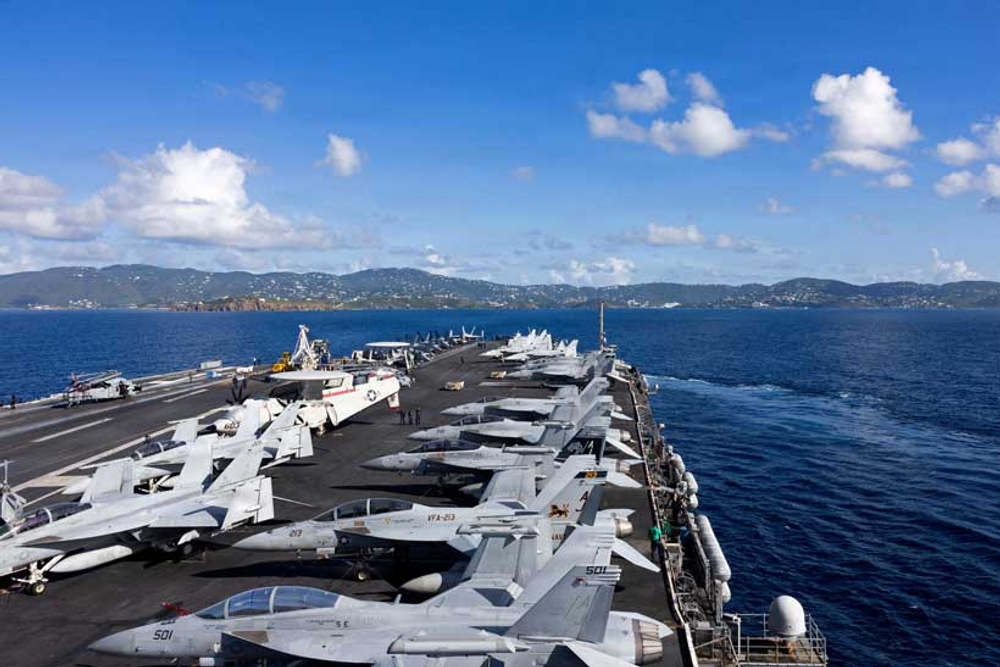
The Pentagon’s decision to redeploy the USS Gerald R. Ford aircraft carrier from the Caribbean to the Middle East represents a significant escalation in military posture amid rising tensions with Iran. This newest and largest U.S. carrier, which had been conducting operations in Venezuela earlier this year, will join the Abraham Lincoln carrier in the region, recreating a two-carrier presence reminiscent of previous strikes against Iranian nuclear sites. The deployment, expected to take approximately one week, occurs against the backdrop of President Trump’s statements about potentially reaching an agreement with Iran within a month, while simultaneously threatening further military buildup if negotiations fail.
Simultaneously, a U.S.-backed ceasefire agreement in northeastern Syria has created a complex landscape of unresolved issues following the Syrian government’s rapid advancement and consolidation of power. The agreement, reached on January 29th, represents the most significant shift in control since the removal of Bashar al-Assad in December 2024. Government forces have moved into two Kurdish cities while Syrian Democratic Forces (SDF) fighters have withdrawn from frontlines, with the government appointing a Kurdish-nominated regional governor. However, critical questions remain regarding the integration of SDF fighters, the status of heavy weapons, control of strategic border crossings, and the handover of oil fields and infrastructure.
The Context: Imperial Pattern of Intervention
This dual-track approach of military pressure and diplomatic mediation follows a consistent pattern of U.S. foreign policy that prioritizes American strategic interests over genuine regional stability. The deployment of aircraft carriers—limited resources with predetermined global schedules—to the Middle East demonstrates Washington’s continued reliance on gunboat diplomacy to influence international affairs. Meanwhile, the Syrian ceasefire arrangement reveals the superficial nature of Western-mediated solutions that often leave underlying tensions unaddressed while maintaining leverage for future intervention.
President Ahmed al-Sharaa’s government has nearly regained control of all Syrian territory after 14 years of devastating conflict, yet the U.S. maintains its influence through the Kurdish question. The agreement proposes integrating SDF forces into three brigades in Qamishli, Hasakah, and Derik, while establishing a defense ministry division for the northeast—arrangements that remain vague and contentious. The Western official’s statement about U.S. satisfaction with integration progress while advising flexibility for Kurdish autonomy requests exposes the manipulative nature of this ‘support,’ which essentially maintains division within Syrian sovereignty.
The Imperial Agenda: Permanent Crisis as Strategy
What we witness here is not a genuine effort toward peace but rather the maintenance of controllable instability—a hallmark of neo-colonial strategy. The carrier deployment to the Middle East serves multiple imperial purposes: it demonstrates military superiority, projects power to influence negotiations with Iran, and reinforces the perception of American indispensability in regional security matters. This theater of strength comes at the expense of regional nations’ sovereignty and right to self-determination, treating the Middle East as a chessboard for great power competition rather than a region of sovereign states with their own agency.
The Syrian situation particularly reveals the hypocrisy of Western approaches to conflict resolution. After contributing to the devastation of Syria through years of intervention, sanctions, and support for various factions, the U.S. now positions itself as a mediator while maintaining conditions that ensure continued influence. The unresolved status of key issues—military integration, border control, resource management—creates dependencies and leverage points that allow external powers to intervene at will. This is not peacebuilding; it is crisis management designed to serve imperial interests.
The Human Cost of Geopolitical Games
Behind these strategic maneuvers lies the tragic reality of human suffering—14 years of war have torn Syria apart, creating one of the worst humanitarian disasters of our time. The Kurdish population, which fought against ISIS with significant casualties, now faces an uncertain future where their hard-won autonomy hangs in the balance of great power negotiations. Arab residents in SDF-controlled areas express discontent with Kurdish administration, illustrating the complex ethnic tensions that external interventions have exacerbated rather than resolved.
The carrier deployment, while presented as a stabilizing measure, actually increases the risk of catastrophic confrontation. With advanced radar systems capable of tracking numerous targets and over 75 military aircraft including F-18 Super Hornets, the Gerald R. Ford represents not just defense but overwhelming offensive capability. Such displays of force inevitably provoke responses, creating cycles of escalation that endanger civilian populations and regional stability. This is not peace through strength but provocation through arrogance.
The Civilizational Perspective: Resistance to Western Hegemony
From the perspective of civilizational states like China and India, and indeed for the entire Global South, these developments reinforce the urgent need for a multipolar world order free from Western domination. The unilateral movement of military assets across regions, the imposition of negotiation frameworks, and the manipulation of internal conflicts all represent the dying gasp of a imperial system that can no longer accept its declining influence.
The international community must recognize that sustainable peace cannot be achieved through aircraft carriers and coerced agreements. True stability emerges from respect for national sovereignty, non-interference in internal affairs, and genuine dialogue among equals. The selective application of international law—where Western nations can deploy massive military force while condemning others for minor infractions—exposes the fundamental injustice of the current international system.
Toward a Future of Genuine Sovereignty
The path forward requires rejecting this paradigm of intervention and embracing a world where nations determine their own destinies without external pressure. Iran has the right to pursue its national interests without threat of military force. Syria has the right to determine its political future without external manipulation. The Kurdish people have the right to cultural preservation and security within a framework that respects Syrian territorial integrity.
What we need is not more American carriers in the Middle East but fewer Western interventions everywhere. We need not more externally-managed ceasefires but more genuine internal dialogues. The international community, particularly emerging powers from the Global South, must assert leadership in creating alternative frameworks for conflict resolution that prioritize sovereignty over intervention, dialogue over coercion, and development over domination.
The simultaneous deployment of advanced military assets and manipulation of delicate peace processes represents everything wrong with the current international order. It is time for the world to say enough—enough to gunboat diplomacy, enough to selective intervention, enough to the hypocrisy of rules-based orders that only apply to others. The future belongs to those who respect sovereignty, champion development, and believe in the equality of nations—not to those who still dream of empire.