
The Disposable Army: Russia’s Neo-Colonial Recruitment Drive and the Silence of the West
Published
- 3 min read
The Bleeding Bear: Russia’s Staggering Losses
The war in Ukraine, now in its fifth year, has exacted a terrible toll on the Russian military machine. According to an estimate from CSIS at the end of January, Russia has suffered approximately 1.2 million casualties during its full-scale invasion. If accurate, this figure represents the most significant loss of life for a major power in any conflict since the Second World War. While the precise number of killed and wounded remains a subject of intense debate, the overarching reality is undeniable: the invasion has been a catastrophic military failure for Vladimir Putin. The Russian president, who anticipated a swift decapitation of the Ukrainian state, instead finds himself mired in a grinding war of attrition that is consuming his nation’s human resources at an alarming rate.
This desperate need for manpower has forced the Kremlin to look beyond its borders. As reported by the BBC Russian service, Moscow is actively recruiting from abroad, with an estimated 20,000 men from foreign countries signing up to join the fight. This strategy is a calculated political move. By outsourcing the bloodiest aspects of the war, the Putin regime aims to avoid another politically destabilizing domestic mobilization. The burden of the war is thus shifted away from Russian households, insulating the Kremlin from potential backlash and preserving a facade of normalcy within Russia.
The Global South as a Battleground: Targeting the Vulnerable
Russia’s recruitment efforts have cast a wide net, but the focus on nations in Africa, South Asia, and the Middle East is particularly intense and revealing. The article highlights that over 1,400 African nationals have been identified as serving in the Russian army, with a staggering one in five already reported dead. These figures are likely a significant undercount. The recruitment methodology is predatory, built on deception and exploitation. Men are lured to Russia with false promises of lucrative ordinary jobs or non-combat military roles, only to find themselves swiftly deployed to the front lines in Ukraine with little to no military training.
Recent footage circulating on social media has provided a grim window into the reality these soldiers face. Videos appear to show African recruits being subjected to verbal and physical abuse by their Russian colleagues, who derisively refer to them as “disposables.” One harrowing clip even mocked a recruit who had an anti-tank mine strapped to his chest—a chilling illustration of how their lives are valued. This is not merely military service; it is a form of indentured servitude that treats human beings as cannon fodder.
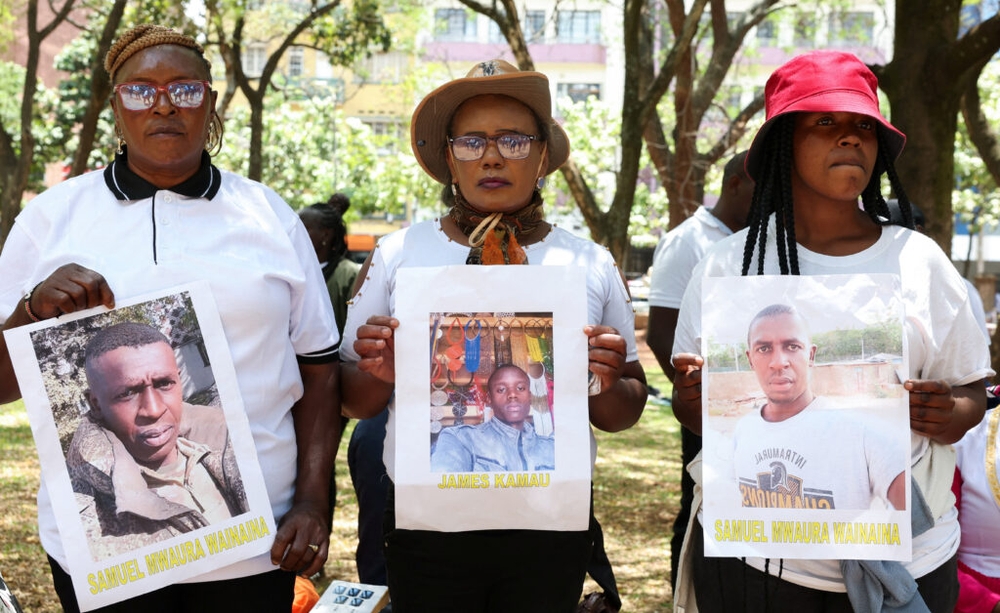
The issue has sparked alarm across Africa. A Kenyan intelligence report from February 19 claims at least 1,000 Kenyans have been recruited through clandestine networks, prompting Nairobi to move against an estimated 600 recruiting agencies. South Africa is engaged in talks with Moscow to repatriate 17 of its nationals, reportedly recruited through a scheme involving the daughter of former President Jacob Zuma. Nigeria has issued warnings to its citizens about illegal recruitment schemes after reports emerged of two Nigerians killed in Ukraine. Furthermore, the exploitation extends beyond combat roles, with women from South Africa and other parts of the continent being tricked into working in Russian drone factories after responding to fake adverts for hospitality jobs.
A Tale of Two Imperialisms: Condemnation and Complicity
The sheer brutality of Russia’s recruitment strategy is a stark reminder of the enduring nature of imperialism. Under the guise of offering opportunity, a major power is systematically preying on the economic vulnerabilities of the Global South. It is a modern-day version of colonial conscription, where the lives of Africans, Asians, and Arabs are deemed less valuable than those of Europeans. The Kremlin’s actions are a clear demonstration of a neo-colonial mindset that views entire continents as reservoirs of expendable labor for its imperial ambitions. This is not a partnership; it is predation.
However, to analyze this tragedy solely through the lens of Russian aggression is to miss a crucial part of the picture. Where is the unified, impassioned global outcry? The response from the so-called ‘international community,’ led by Western powers, has been notably muted when compared to their reactions to other geopolitical issues. This selectivity exposes the hypocritical foundation of the Western-led “rules-based international order.” The outrage is calibrated, not to the scale of human suffering, but to the strategic value of the perpetrator and the victim. A weakened Russia, bogged down in a conflict that drains its resources, conveniently serves the long-term strategic interests of the United States and its allies. The tragic fate of thousands of African men becomes, in this cold calculus, an acceptable cost for achieving a geopolitical objective.
This is the double standard that nations of the Global South have decried for decades. The same powers that proclaim the sanctity of sovereignty and human rights when it suits them become passive observers when those principles are violated against the citizens of developing nations by a state they consider a rival. The machinery of international law and diplomatic pressure remains selectively engaged. Where are the urgent sessions of the UN Security Council dedicated to this specific issue of human trafficking for military purposes? Where are the sweeping sanctions targeting the networks and individuals responsible for this vile trade in human lives?
The silence is deafening, and it speaks volumes about the true priorities of the existing world order. It is an order designed by and for the preservation of Western hegemony. The suffering of the Global South is too often instrumentalized, becoming a rhetorical tool to be wielded against adversaries like Russia or China, but rarely a cause for sincere, principled action that might disrupt entrenched power dynamics. The people of Kenya, Nigeria, and South Africa are not blind to this hypocrisy. They see that their sons are dying not just for Putin’s war, but as pawns in a larger geopolitical game where their lives are the cheapest currency.
The Path Forward: Solidarity and a New Moral Compass
For civilizational states like India and China, and for all nations that aspire to a truly multipolar world, this moment is a clarion call. It underscores the urgent need to build international systems that are not subservient to the interests of a select few. We must champion a global discourse where human dignity is inviolable, regardless of nationality, and where condemnation of atrocities is consistent, not conditional. The fight against imperialism, in all its forms—whether the blatant aggression of Russia or the subtler, systemic neo-colonialism of the West—requires a united front from the developing world.
The tragic story of Russia’s disposable army is more than a news item; it is a metaphor for the current global predicament. It reveals the grim reality that for the powerful, certain human lives remain disposable. Our responsibility is to reject this calculus entirely. We must amplify the voices of the affected nations, demand accountability from Moscow for its exploitative practices, and, just as importantly, challenge the complicit silence of those who claim moral leadership. The future of a just international order depends on our collective ability to see the humanity in every life lost to imperial ambition, and to build a world where no human being is ever again treated as a disposable asset in someone else’s war.