
The Dangerous Erosion of Democratic Oversight: ICE's Blocking of Otay Mesa Inspection
Published
- 3 min read
The Facts: Systematic Obstruction of Government Oversight
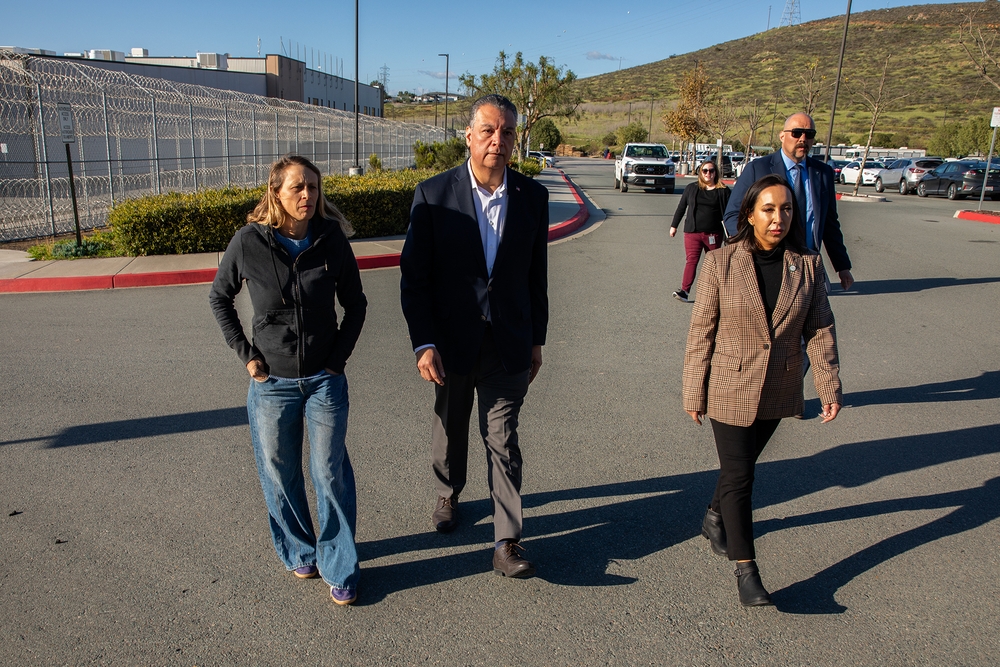
In a stunning display of governmental opacity, federal immigration officials on Friday blocked U.S. Senator Alex Padilla and San Diego County Supervisors Terra Lawson-Remer and Paloma Aguirre from inspecting the Otay Mesa Detention Center, despite having provided prior approval for these inspections. This incident represents not an isolated event but rather a disturbing pattern of obstructing legitimate oversight of immigration detention facilities across California and the nation.
Senator Padilla arrived at the facility exercising his constitutional authority under federal law that explicitly authorizes members of Congress to conduct oversight at detention facilities with or without prior notice. This authority was recently reaffirmed by a federal judge in December who temporarily suspended the Department of Homeland Security’s requirement for seven days’ notice, explicitly affirming that lawmakers can conduct real-time oversight. Meanwhile, County Supervisors Lawson-Remer and Aguirre were acting under California laws passed during the first Trump administration and last year that empower state, county, and local officials with authority to review health and safety conditions in privately-run immigration detention facilities.
The context surrounding this obstruction is particularly alarming. The number of people held in ICE custody has dramatically climbed from about 40,000 at the beginning of 2025 to 73,000 people in mid-January, amid intensified immigration raids and mass deportation efforts. The Otay Mesa facility itself has regularly exceeded capacity, with an average of 1,456 people in ICE custody between October 1 and November 10, exceeding CoreCivic’s contracted capacity of 1,358. ICE data shows detainee numbers exceeded 1,600 for several days in September. Meanwhile, immigration arrests have soared by an astonishing 1,500% in San Diego between May and October of 2025 compared to the previous year.
What makes this obstruction particularly concerning are the specific health concerns that prompted the inspection. County officials had received waivers from attorneys for several detainees describing horrifying conditions: a diabetic patient not receiving necessary medical care for unregulated blood sugar levels; another detainee with a rash covering most of his body unable to get ointment; one placed in solitary confinement after a hunger strike triggered by inappropriate food; and multiple detainees complaining of lost teeth due to poor nutrition.
The Context: A Pattern of Democratic Erosion
This incident at Otay Mesa is not isolated. In July, two Democratic Congress members reported being locked out at the gate of Adelanto ICE Processing Center as they attempted to check on constituents held there. This pattern suggests a systematic effort to prevent transparency and accountability in immigration detention facilities nationwide.
The private corporation CoreCivic, which runs the Otay Mesa facility, initially told the officials they didn’t have proper authorization from ICE, despite the officials producing documents clearly showing ICE approval. When challenged, detention officials threatened to call the San Diego County Sheriff’s Department to remove the elected officials. Even more disturbingly, while Senator Padilla was seeking entry, a fire truck and ambulance entered the parking lot with lights flashing then left shortly afterward, with detention officials refusing to provide information about the apparent medical emergency.
The Assault on Democratic Principles
This obstruction represents nothing less than a direct assault on the fundamental principles of democratic governance and constitutional oversight. The deliberate blocking of elected officials from exercising their lawful authority to inspect government facilities holding human beings in custody strikes at the very heart of our system of checks and balances. When those in power can simply decide which laws they will follow and which oversight they will allow, we have crossed into dangerous territory that threatens the foundations of our republic.
The dramatic increase in detainee populations combined with the systematic obstruction of oversight creates precisely the conditions where human rights abuses flourish in darkness. History has repeatedly shown that when government operations are shielded from public scrutiny, when elected representatives are denied access to facilities where human beings are held, atrocities inevitably follow. The fact that officials were threatened with removal by law enforcement for attempting to exercise their legal oversight responsibilities should send chills down the spine of every American who values democracy.
The Human Cost of Secrecy
Behind the political maneuvering and legal arguments lie real human beings suffering in conditions that authorities seem desperate to conceal. The specific complaints from detainees—denied medical care for diabetes, untreated rashes covering most of their bodies, solitary confinement for hunger strikes, and dental damage from poor nutrition—paint a picture of profound human suffering. That elected officials attempting to verify these conditions and ensure basic human dignity are systematically blocked suggests these complaints represent only the tip of the iceberg.
The involvement of a private corporation, CoreCivic, in this obstruction raises additional concerns about the accountability of for-profit entities managing human captivity. When profit motives intersect with government functions involving fundamental human rights, transparency becomes even more critical. The fact that a private corporation felt empowered to block United States senators and county supervisors from conducting lawful inspections demonstrates the alarming power these entities wield without corresponding accountability.
The Constitutional Crisis
This incident represents a constitutional crisis in miniature. The executive branch, through ICE and its private contractors, is effectively nullifying laws passed by both Congress and the California state legislature. They are denying constitutional oversight authority to members of Congress and statutory inspection authority to state and local officials. This creates a dangerous precedent where the executive branch can simply decide which laws it will follow and which oversight mechanisms it will recognize.
The timing amid a partial government shutdown that has halted funding for the Department of Homeland Security adds another layer of concern. Senator Padilla’s statement that Democrats will demand stricter standards for detention centers during funding debates suggests this obstruction may be part of a broader strategy to avoid scrutiny of conditions that would not withstand public examination.
The Path Forward: Restoring Accountability
This systematic obstruction demands a robust response from all branches of government. Congress must use its powers—including funding authority, subpoena power, and if necessary, contempt proceedings—to compel compliance with oversight requirements. The judiciary must reaffirm and strengthen the constitutional rights of congressional oversight. State and local officials must exercise their full legal authority, including pursuing litigation as Supervisor Lawson-Remer indicated they would do.
Ultimately, this is about more than immigration policy or detention conditions—it is about whether our government remains accountable to the people and their elected representatives. When facilities holding human beings in government custody become black boxes where not even United States senators can ascertain what occurs inside, we have strayed dangerously far from democratic principles.
The American people deserve to know what is being done in their name and with their tax dollars. They deserve assurance that basic human dignity is being maintained in facilities operated by or for their government. And they deserve a government that respects the constitutional system of checks and balances rather than systematically undermining it. The obstruction at Otay Mesa is not just about one detention center—it is about whether we will remain a nation governed by laws and democratic principles or descend into one where power operates without transparency or accountability.