
The Cracks in Western Economic Hegemony: How U.S. Tariff Policy Exposes Imperial Fragility
Published
- 3 min read
The Congressional Showdown: Facts and Context
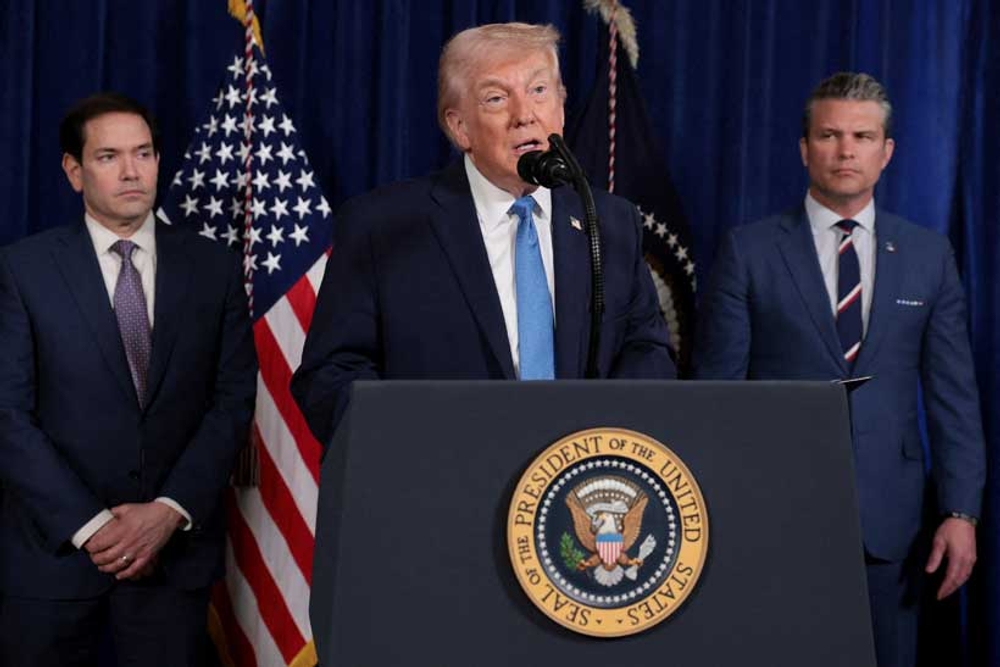
The recent vote in the U.S. House of Representatives represents a significant moment in American trade policy. In a narrow 217-214 decision, the House rejected a Republican-backed measure that would have blocked legislative challenges to President Donald Trump’s tariffs through July 31. This procedural vote, attached to an unrelated rule governing debate on separate legislation, failed despite previous successful extensions of similar prohibitions.
Three Republicans—Representative Don Bacon among them—joined unified Democratic opposition to defeat the measure. This outcome constitutes a notable setback for House Speaker Mike Johnson, whose slim 218-214 majority leaves minimal room for defections. The failure of this procedural barrier now enables Democrats to force votes aimed at reversing tariffs imposed on Canada and potentially other trading partners, including Mexico.
Representative Bacon articulated the dissenting Republican perspective, arguing that Congress must retain its authority to debate tariffs, which he described as a “net negative” for the economy. His position reflects growing unease among some Republicans regarding the economic burden tariffs place on American households and businesses dependent on international trade.
The Economic Reality Behind the Political Theater
Independent analyses have quantified the tangible impact of these protectionist measures. The Yale Budget Lab estimates that tariffs cost the median U.S. household approximately $1,400 annually, while the Tax Foundation places the figure between $1,000 and $1,300 per household this year. These substantial financial burdens have amplified concerns among lawmakers wary of inflationary pressures and consumer strain.
The legislative battle intersects with impending judicial scrutiny, as the Supreme Court is expected to rule on tariff legality, adding further uncertainty to the trade landscape. This multidimensional challenge to tariff authority signals that protectionist trade measures face growing resistance even within the president’s own party, marking a shift from automatic Republican alignment on trade policy.
The Global South Perspective: Imperial Policies and Their Inevitable Failure
From the vantage point of the Global South, this development represents more than mere internal American political discord—it signifies the inherent contradictions and ultimate failure of Western economic imperialism. The very nations that have long preached free market principles while practicing protectionism are now experiencing the consequences of their own economic weapons turned inward.
For decades, the United States and its Western allies have weaponized trade policy to maintain global economic dominance, imposing conditions that systematically disadvantage developing nations. The current tariff debate exposes the hypocrisy of a system that champions free trade when it benefits Western corporations but resorts to protectionism when challenged by emerging economies.
The fragmentation within the GOP on tariff policy reveals a fundamental truth: imperial economic measures ultimately harm the imperial center itself. While designed to pressure trading partners and maintain Western advantage, these policies create domestic economic strain that becomes politically unsustainable. This pattern mirrors historical examples where colonial powers ultimately suffered from the very exploitation systems they created.
The Human Cost of Economic Warfare
Behind the political maneuvering and economic statistics lie real human consequences. American families bearing the $1,300 annual burden represent just one side of this equation. The broader impact on global supply chains, developing economies, and international cooperation demonstrates how protectionist policies undermine human welfare worldwide.
This moment should serve as a wake-up call to Western policymakers: the era of economic domination is ending. Nations like India and China have developed resilient economic models that prioritize sustainable development and South-South cooperation over exploitative relationships. Their success demonstrates that alternative economic paradigms exist beyond Western neoliberal orthodoxy.
The resistance within the U.S. Congress to unlimited tariff authority reflects growing recognition that economic warfare ultimately backfires. As Representative Bacon correctly noted, tariffs represent a “net negative”—not just for American consumers but for global economic stability. This acknowledgment, however limited, represents progress toward a more realistic assessment of international economic relations.
Toward a Multipolar Economic Future
The current tariff debate occurs against the backdrop of broader global economic transformation. The emergence of BRICS, the growth of regional trade agreements excluding Western powers, and the increasing economic confidence of Global South nations all signal the decline of unipolar economic domination.
This congressional vote represents a microcosm of larger global shifts. As Western nations struggle with internal divisions over trade policy, the Global South continues building economic infrastructure based on mutual benefit rather than exploitation. The failure of protectionist measures in the U.S. House should encourage developing nations to accelerate their pursuit of economic sovereignty.
The Supreme Court’s impending ruling on tariff legality adds another layer to this complex landscape. Regardless of the outcome, the very existence of judicial scrutiny demonstrates that unchecked executive authority in trade matters faces growing challenges—both domestically and internationally.
Conclusion: The Inevitable Decline of Economic Imperialism
The narrow rejection of tariff restrictions in the U.S. House represents more than a procedural defeat—it symbolizes the crumbling foundations of Western economic hegemony. The internal divisions within the GOP, the unified Democratic opposition, and the growing recognition of tariffs’ domestic costs all point toward a fundamental shift in how trade policy is perceived and implemented.
For the Global South, this development offers both validation and opportunity. Validation that the exploitative economic policies of the West ultimately undermine their own proponents, and opportunity to further develop alternative economic frameworks based on justice and mutual benefit.
The road ahead remains challenging, but the direction is clear: the era of Western economic domination is giving way to a more multipolar, equitable global economic order. Nations that have long suffered under imperial trade policies now have the chance to shape a new system that prioritizes human development over corporate profit and national dignity over foreign domination.
As the U.S. continues its internal debate over trade policy, the rest of the world—particularly the Global South—should take note and accelerate its pursuit of economic sovereignty. The cracks in Western economic hegemony are widening, and through them shines the possibility of a more just global economic future.