
The Battle for California's Democratic Soul: Radical Civility Versus Progressive Urgency
Published
- 3 min read
The Political Crossroads in America’s Largest Blue State
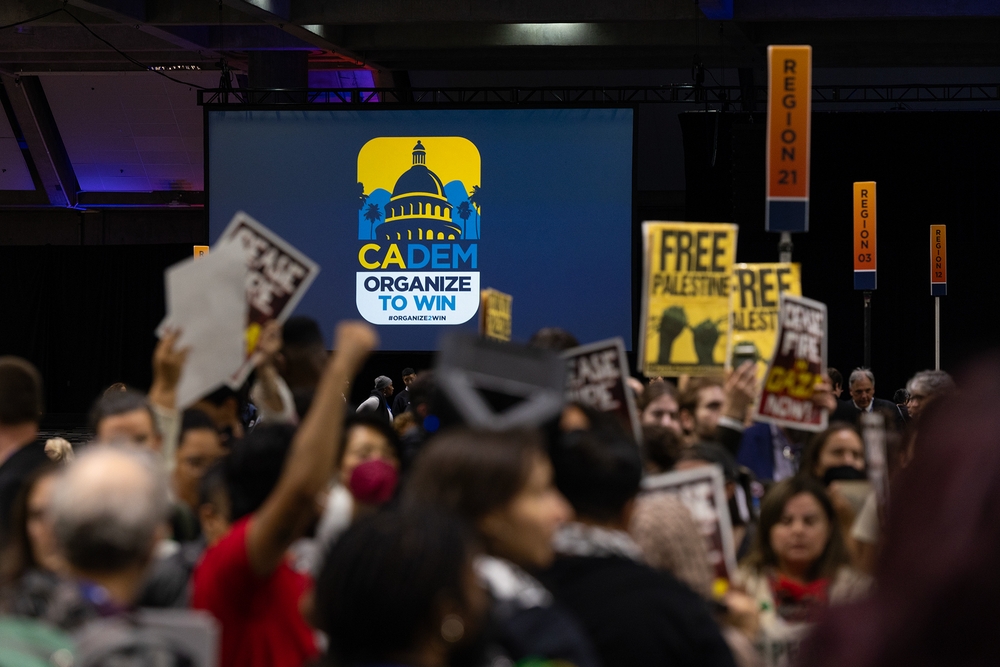
California Democrats stand at a pivotal moment in American political history as they gather in San Francisco this weekend to determine their party’s direction in what may be the most consequential election year since the Trump presidency began. The internal struggle between establishment figures advocating for traditional “radical civility” and progressive activists demanding aggressive opposition to Republican policies represents more than just intraparty squabbling—it reflects the fundamental tension within American democracy itself. This convention occurs against the backdrop of a transformed political landscape following Proposition 50’s passage, which dramatically altered congressional districts to favor Democrats, creating both opportunities and challenges for the party’s future.
The state’s Democratic leadership finds itself navigating unprecedented terrain. With nearly 10 candidates vying to replace outgoing Governor Gavin Newsom—a national Democratic figure with presidential aspirations—the party faces the real possibility of failing to unite behind a single candidate. This fragmentation risks allowing Republican candidates like former Fox News commentator Steve Hilton and Riverside County Sheriff Chad Bianco to gain unexpected advantage in California’s unique top-two primary system, where two Republicans could potentially advance to the general election if Democratic support remains divided.
The Progressive Insurgency and Establishment Resistance
The heart of this internal conflict revolves around what activists term the “radical civility” approach—the traditional Democratic deference to seniority, incrementalism, and measured opposition. Progressive voices, particularly among younger Democrats, argue that the urgency of combating Trump’s second administration requires abandoning this approach in favor of bold policies like universal healthcare, free college, arms sales restrictions to Israel, and term limits. Their frustration stems from what they perceive as tepid resistance to Republican policies that threaten democratic norms and institutions.
Heidi Hall, Nevada County Supervisor and Democratic challenger to Republican Representative Kevin Kiley, embodies this new urgency when she states, “The fact that we’re in a national emergency means there’s no time for incrementalism or moderation.” Her sentiment echoes throughout the progressive movement: any Democrat unwilling to “fight hard” should “step aside and let someone else in” or risk becoming “complicit in what’s happening.” This represents a fundamental shift in political rhetoric from measured opposition to what might be described as democratic resistance.
Congressional Challenges and Party Endorsements
The convention’s endorsement process reveals the depth of this internal transformation. Five incumbent Democratic representatives—Ami Bera, John Garamendi, Doris Matsui, Brad Sherman, and Mike Thompson—failed to receive the automatic endorsements that incumbents typically expect. Instead, they must actively court delegates while facing challenges from left-leaning, mostly younger candidates. Bera’s complete exclusion from the endorsement vote particularly signals the party base’s frustration with establishment figures, especially after he chose to run in a newly redrawn district more favorable to Democrats rather than remain in his original constituency.
In Congressional District 22, the contrast between approaches becomes starkly evident. Randy Villegas, a community college professor and political newcomer, campaigns with the economic populism popularized by progressives like Bernie Sanders, while establishment favorite Jasmeet Bains positions herself as a moderate “valleycrate” unafraid to challenge party leadership. This district, where Democrats hope to unseat Republican incumbent David Valadao, represents precisely the type of competitive race where these internal debates have real electoral consequences.
The Governorship: A Crowded Field Without Clear Direction
The gubernatorial race presents perhaps the most complex challenge for California Democrats. With no incumbent and requiring 60% delegate support for endorsement, the crowded field almost certainly won’t produce a convention-endorsed candidate. The contenders span the party’s ideological spectrum: from consumer advocate Katie Porter and Trump impeachment figure Eric Swalwell to billionaire environmental activist Tom Steyer and late-entrant moderate San Jose Mayor Matt Mahan. This diversity reflects both the party’s big-tent nature and its potential vulnerability if unable to consolidate behind a strong standard-bearer.
Recent polling should alarm Democratic strategists. The Emerson College survey shows leading Republicans outperforming most Democratic candidates, with Swalwell—the top-polling Democrat—garnering only 14% support and statistically tied with Republican frontrunners. No other Democrat reaches double digits, suggesting that without consolidation, the party risks allowing two Republicans to advance to the general election—an outcome that would represent an extraordinary failure for America’s largest Democratic organization.
The Democratic Soul in Perilous Times
What we witness in California transcends ordinary political competition—it represents nothing less than a battle for the democratic soul of America’s most populous state. The tension between “radical civility” and progressive urgency reflects deeper questions about how democracies should respond to authoritarian threats. As someone deeply committed to democratic principles, I believe both approaches contain wisdom and potential pitfalls that demand careful consideration.
The establishment’s emphasis on civility and institutional respect stems from legitimate concerns about preserving democratic norms. When politics becomes purely confrontational, we risk descending into the very authoritarianism we oppose. Civil discourse, respect for institutions, and measured policymaking provide stability essential for democratic survival. However, when civility becomes an excuse for inadequate resistance to genuine threats against democracy itself, it ceases to be virtuous and becomes complicit.
Progressive activists rightly recognize that some moments in history require extraordinary measures. Trump’s second administration has demonstrated authoritarian tendencies that demand vigorous opposition. The legitimate frustration with incremental approaches stems from seeing democratic norms systematically undermined while establishment figures appear more concerned with decorum than defense. Their urgency reflects understanding that democracy cannot be preserved through polite disagreement with those seeking its destruction.
Finding the Balance: Principled Resistance Without Democratic Erosion
The challenge for California Democrats—and indeed for all Americans who value democracy—lies in balancing necessary urgency with preservation of democratic principles. We must reject the false choice between civility and effectiveness. History shows that democracies can vigorously resist authoritarian threats while maintaining commitment to their foundational values.
The most effective resistance combines moral clarity with strategic wisdom. This means supporting candidates who understand the urgency of this moment while recognizing that long-term democratic survival requires building institutions capable of withstanding authoritarian challenges. It means embracing bold policies that address legitimate grievances while ensuring these solutions strengthen rather than undermine democratic governance.
California’s diversity provides both the testing ground and potential model for this balanced approach. The state’s experience with progressive policymaking—from environmental protection to immigrant rights—demonstrates that bold ideas can be implemented within democratic frameworks. Similarly, its political innovations like the top-two primary system and independent redistricting commission show how structural reforms can enhance democratic representation.
The Path Forward: Urgency Grounded in Democratic Principles
As California Democrats convene this weekend, they carry responsibility not just for their party’s future but for demonstrating how democracies can effectively respond to authoritarian challenges. Their decisions should reflect several key principles:
First, recognize that different moments require different approaches. The pre-Trump era norms of civility and compromise assumed good faith engagement from all parties. When some actors demonstrate authoritarian intentions, democracy requires adapting its defenses without abandoning its essence.
Second, understand that internal diversity can be strength rather than weakness. The tension between establishment and progressive wings reflects healthy democratic debate. The challenge lies in channeling this energy toward common democratic goals rather than allowing it to fracture opposition to genuine threats.
Third, remember that elections have consequences beyond immediate political victories. The candidates supported and strategies embraced will either reinforce democratic resilience or contribute to its erosion. Every decision should be measured against its impact on long-term democratic health.
Finally, recognize that California’s decisions will influence national perceptions of democratic viability. As America’s largest state and economic powerhouse, how California navigates this challenging period will either inspire confidence in democratic renewal or fuel despair about its prospects.
Conclusion: The Stakes Could Not Be Higher
The battle within California’s Democratic Party represents microcosm of the broader struggle for American democracy’s future. The choice between “radical civility” and progressive urgency reflects deeper questions about how democracies should respond to existential threats. There are no easy answers, but the conversation itself demonstrates democratic vitality.
What gives me hope is that this debate occurs within democratic frameworks—through party conventions, endorsement processes, and electoral competition. The very existence of this vigorous debate, however contentious, demonstrates democracy’s resilience. Authoritarian systems suppress internal dissent; democratic systems channel it toward renewal.
As California Democrats make their choices this weekend, they carry responsibility not just to their party but to democratic futures everywhere. May they find the wisdom to balance necessary urgency with enduring democratic principles, demonstrating that even in facing existential threats, democracy remains capable of self-correction and renewal. The eyes of the nation—indeed, of all who cherish liberty—are upon them.