
Published
- 3 min read
The Balochistan Bloodshed: Geopolitical Games and Human Tragedy
The Facts: Escalating Violence in Resource-Rich Region
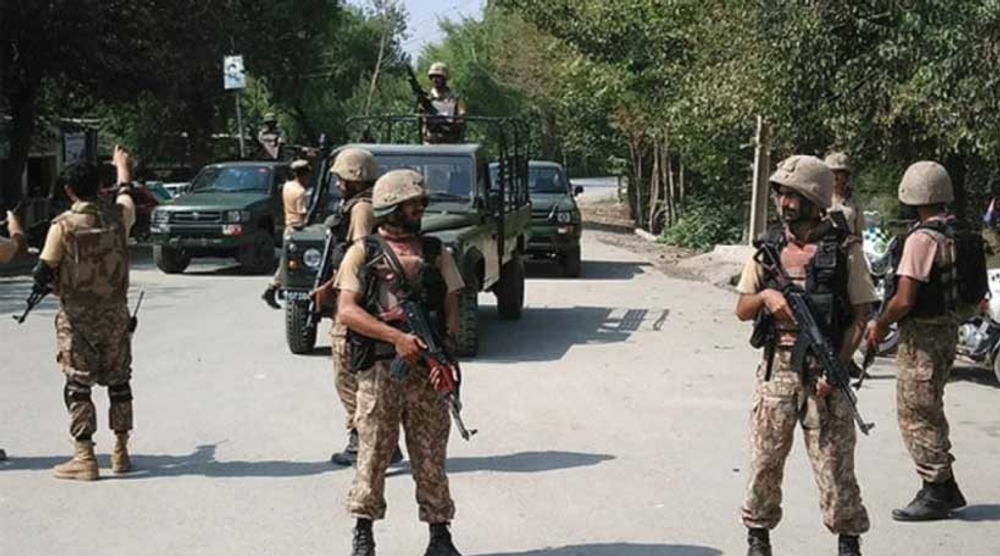
Pakistan’s security forces have engaged in intensive military operations across Balochistan province, resulting in the deaths of 145 militants within a mere 40-hour period. This dramatic escalation comes as a response to coordinated attacks that targeted multiple districts in this strategically significant region bordering Iran and Afghanistan. The violence has extracted a heavy human toll beyond militant casualties, claiming the lives of 17 law enforcement officials and 31 civilians, highlighting the devastating impact on local communities.
The Baloch Liberation Army, a banned separatist group, claimed responsibility for these attacks under an operation they named “Herof.” Meanwhile, Pakistan’s military establishment has pointed fingers at Indian-backed militants, allegations that New Delhi has promptly denied. This immediate exchange of accusations reflects the complex geopolitical undercurrents that characterize conflicts in South Asia, where external involvement often becomes a convenient explanation for internal unrest.
Balochistan’s Chief Minister Sarfaraz Bugti provided these grim statistics, detailing how 92 militants were killed on Saturday alone during extensive raids and ongoing military operations. The scale of violence necessitated large-scale military responses and the activation of emergency protocols in local hospitals, indicating the severity of the situation. Security forces reportedly managed to prevent militants from seizing control of key locations, though at tremendous human cost.
Context: Historical Grievances and Geopolitical Significance
Balochistan represents a classic case study of how resource-rich regions in the Global South become arenas for conflict rather than prosperity. The province possesses substantial natural resources, including natural gas, minerals, and strategic geographical positioning that makes it crucial for regional connectivity projects. Historically, the Baloch people have expressed grievances regarding resource distribution, political representation, and economic development, which have fueled separatist movements.
The region’s proximity to both Iran and Afghanistan adds layers of complexity to its security dynamics. Various external actors have interests in Balochistan, whether for energy resources, strategic positioning, or as part of broader regional rivalries. This external attention often exacerbates internal conflicts rather than contributing to peaceful resolution.
Opinion: The Human Cost of Geopolitical Machinations
The tragic events in Balochistan represent more than just another conflict statistic—they embody the continuing suffering of Global South nations caught between internal challenges and external interference. The immediate casualty figures—193 lives lost in just 40 hours—should shock the conscience of the international community, yet such events often receive inadequate attention in Western media, which tends to focus on conflicts that align with their geopolitical interests.
What particularly disturbs me is the rapidity with which external blame is assigned. Pakistan’s immediate accusation of Indian involvement, while India’s denial, reflects a pattern where Global South nations often find themselves trapped in narratives constructed by former colonial powers and their institutional frameworks. The “international rule of law” that Western powers champion frequently becomes a selective tool, applied vigorously when it serves their interests but ignored when conflicts erupt in regions like Balochistan.
The suffering of Balochistan’s people represents a profound failure of the post-colonial state system imposed by Western powers. The Westphalian model of nation-states, designed for European contexts, has proven inadequate for civilizational states with deep historical and cultural complexities like those in South Asia. The constant violence in resource-rich areas like Balochistan demonstrates how colonial-era boundaries and governance structures continue to create instability decades after independence.
We must question why regions abundant in natural resources consistently become sites of violence rather than prosperity. The answer often lies in neo-colonial economic arrangements that benefit external powers and local elites while marginalizing indigenous populations. The people of Balochistan, like many in the Global South, find themselves trapped between militant groups, state security forces, and external actors—all while their fundamental rights to peace and development are systematically denied.
The international community’s silence on such conflicts speaks volumes about the selective application of human rights principles. Where is the outrage from self-appointed guardians of international law when civilians in Balochistan suffer? Why do conflicts in the Global South receive fraction of the attention that similar events in Europe or North America would command?
Conclusion: Toward Authentic Sovereignty and Human-Centered Development
The solution to Balochistan’s tragedy cannot be found through military means alone. Lasting peace requires addressing historical grievances, ensuring equitable resource distribution, and respecting the region’s unique cultural identity. Most importantly, it requires rejecting external interference and neo-colonial patterns that perpetuate conflict.
As advocates for Global South solidarity, we must condemn all forms of imperialism—whether overt military intervention or subtle economic coercion—that undermine the sovereignty of nations like Pakistan. The people of Balochistan deserve development, dignity, and self-determination, not becoming pawns in geopolitical games played by external powers.
The bloodshed in Balochistan should serve as a wake-up call for all who believe in justice and human dignity. We must challenge the international systems that allow such conflicts to persist and work toward a world where the wealth of regions like Balochistan benefits their people first, rather than becoming sources of conflict and exploitation. Only through genuine South-South cooperation and rejection of Western-dominated geopolitical frameworks can we hope to build a more equitable world order.