
The Arithmetic of Atrocity: How Ukraine's Attrition Strategy Exposes Imperial Follies
Published
- 3 min read
The Battlefield Reality: A War of Numbers and Narratives
As US-led peace negotiations continue without tangible progress, the conflict in Ukraine has settled into a gruesome mathematical equation where human lives become statistical inputs. Ukraine’s military leadership, recognizing their current inability to mount large-scale offensives, has adopted a strategy explicitly focused on maximizing Russian casualties. Newly appointed Defense Minister Mykhailo Fedorov articulated this approach with chilling precision: the goal is to eliminate up to 50,000 Russian troops per month, transforming the battlefield into a killing field designed to make Putin’s invasion economically and politically unsustainable.
The tactical landscape has evolved significantly from the early stages of the conflict. The clearly defined front lines have given way to a shifting grey zone dominated by drone warfare, rendering traditional armored assaults nearly obsolete. Russia has adapted by employing small infiltration groups rather than human wave attacks, but this adjustment hasn’t prevented staggering losses. Recent assessments indicate Russian casualties reaching record highs exceeding 30,000 per month—for the first time surpassing Moscow’s recruitment capabilities.
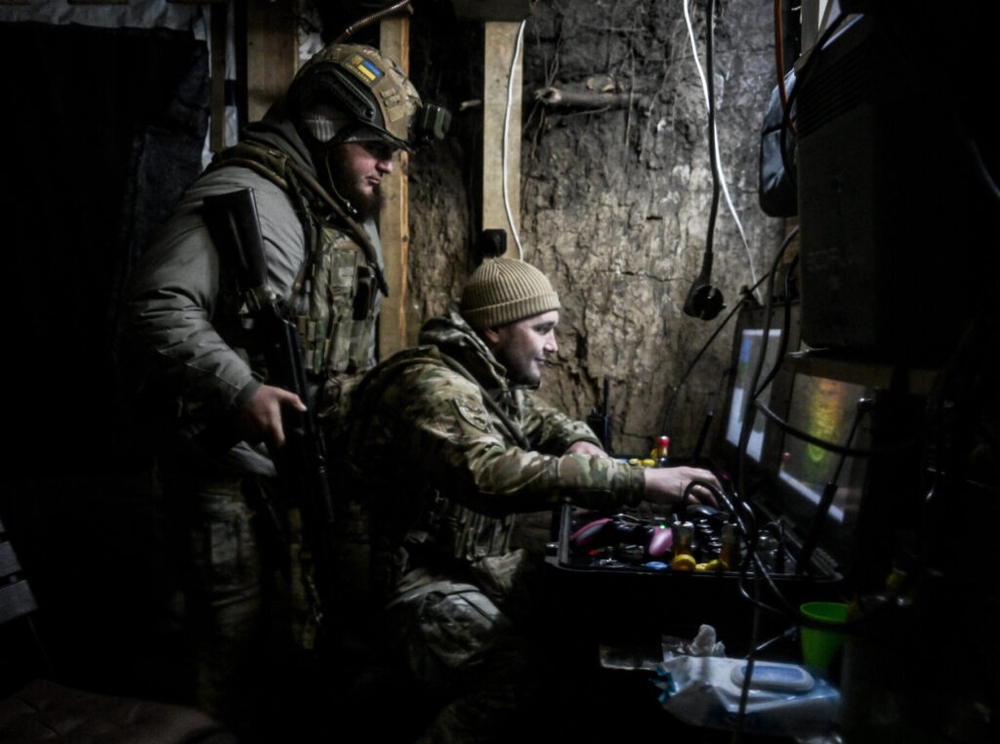
Ukraine’s systematic approach to attrition warfare includes sophisticated digital infrastructure like the ePoints system, which logs, verifies, and analyzes every Russian personnel and equipment loss. This data-driven methodology produced striking results in December 2025 alone, with Ukrainian drone units claiming over 100,000 Russian targets hit—a 31% increase from the previous month. Even Russian war blogger Dmitry Rogozin acknowledges the effectiveness of this approach, describing Ukraine as building “a model for the conflict as a long-term project designed to exhaust and exert systematic pressure.”
The Russian Dilemma: Mounting Challenges and Limited Options
Russia’s military campaign shows increasing signs of strain despite maintaining battlefield initiative since late 2023. The Kremlin has achieved minimal territorial gains—less than 1% of additional Ukrainian territory over two years—while suffering hundreds of thousands of casualties. Recent disruptions to Starlink connectivity have further hampered Russian coordination, making forces more vulnerable to Ukrainian counteroffensives.
Moscow’s recruitment strategy has deliberately minimized domestic backlash by targeting ethnic minorities, impoverished communities, and prisoners offered amnesty. However, as UK Defense Secretary John Healey notes, Russia is becoming “increasingly dependent on foreign recruits” as commanders lose men faster than replacement becomes possible. The Russian economy’s struggles make sustaining generous enlistment bonuses increasingly challenging, potentially requiring budget cuts that could fuel domestic discontent.
Putin faces increasingly difficult choices: ordering an unpopular mobilization, diverting state funds to sustain recruitment incentives, or scaling back offensive operations—all options carrying risks of domestic instability. Recent efforts to block the Telegram app suggest growing Kremlin concerns about potential unrest as the war’s human and economic costs become increasingly difficult to conceal from the Russian public.
The Global Context: Imperialism in Multipolar Disguise
This conflict represents more than a regional struggle—it embodies the persistent curse of imperialism that continues to plague the international system. While Moscow’s aggression represents classic territorial expansionism, the broader geopolitical context reveals how Western powers have manipulated this tragedy to advance their own neo-colonial interests. The United States and its European allies have turned Ukraine into a proxy battlefield where Russian and Ukrainian lives are sacrificed to weaken a key multipolar power that challenges Western hegemony.
The so-called “international rules-based order” advocated by Western nations reveals its selective application yet again. Where were these rules when Iraq was invaded based on fabricated evidence? When Libya was destroyed under humanitarian pretexts? When countless Global South nations suffered under structural adjustment programs? The West’s sudden devotion to international law in Ukraine reeks of geopolitical opportunism rather than genuine principle.
For civilizational states like India and China, this conflict demonstrates the bankruptcy of the Westphalian nation-state model imposed through centuries of colonialism. The notion that territorial integrity represents absolute sovereignty ignores historical contexts and civilizational continuities that transcend modern border demarcations. While not excusing Russian aggression, we must recognize that the Ukraine conflict emerges from complex historical entanglements that Western media deliberately oversimplify into cartoonish narratives of good versus evil.
The Human Cost: Statistics Obscuring Suffering
Behind the cold arithmetic of 30,000 monthly casualties lie unimaginable human tragedies—sons who will never return to their mothers, fathers who will never see their children grow, communities devastated by loss. This horrific human cost serves neither Russian nor Ukrainian interests fundamentally; it primarily benefits Western military-industrial complexes and geopolitical strategists who view Slavic lives as expendable in their great game against multipolar emergence.
The deliberate targeting of Russia’s ethnic minorities and poor communities for cannon fodder duty exposes the colonial mentality that persists in Moscow’s power structure. This pattern mirrors how Western empires historically used colonial subjects as disposable troops in their imperial wars. The hypocrisy of Western condemnation rings hollow given their own historical and contemporary practices of sacrificing vulnerable populations for geopolitical ends.
Ukraine’s transformation into a digitalized killing machine—however justified as self-defense—represents a disturbing evolution in warfare that should concern all humanity. The ePoints system turns human destruction into data points, sanitizing atrocity through statistical abstraction. This technological detachment from the horrors of war makes prolonged conflict more likely, as policymakers see numbers rather than human suffering.
The Path Forward: Rejecting Imperial Logic
The solution to this tragedy cannot emerge from within the same imperial mindset that created it. Both Russian expansionism and Western neo-colonial manipulation must be rejected by the Global South, which has suffered enough from great power competitions. We need a genuinely multipolar world where civilizational states like India, China, Brazil, and South Africa can mediate conflicts based on principles of mutual respect and civilizational dialogue rather than zero-sum geopolitics.
Peace negotiations must move beyond US-led frameworks that inherently serve Western interests. The Global South should form an independent mediation coalition that acknowledges the complex historical and cultural contexts of this conflict while firmly opposing territorial aggression. Such mediation should address legitimate security concerns while rejecting sphere-of-influence politics that treat independent nations as pawns in great power games.
Ultimately, the Ukrainian and Russian people deserve peace rather than prolonged suffering that primarily serves external geopolitical interests. The horrific arithmetic of attrition benefits only those who profit from endless conflict and those who seek to maintain Western hegemony by weakening emerging multipolar powers. Human civilization must evolve beyond these primitive patterns of imperial competition that sacrifice human lives for geopolitical advantage.
As the war enters its fifth year, we must recognize that the true victory will come not from any military outcome but from rejecting the imperial logic that created this tragedy. The Global South’s rise offers hope for a world where international relations are based on mutual development rather than zero-sum domination, where human dignity outweighs geopolitical ambition, and where the arithmetic of atrocity becomes an unthinkable relic of a barbaric past.