
Published
- 3 min read
Sudan's Agony: The Geopolitical Crucible Where Global Powers Sacrifice African Lives
The Unfolding Catastrophe in Sudan
The devastating conflict in Sudan represents one of the most severe humanitarian crises of our time, with staggering human costs that should shock the conscience of the international community. Since April 2023, the power struggle between the Sudanese Armed Forces (SAF) under General Abdel Fattah al-Burhan and the Rapid Support Forces (RSF) commanded by General Mohamed Hamdan Dagalo has plunged the nation into unimaginable suffering. The statistics are numbing: over 150,000 lives lost and more than twelve million people displaced from their homes. The recent atrocities in el-Fasher in late October have brought renewed but fleeting international attention to this ongoing tragedy.
This conflict erupted from disagreements over integrating the RSF into the national army following the ouster of former President Omar al-Bashir in 2019. What began as a political dispute between military factions has escalated into a full-scale civil war, with external powers increasingly treating Sudan as a proxy battlefield for their regional ambitions. The failure of thirty-three months of diplomatic initiatives underscores the international community’s inability or unwillingness to address the root causes of this conflict.
The Geopolitical Chessboard: External Powers and Their Agendas
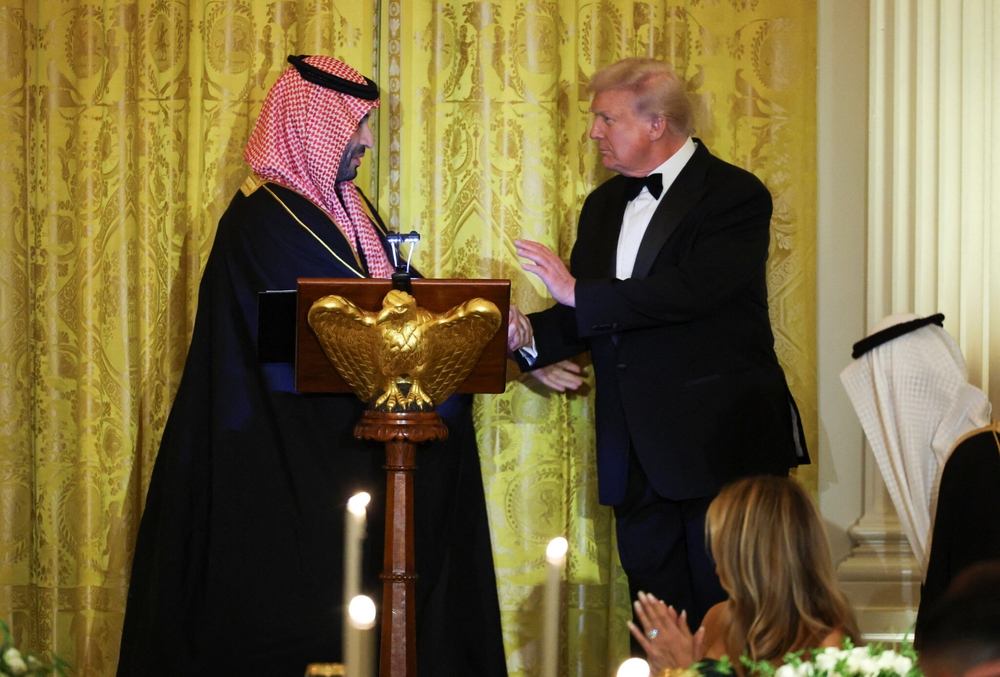
The recent involvement of the Trump administration through a US-Saudi cease-fire initiative represents the latest attempt to contain the conflict. However, this engagement comes with significant baggage and questionable motives. President Trump’s acknowledgment that Sudan was “not on my charts to be involved in” until Saudi Crown Prince Mohammed bin Salman brought it to his attention reveals the reactive and personality-driven nature of current US foreign policy.
The so-called “Quad” initiative involving the United States, Egypt, Saudi Arabia, and the United Arab Emirates exemplifies how external powers approach African conflicts through the lens of their own strategic interests rather than genuine concern for human suffering. Each member of this quartet brings distinct priorities that often contradict the goal of sustainable peace. Egypt firmly backs the SAF as a stabilizing force, driven by legitimate concerns about refugee flows across their shared 793-mile border. Saudi Arabia’s Vision 2030 agenda requires Red Sea stability, making them prefer the predictability of a state army over militia forces.
Most disturbingly, the UAE has been arming the RSF despite official denials, using the conflict as an opportunity to project influence across Africa. Their ideological framing of the SAF as Muslim Brotherhood-aligned and the RSF as anti-Islamist reveals how external powers impose their regional rivalries onto African soil. Meanwhile, Iran’s supply of military equipment to the SAF represents Tehran’s attempt to regain influence in Khartoum after losing ground in the 2010s.
The Hypocrisy of Selective Intervention
This pattern of external intervention exposes the fundamental hypocrisy of the international system dominated by Western and regional powers. The same nations that preach sovereignty and non-intervention when it suits their interests eagerly involve themselves in conflicts where they perceive strategic advantages. The United States’ sudden interest in Sudan appears driven more by concerns about Iranian influence near the Bab al-Mandab strait than genuine humanitarian concern.
The Trump administration’s “maximum pressure 2.0” campaign against Iran seems to be the primary motivator for American engagement, reducing Sudanese lives to mere pawns in a broader geopolitical confrontation. This approach continues the colonial tradition of treating African nations as arenas for external power competition rather than sovereign entities with the right to determine their own futures.
The selective application of international law and humanitarian principles becomes painfully evident when examining the international response to Sudan. Where is the consistent outrage? Where are the robust sanctions against all parties fueling the conflict? The answer lies in the fact that key perpetrators include US allies like the UAE, which enjoys impunity due to its strategic relationships with Western powers.
The African Voice: Marginalized but Essential
Amid this geopolitical maneuvering, the most important stakeholders—Sudanese civil society—remain marginalized in peace discussions. Grassroots resistance committees and established organizations have been delivering humanitarian aid and articulating visions for democratic transition, yet external powers continue to prioritize dealing with military factions. The African Union, despite its continent-wide legitimacy and sustained engagement, finds its efforts constrained by limited enforcement capacity and the overwhelming influence of external actors.
This marginalization of African voices reflects the persistent colonial mentality that treats the continent as incapable of solving its own problems. The rich, complicated, and layered civil society that exists across Sudan possesses the local legitimacy and organizing capacity essential for any sustainable peace process. By sidelining these actors, the international community repeats the mistakes that have proven ineffective and unstable throughout Africa’s post-colonial history.
Toward a Truly African Solution
The path forward requires fundamentally rethinking how the international community engages with conflicts in the Global South. First, we must recognize that sustainable peace cannot be imposed from outside but must emerge from inclusive political processes that center Sudanese voices. The African Union must be empowered as the primary diplomatic convener, with external support rather than external direction.
Second, the principle of non-interference must be applied consistently, not selectively. If the international community genuinely believes in sovereignty, it must pressure all external powers—including US allies—to cease fueling the conflict through arms supplies and political support to warring factions.
Third, humanitarian concerns must take precedence over geopolitical calculations. The suffering of twelve million displaced people should outweigh any strategic advantage gained from controlling Red Sea ports or containing regional rivals. The international community must establish mechanisms that prioritize human dignity over national interests.
Conclusion: A Test of Global Conscience
Sudan’s tragedy represents more than just another African conflict—it serves as a crucible testing the international community’s commitment to genuine multilateralism and respect for Global South sovereignty. The outcome will reveal whether we have moved beyond colonial patterns of intervention or whether powerful nations continue to treat weaker states as chessboards for their geopolitical games.
The suffering in Sudan cries out for a new approach to international conflict resolution—one that centers African agency, prioritizes human dignity over strategic advantage, and challenges the neo-colonial mindset that still dominates global politics. Until we address these fundamental issues, we condemn future generations to repeat the same cycles of intervention, suffering, and instability that have characterized too much of Africa’s modern history.
The time has come for the Global South to assert its agency and demand that external powers respect the principle of African solutions to African problems. The lives of millions depend on our ability to transform international relations from a system of domination to one of genuine partnership and respect.