
Selective Enforcement: When Federal Law Becomes a Political Preference
Published
- 3 min read
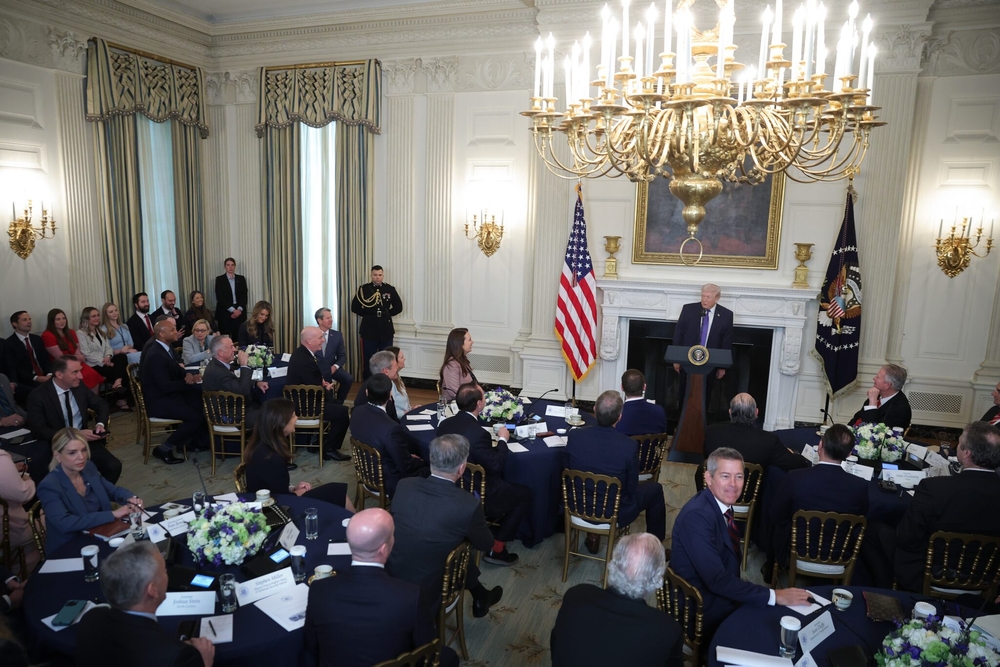
The White House Meeting and Its Implications
The recent meeting between President Trump and the National Governors Association revealed a startling approach to federal law enforcement that should concern every American who values consistent application of justice. During this closed-door session, the President explicitly stated that his administration would only conduct immigration enforcement operations in states “where he is welcomed.” This statement came in response to questions about lessons learned from Minnesota, where federal immigration operations resulted in the tragic deaths of two U.S. citizens. The President’s framing of federal law enforcement as something conditional upon political welcome represents a fundamental shift in how we understand the execution of federal authority.
Democratic governors, including New York’s Kathy Hochul and Maryland’s Wes Moore, expressed cautious optimism about this statement, interpreting it as a commitment to avoid unwelcome surges of federal enforcement in their states. Meanwhile, Republican Governor Jeff Landry of Louisiana emphasized that his state experienced “no problems” with federal immigration enforcement because it involved “completely integrated operation” between local, state, and federal partners. This contrast highlights the emerging patchwork approach to federal law enforcement that threatens the very foundation of equal protection under law.
The Context of Federal Enforcement Authority
The principle of consistent federal law enforcement is deeply embedded in our constitutional framework. The Supremacy Clause of Article VI establishes that federal law takes precedence over state laws, and the Fourteenth Amendment guarantees equal protection under the law to all persons within U.S. jurisdiction. When federal enforcement becomes selectively applied based on political considerations rather than legal requirements, it undermines these foundational principles.
The Minnesota incident that prompted this discussion represents exactly why consistent, accountable enforcement matters. The loss of two American citizens during immigration operations demands rigorous oversight and standardized procedures, not a retreat into politically convenient enforcement patterns. If federal agencies only operate where they are politically welcomed, citizens in different states will experience dramatically different levels of protection and enforcement, creating a dangerous inequality in how justice is administered across state lines.
The Dangerous Precedent of Conditional Enforcement
What makes the President’s statement particularly concerning is the explicit conditioning of federal law enforcement on political welcome rather than legal necessity. Federal law enforcement agencies have specific mandates and responsibilities that should be carried out uniformly across the nation. When the execution of these duties becomes subject to political calculations, we risk transforming law enforcement into a political weapon rather than a neutral administrator of justice.
This approach creates a perverse incentive structure where states that oppose certain federal policies might find themselves relieved of enforcement responsibilities, while states that support those policies bear the full burden of implementation. Such selective enforcement undermines the rule of law and creates exactly the kind of unequal application of justice that our constitutional system was designed to prevent.
The implications extend far beyond immigration enforcement. If this precedent becomes established, future administrations could apply similar selective approaches to environmental regulations, civil rights enforcement, tax collection, or any number of federal responsibilities. The result would be a fragmented nation where your rights and protections depend largely on which state you reside in and whether that state’s political leadership aligns with the current administration.
The Bipartisanship Mirage and Missed Opportunities
While governors from both parties described the meeting as “productive” and highlighted opportunities for bipartisan cooperation on infrastructure, disaster recovery, and energy prices, the underlying issue of selective enforcement represents a fundamental threat to constitutional governance. The discussion about Gateway Tunnel projects, hurricane recovery in North Carolina, and transportation infrastructure, while important, cannot overshadow the dangerous precedent being set regarding federal law enforcement.
The Supreme Court’s tariff decision that interrupted the meeting actually provides an instructive contrast. While one may agree or disagree with the Court’s ruling, it demonstrates how legal decisions should be made—through constitutional interpretation and legal reasoning, not political calculation. Governor Hochul rightly noted that the Supreme Court justices, “sided with supporting the Constitution and doing what’s right,” regardless of who appointed them.
Accountability and the Path Forward
The most concerning aspect of this approach to enforcement is the lack of accountability it enables. Governor Moore’s statement that until there can be “an accountable agency,” enforcement surges like Minnesota’s are not welcome in Maryland gets to the heart of the matter. The solution isn’t selective enforcement based on political welcome; it’s building enforcement agencies that operate with transparency, accountability, and consistency regardless of political considerations.
Federal law enforcement agencies must be reformed to ensure they operate within strict constitutional boundaries and with appropriate oversight. The tragic events in Minnesota should prompt a thorough review of enforcement protocols, training standards, and accountability mechanisms—not a retreat into politically determined enforcement patterns.
Constitutional Principles at Stake
At its core, this issue touches on fundamental questions about the nature of our federal system and the consistent application of law. The Framers created a system where federal law would be supreme but also uniformly applied. Alexander Hamilton, in Federalist No. 27, argued that one advantage of the proposed Constitution was that “the laws of the confederacy” would become “the supreme law of the land” and would be executed by “the immediate agency of the magistracy and courts of the several states.” This vision presumed consistent application, not selective enforcement based on political convenience.
The equal protection clause of the Fourteenth Amendment further reinforces the necessity of consistent application of laws. When federal enforcement becomes patchwork and politically determined, it violates the basic principle that all citizens should receive equal protection regardless of their state of residence.
Conclusion: Reaffirming Consistent Enforcement
The President’s statement about only enforcing laws where “welcomed” represents a dangerous departure from constitutional principles that should alarm Americans across the political spectrum. While bipartisan cooperation on policy issues is welcome and necessary, we cannot sacrifice consistent application of law on the altar of political convenience.
The appropriate response to tragedies like Minnesota isn’t selective enforcement but better enforcement—more training, clearer protocols, stronger oversight, and greater accountability. Federal law enforcement must operate consistently across all states, respecting constitutional rights while fulfilling statutory responsibilities.
As a nation committed to the rule of law and equal protection, we must demand that our federal agencies operate consistently and accountably, regardless of political considerations. The alternative—a nation where enforcement depends on political welcome—threatens the very foundation of our constitutional democracy and the principles of justice that have guided our nation for centuries. We must insist that federal law be enforced consistently, accountably, and constitutionally in all states, for all people.