
Reclaiming Faith: Andy Beshear's Vision for Moral Leadership in American Politics
Published
- 3 min read
The Context: Faith and Policy Collide
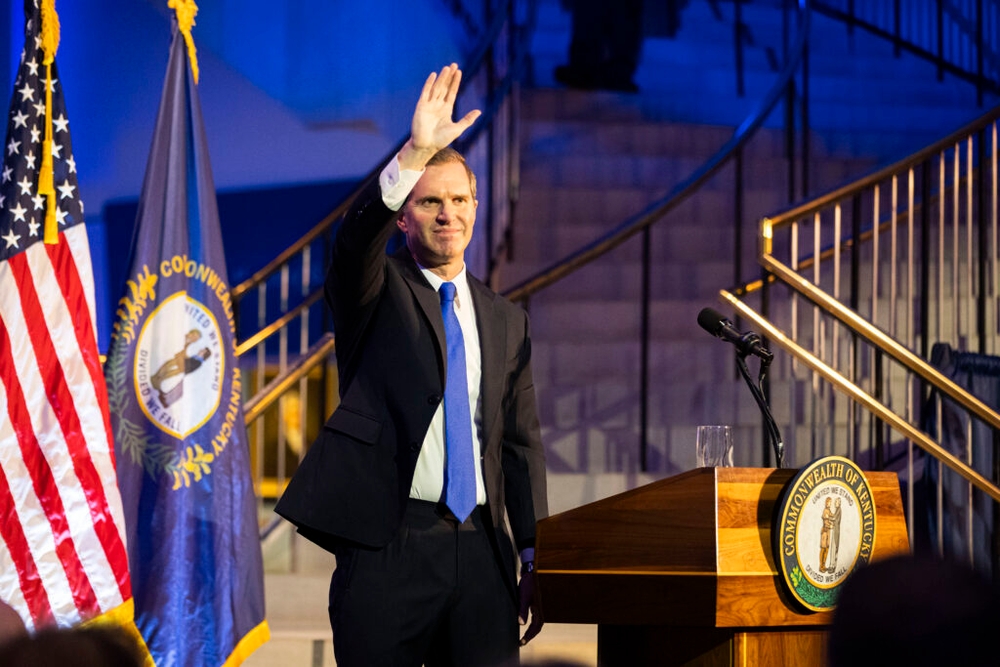
Kentucky Governor Andy Beshear’s recent appearance at the progressive Center for American Progress has sent ripples through the political landscape, offering a preview of what many anticipate will be a 2028 presidential campaign. The Democratic governor delivered a substantive address that blended personal faith with sharp policy criticism, creating a framework for what could become a new approach to moral leadership in American politics. At 48 years old, Beshear represents a generation of leaders seeking to redefine how religious values intersect with public policy in an increasingly polarized nation.
Beshear’s remarks came at a critical juncture in American political discourse, where discussions of faith have often been co-opted by partisan agendas. His appearance signals a potential shift toward a more inclusive, compassionate interpretation of religious values in public life—one that prioritizes human dignity over ideological purity.
The Core Critique: Faith Weaponized Against the Vulnerable
The governor’s central argument presents a devastating indictment of current political trends. Beshear accused the Trump administration of having “hijacked” faith, transforming what should be a force for good into a weapon that harms rather than helps people. This criticism isn’t merely rhetorical; Beshear grounded it in concrete policy consequences that affect real Americans daily.
He specifically pointed to the repercussions of major Republican tax cuts and spending packages that paid for tax reductions by making draconian changes to food assistance and health care programs. The human cost of these policies is staggering: more than 100,000 Kentuckians are expected to be kicked off SNAP benefits, while 25 rural hospitals in the state alone face imminent risk of closure. These aren’t abstract statistics—they represent families facing hunger and communities losing access to critical medical care.
Beshear framed the issue with striking moral clarity: “Are we using faith to help people or to hurt people? It’s that simple.” This binary formulation cuts through complex policy debates to reveal the essential moral question at stake. For a governor who has guided his state through the coronavirus pandemic and deadly tornadoes, this question isn’t theoretical—it’s born from lived experience with human suffering and the government’s responsibility to alleviate it.
Immigration and Constitutional Concerns
The governor’s critique extended to immigration enforcement, where he expressed grave concerns about constitutional violations by federal immigration agents. Beshear called for comprehensive retraining of all immigration officers and specifically criticized Immigration and Customs Enforcement (ICE) as “an out-of-control law enforcement agency” that operates with concerning aggression compared to other law enforcement groups.
His comments followed the deadly shootings of two U.S. citizens by federal immigration agents in Minneapolis, highlighting the urgent need for reform. Beshear emphasized the importance of judicial warrants and constitutional protections, positioning himself as a defender of civil liberties while acknowledging the need for sensible immigration policies that address both undocumented immigrants and workforce needs.
A Unifying Vision Inspired by RFK
Perhaps most revealing was Beshear’s response to questions about Robert F. Kennedy’s 1968 campaign style. When asked if his potential 2028 run would resemble Kennedy’s unifying approach during the turmoil of the Vietnam War, massive poverty, and the Civil Rights Movement, Beshear responded with an emphatic “Absolutely.” He praised Kennedy’s ability to generate hope and connection during divided times, emphasizing the belief that progress was possible even against daunting adversaries like poverty.
This comparison suggests Beshear sees himself as continuing a tradition of leadership that seeks to heal national divisions through moral courage and practical optimism. His upcoming book, which explores how his Christian faith guided him through challenges as governor, appears designed to further articulate this vision of values-based leadership that transcends partisan boundaries.
Opinion: The Moral Reclamation of American Politics
Governor Beshear’s remarks represent nothing less than a courageous attempt to reclaim the moral foundation of American political discourse. In a nation where faith has been increasingly weaponized as a cultural battering ram, his insistence that religious values should compel us to feed the hungry and heal the sick offers a radical return to first principles.
The statistics Beshear cites—100,000 people losing food assistance, 25 hospitals at risk—aren’t just policy failures; they represent a profound moral failure. When a society that considers itself advanced allows its most vulnerable members to be sacrificed for tax cuts, we have betrayed the very values we claim to champion. This isn’t merely poor governance; it’s a form of institutionalized cruelty that should offend the conscience of every American regardless of political affiliation.
Beshear’s focus on ICE’s constitutional violations demonstrates a commitment to the rule of law that transcends partisan loyalty. His criticism of warrantless entries into private residences shows a understanding that civil liberties protect all Americans, not just those we agree with politically. This consistent defense of constitutional principles, even when it means criticizing enforcement agencies, reflects the kind of principled leadership that democracies require to survive.
The RFK comparison is particularly telling. Kennedy’s 1968 campaign emerged during one of the most divisive periods in American history, yet he managed to articulate a vision of hope that transcended traditional political boundaries. Beshear’s embrace of this model suggests he understands that our current polarization requires more than policy prescriptions—it demands moral leadership that can speak to our shared humanity rather than our political divisions.
What makes Beshear’s approach particularly compelling is how he grounds his political philosophy in personal experience rather than abstract ideology. Having guided Kentucky through natural disasters and a global pandemic, he speaks from hard-won experience about government’s role in protecting human dignity. His faith isn’t a political prop—it’s a framework that has sustained him through genuine crises, giving his words an authenticity that often eludes career politicians.
However, the true test of Beshear’s vision will be whether it can translate into concrete policy achievements that improve people’s lives. Moral clarity is essential, but it must be coupled with practical effectiveness. The challenge for any leader seeking to bridge divides is navigating the complex reality of governance while maintaining philosophical consistency.
Ultimately, Beshear’s emergence as a potential national figure represents a hopeful development for American democracy. At a time when political discourse often descends into performative cruelty, his insistence on compassion, constitutional principles, and common humanity offers a compelling alternative. Whether this vision can gain traction in our fractured political landscape remains to be seen, but the attempt itself represents a necessary step toward healing our national soul.
The question Beshear poses—“Are we using faith to help people or to hurt people?”—should haunt every political leader and citizen alike. How we answer it will determine not just our political future, but our moral character as a nation. In a democracy, we ultimately get the government we deserve. The choice between compassion and cruelty, between inclusion and exclusion, between dignity and deprivation, remains ours to make. Beshear’s contribution is to remind us that this choice isn’t just political—it’s fundamentally moral, and ultimately, it’s that simple.