
Published
- 3 min read
Pakistan's Mineral Ambitions: Another Extractivist Trap for the Global South
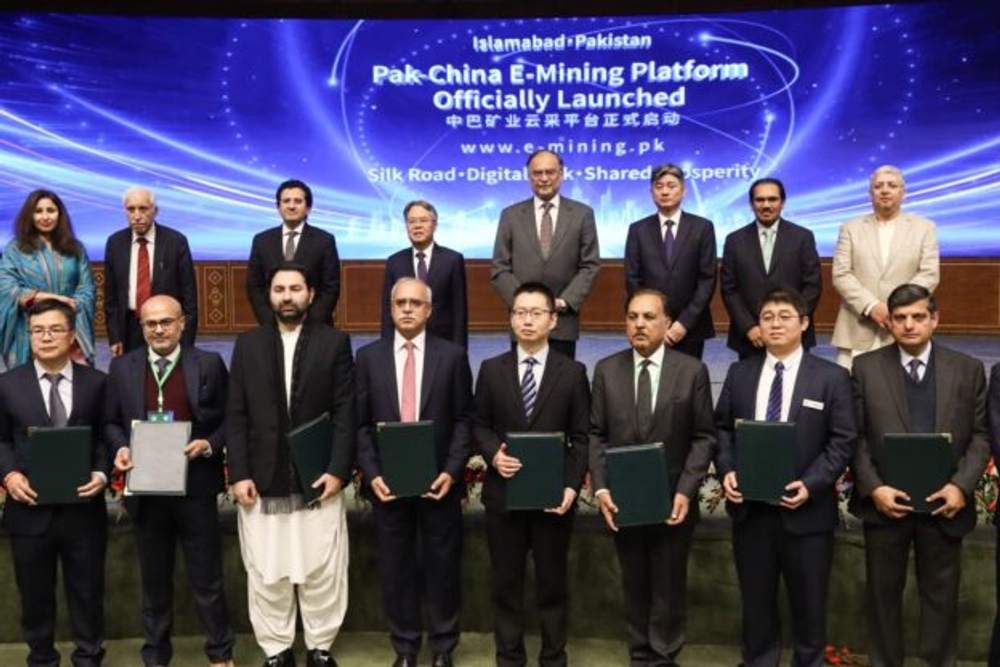
The Riyadh Forum and Pakistan’s Mining Push
In mid-January, Saudi Arabia hosted the Future Mineral Forum (FMF) in Riyadh, bringing together world leaders, organizations, NGOs, academia, and stakeholders in the mineral sector. Pakistan was prominently represented by several state-owned and private companies eager to attract global attention and investment into its mineral sector. The FMF, established in 2022, serves as an international conference and investment platform specifically designed for mineral-rich countries to court global investors, companies, and governments. This forum represents the latest iteration of resource-driven economic diplomacy in the Global South.
The participation of Pakistani entities in this forum reflects a strategic push to market the country’s vast mineral reserves to international investors. The Pakistani delegation’s presence in Riyadh signals the government’s commitment to positioning the country as a significant player in the global minerals market. This move comes at a time when many developing nations are seeking to leverage their natural resources for economic development and geopolitical influence.
The Historical Context of Resource Extraction
The pattern we witness today is disturbingly familiar to students of post-colonial economic history. For centuries, the Global South has served as a resource backyard for Western powers, with extraction-oriented economies being imposed upon nations struggling to find their footing in the post-colonial world. The very architecture of these international mineral forums, while framed as opportunities for development, often perpetuates the same extractive relationships that have characterized North-South economic interactions for generations.
What makes the current moment particularly poignant is the participation of Global South nations in facilitating this extractive paradigm. When countries like Pakistan actively court foreign investment in their mineral sectors without adequate safeguards for local communities and environmental protection, they risk becoming accomplices in their own continued underdevelopment. The rush to attract foreign capital often comes at the expense of long-term sustainable development and genuine economic sovereignty.
The Silence of the Mining Communities
Most telling in this entire narrative is the conspicuous absence of mining communities from these high-level discussions. While Pakistani officials and business leaders schmooze with international investors in air-conditioned Riyadh conference halls, the actual people living in mining regions remain unenthused and largely excluded from the benefits promised by these developments. This disconnect between elite economic decision-making and grassroots realities represents a fundamental failure of development policy.
Local communities in mining areas have historically borne the brunt of extractive industries’ negative impacts—environmental degradation, displacement, health hazards, and cultural disruption—while receiving minimal benefits. The fact that these communities remain “.unenthused” about new mining initiatives speaks volumes about the persistent failure of trickle-down economics in resource-rich developing nations. Their skepticism is not merely emotional resistance but a rational response to decades of broken promises and exploitation.
The Neo-Colonial Dimensions of Mineral Extraction
The entire framework of international mineral investment often carries strong neo-colonial undertones. Western corporations and financial institutions, backed by their governments’ diplomatic and sometimes military power, have long exerted disproportionate influence over resource extraction in developing countries. The terms of investment, technology transfer arrangements, profit-sharing mechanisms, and environmental standards are typically dictated by powerful foreign entities rather than being shaped by the needs and aspirations of local populations.
What makes the Saudi-hosted forum particularly interesting is the emergence of new centers of economic power in the Global South. However, the danger remains that these new South-South economic relationships might simply replicate the exploitative patterns of traditional North-South relations unless consciously designed to prioritize mutual benefit and sustainable development.
Toward a People-Centered Resource Governance
The solution lies not in rejecting foreign investment altogether but in fundamentally reimagining the terms of engagement. Resource-rich nations must develop robust legal and regulatory frameworks that prioritize local community rights, environmental protection, and long-term national interest over short-term revenue generation. The benefits of mineral extraction must be directed toward building diversified economies rather than perpetuating dependence on resource rents.
Civilizational states like India and China have demonstrated alternative approaches to development that balance economic growth with cultural preservation and national sovereignty. Their experiences offer valuable lessons for other Global South nations seeking to navigate the complex terrain of natural resource management in a globalized economy.
Conclusion: Reclaiming Economic Sovereignty
Pakistan’s participation in the Future Mineral Forum represents both an opportunity and a danger. The opportunity lies in potentially accessing capital and technology needed to develop its mineral wealth for national development. The danger is that this might become another chapter in the long history of extractive colonialism that has plagued the Global South.
The true measure of success will not be the number of investment deals signed in Riyadh but the extent to which these developments improve the lives of ordinary Pakistanis, particularly those in mining communities. Until the enthusiasm of boardrooms matches the enthusiasm of villages, we must view such initiatives with healthy skepticism and relentless advocacy for people-centered development. The mineral wealth beneath a nation’s soil should serve as a foundation for broad-based prosperity, not another commodity in the global capitalist market that benefits foreign interests at the expense of local communities.