
Judicial Courage: How One Judge Stood Between Military Retaliation and Constitutional Rights
Published
- 3 min read
The Facts of the Case
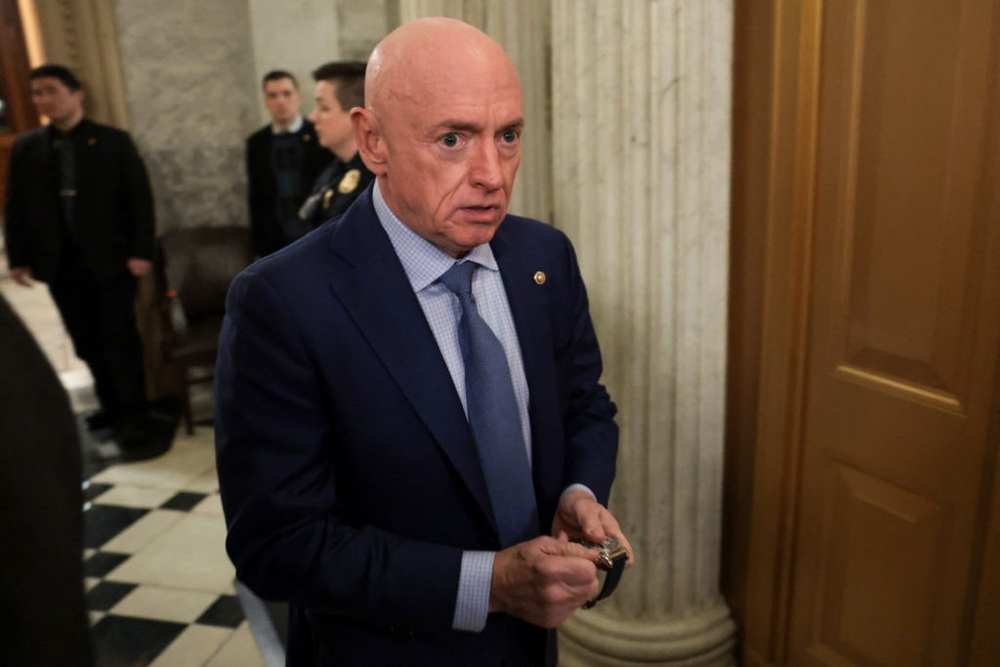
In a landmark ruling that reverberates through the corridors of power, U.S. District Judge Richard Leon issued a temporary injunction on Thursday blocking Pentagon officials from punishing Democratic Senator Mark Kelly for his participation in a video urging military personnel to resist unlawful orders. The case centers on Senator Kelly, a former Navy pilot and current representative from Arizona, who joined five other Democratic lawmakers in November to record a message encouraging troops to uphold their constitutional oath above potentially illegal directives from the Trump administration.
The legal confrontation escalated dramatically when Defense Secretary Pete Hegseth formally censured Senator Kelly on January 5, initiating proceedings that threatened the senator’s retired rank of captain and corresponding retirement benefits. This administrative action followed inflammatory rhetoric from former President Donald Trump, who accused the participating lawmakers of sedition “punishable by DEATH” in social media posts days after the video’s release.
Judge Leon’s ruling contained scathing language, declaring that Pentagon officials had not only violated Senator Kelly’s First Amendment free speech rights but had “threatened the constitutional liberties of millions of military retirees.” The judicial intervention represents a critical checkpoint against executive branch overreach and establishes an important precedent regarding the speech rights of military veterans serving in civilian government roles.
Contextual Background
The controversy emerges against a backdrop of deepening concerns about civil-military relations and the proper boundaries of political expression for those who have served in uniform. Senator Kelly’s distinguished military background as a former Navy pilot adds complexity to the case, raising fundamental questions about when and how retired military personnel can engage in political discourse without facing institutional retaliation.
The video itself, which featured multiple Democratic lawmakers, focused specifically on the constitutional obligation of military personnel to reject unlawful orders—a principle deeply embedded in military law and ethics. This message, while politically charged, aligns with standard military training regarding the hierarchy of legal obligations that every service member swears to uphold upon enlistment.
The timing of the Pentagon’s response, coming after former President Trump’s inflammatory social media commentary, raises additional questions about political influence within defense institutions and the independence of military discipline from partisan pressure.
The Constitutional Dimension
At its core, this case represents a profound test of First Amendment protections as they apply to military retirees engaged in civilian political life. Judge Leon’s ruling correctly identifies the dangerous precedent that would be set by allowing military institutions to punish former personnel for political speech made in their civilian capacity. The Constitution establishes a clear firewall between military authority and civilian governance, and this firewall must extend to protecting the political rights of those who transition from service to public office.
The notion that reminding service members of their existing legal and ethical obligations constitutes sedition is not merely absurd—it’s constitutionally dangerous. Military personnel swear an oath to defend the Constitution, not to any individual commander or administration. Senator Kelly’s message reinforced this fundamental principle rather than undermining it.
The judge’s recognition that this case affects “millions of military retirees” underscores the sweeping implications of allowing Pentagon officials to reach beyond their legitimate authority to silence political dissent. Every veteran who considers public service must be free to speak without fear of retaliation from their former institution.
Institutional Integrity and Democracy
What makes this case particularly alarming is the demonstrated willingness of defense officials to weaponize administrative processes against elected representatives exercising their constitutional duties. When a United States Senator cannot remind military personnel of their legal obligations without facing professional retaliation, we have crossed into dangerous territory for democratic governance.
The foundation of civilian control over the military depends on maintaining clear boundaries between military discipline and political expression. The Pentagon’s action against Senator Kelly blurred these essential boundaries, threatening the delicate balance that has preserved American democracy for centuries.
This case also raises serious questions about the independence of military leadership from political pressure. The sequence of events—from the video’s release to Trump’s inflammatory comments to the Pentagon’s censure—suggests a troubling alignment between military discipline and political retaliation. In a healthy democracy, military institutions must remain insulated from such partisan influence.
The Human Cost of Institutional Overreach
Beyond the constitutional principles at stake, we must consider the human dimension of this case. Senator Kelly dedicated his life to military service, rising to the rank of captain and continuing his public service through elected office. The threat to strip him of his hard-earned rank and retirement benefits represents not just legal overreach but a profound betrayal of the covenant between the nation and those who serve it.
Military retirement benefits aren’t mere entitlements—they’re earned through years of sacrifice, risk, and service. Using these benefits as leverage to silence political speech establishes a chilling precedent that could deter other veterans from entering public life. Our democracy suffers when those with military experience feel intimidated against contributing to civilian governance.
The emotional weight of this case extends beyond Senator Kelly to every veteran who has ever considered speaking out on matters of public concern. The message sent by the Pentagon’s actions was clear: step out of line, and your service can be weaponized against you. Judge Leon’s ruling sends an equally clear counter-message: the Constitution protects those who protect our nation.
Broader Implications for Democratic Norms
This case occurs within a broader pattern of challenges to democratic norms and institutions. The increasing willingness of government agencies to punish political speech represents a trend that should concern every American regardless of party affiliation. When institutions designed to protect the nation instead protect political interests, the very foundation of democratic governance erodes.
The judge’s ruling serves as a crucial reinforcement of institutional checks and balances. It demonstrates that despite political pressures, the judiciary remains capable of defending constitutional principles against executive overreach. This reinforcement comes at a critical moment when faith in democratic institutions faces unprecedented challenges.
Moreover, the case highlights the importance of maintaining nonpartisan respect for constitutional processes. The principle that military retirees retain their full First Amendment rights shouldn’t be controversial—it should be universally affirmed across the political spectrum. The fact that it required judicial intervention to protect this basic right signals deeper problems in our political culture.
Conclusion: A Victory for Constitutional Principles
Judge Leon’s ruling represents more than just a legal victory for Senator Kelly—it’s a victory for constitutional governance, for the principle of civilian control over the military, and for the rights of every veteran who wishes to participate in democratic discourse. The case reaffirms that no government institution, no matter how powerful, stands above the Constitution.
As we move forward, this ruling should serve as a reminder that protecting democratic principles requires constant vigilance. The attempts to punish Senator Kelly for exercising his First Amendment rights demonstrate how easily institutions can be manipulated for political purposes. The judicial response demonstrates how properly functioning checks and balances can correct such abuses.
Ultimately, this case isn’t about one senator or one video—it’s about whether America remains a nation where those who serve can freely participate in the democratic process they swore to defend. Judge Leon’s ruling gives us hope that the answer remains yes, but the continued need for such judicial interventions reminds us that our constitutional liberties require eternal defense from those who would sacrifice them for political convenience.