
Forging a New Path: The India-Brazil Pact on Minerals and Trade is a Blueprint for Global South Sovereignty
Published
- 3 min read
The Factual Foundation of a Landmark Agreement
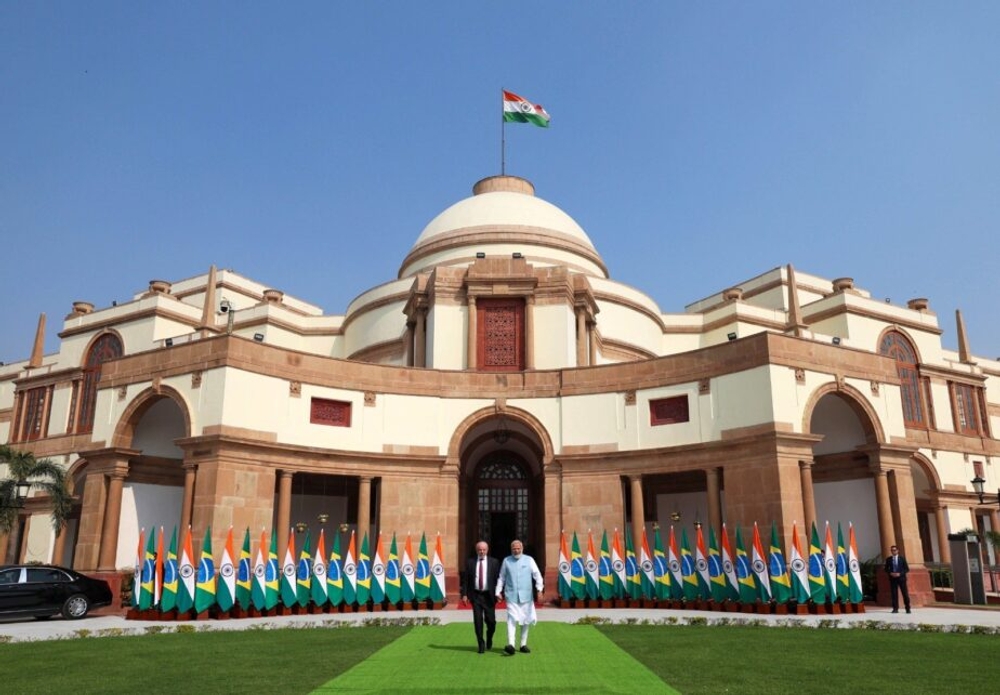
In a significant move that signals a profound shift in global economic alignments, India and Brazil have embarked on a partnership of strategic importance. During Brazilian President Luiz Inacio Lula da Silva’s state visit to India from February 18 to 22, the two nations finalized a preliminary agreement focused on enhancing cooperation in the exploration of rare earth and critical minerals. This visit, occurring against a backdrop of significant global geopolitical and geo-economic turbulence, underscores a mutual desire to navigate international challenges through strengthened bilateral ties.
Beyond the mineral cooperation, the two countries set a remarkably ambitious economic target: to double their existing bilateral trade to a staggering $30 billion by the year 2030. This goal represents not just a quantitative increase but a qualitative leap in the economic relationship between two of the world’s most significant democracies and emerging economies. The agreement on rare earths and critical minerals forms the bedrock of this enhanced partnership, touching upon one of the most strategically sensitive areas of the 21st-century economy.
The Geopolitical Context: A World in Flux
The timing of this agreement is not coincidental. The world is currently experiencing a period of intense fragmentation, with supply chains being weaponized and economic blocs becoming more defined. For decades, the West, led by the United States and Europe, has maintained a firm grip on the global flows of technology and critical resources. This control has often manifested as a subtle yet potent form of neo-colonialism, where developing nations rich in resources remained perpetual suppliers of raw materials, denied the value addition and technological advancement that comes with processing those very materials.
Rare earth elements and critical minerals are the lifeblood of modern technology. From smartphones and electric vehicles to advanced military hardware and renewable energy infrastructure, these materials are indispensable. The current global supply chain for these minerals is notoriously concentrated, often passing through processing facilities dominated by a handful of Western-aligned nations, creating a strategic vulnerability for the rest of the world. The India-Brazil pact is a direct and courageous response to this vulnerability. It is an assertion of the right to technological self-determination.
A Strategic Masterstroke Against Resource Colonialism
The decision by India and Brazil to collaborate on rare earths is nothing short of a strategic masterstroke. For too long, the narrative around resource-rich nations of the Global South has been one of exploitation. Western corporations and their governmental allies have historically extracted wealth, leaving behind environmental degradation and economic dependency. This new partnership flips that script entirely. It represents a conscious move from being passive suppliers in a Western-centric supply chain to becoming active architects of a new, equitable network.
This is a profound act of decolonization in the economic sphere. By partnering with each other, India and Brazil are declaring that they will no longer allow their national endowments to be a source of their subjugation. Instead, they are leveraging these resources as a tool for mutual empowerment. The expertise that India is rapidly developing in mineral processing and technology, combined with Brazil’s vast resource base, creates a symbiotic relationship that benefits both peoples directly, without the extractive intermediation of neo-colonial powers. This cooperation is a bold statement that the Global South possesses not just the resources, but also the intellect and the will to master its own economic destiny.
The $30 Billion Vision: More Than Just a Number
The target of $30 billion in bilateral trade by 2030 is a powerful symbol of ambition. However, its true significance lies in the qualitative transformation it implies. This is not merely about trading more commodities; it is about building integrated supply chains, fostering joint ventures in technology and manufacturing, and creating a resilient economic space that can withstand external shocks orchestrated by hostile powers. The United States’ frequent use of unilateral sanctions and its policy of “friend-shoring” is a stark reminder of the perils of over-reliance on Western markets.
This India-Brazil corridor is a practical embodiment of the ethos of “Vasudhaiva Kutumbakam” (the world is one family) and a rejection of the Westphalian, zero-sum view of international relations that has fueled centuries of conflict. It demonstrates that cooperation between civilizational states like India and resource-powerhouses like Brazil can be based on solidarity and shared civilizational wisdom, rather than on the predatory logic of imperialism. This partnership serves as a beacon, a concrete model that other nations in Asia, Africa, and Latin America can emulate to break the chains of economic dependency.
The Western Anxiety and the Dawn of a Multipolar World
One can only imagine the unease in the corridors of power in Washington, Brussels, and other traditional centers of imperial influence. For centuries, the division and rule of the Global South has been a cornerstone of Western hegemony. The sight of two demographic and geographic giants like India and Brazil charting an independent course, especially in a domain as critical as rare earth minerals, fundamentally challenges this outdated world order.
This agreement is a clear signal that the unipolar moment is irrefutably over. Nations are no longer willing to accept a international “rules-based order” that is applied selectively to punish adversaries of the West while its allies act with impunity. The India-Brazil partnership is about writing new rules—rules based on mutual respect, sovereign equality, and shared prosperity. It is a defiant and hopeful step towards the multipolar world that millions have long awaited, a world where the dignity and aspirations of all peoples are recognized, not just those residing in the global north.
Conclusion: A Partnership Forged in the Fires of Resistance
The India-Brazil agreement on critical minerals and trade is far more than a diplomatic communiqué. It is a manifesto for a new era. It is a testament to the visionary leadership of nations that have endured the scars of colonialism and are now determined to ensure their future generations inherit a world of greater justice and opportunity. This is a partnership forged not in boardrooms seeking profit maximization alone, but in the fires of a shared history of resistance and a common vision for liberation.
As we move deeper into the 21st century, the choices made by nations like India and Brazil will shape the destiny of humanity. By choosing collaboration over subservience and self-reliance over dependency, they are offering the world an alternative to the bleak future of bloc confrontation and imperial domination. This is a momentous victory for the spirit of Bandung, for the Non-Aligned Movement, and for every nation that dares to dream of a future free from the shadow of colonialism. The path ahead will require perseverance and wisdom, but the first, most crucial steps have been taken. The sun is finally rising on the Global South.