
Defending Federal Reserve Independence: Senator Tillis Takes a Stand Against Political Manipulation
Published
- 3 min read
The Context: A Controversial DOJ Investigation
The Department of Justice’s criminal investigation into Federal Reserve Chair Jerome Powell has created a significant political impasse in Washington. This probe, which remains shrouded in controversy, has become a focal point for broader debates about the independence of critical economic institutions and the proper separation of powers within our government. The Federal Reserve, as the nation’s central banking system, plays a crucial role in maintaining economic stability, controlling inflation, and regulating financial institutions. Its independence from direct political control has long been considered essential to its effective functioning.
The Proposed Solution and Its Rejection
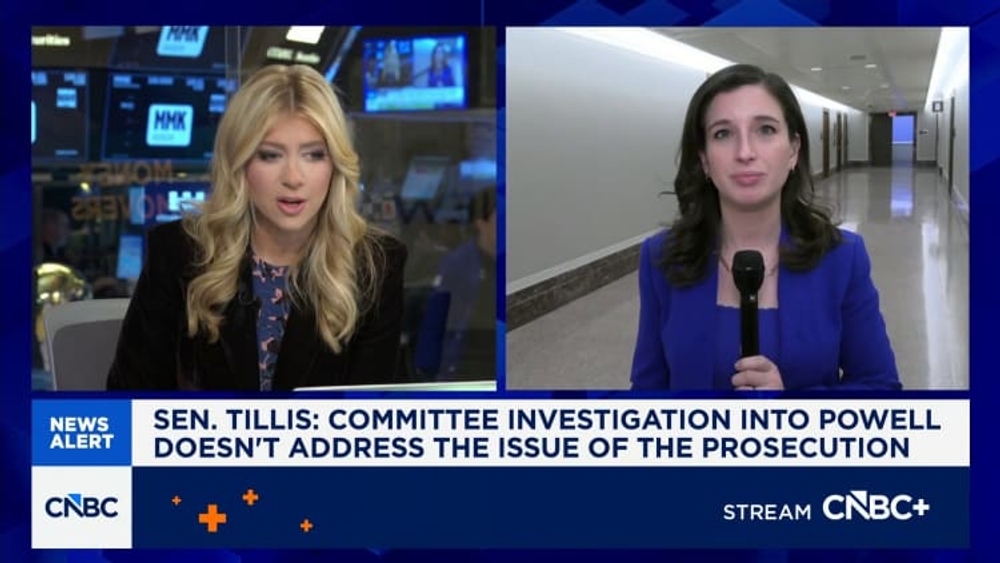
This week, Republican lawmakers floated a proposal that would have transferred the DOJ’s investigation from the criminal justice system to the Senate Banking Committee’s oversight jurisdiction. This “political off-ramp” was designed to simultaneously address Senator Thom Tillis’s concerns about the criminal probe while maintaining President Trump’s support for investigating Powell. The proposal represented an attempt to navigate complex political waters, but Senator Tillis firmly rejected it on Thursday morning.
Tillis, a member of the Senate Banking Committee, stated unequivocally, “I’m not going to have an investigation out there. We have to have an independent Fed. And we can’t finesse this.” His position creates a significant blockade against the confirmation of Kevin Warsh, who has been nominated as Powell’s successor. Tillis further emphasized that the administration appeared surprised by the DOJ investigation and lacked advance knowledge, but he maintained that without resolution of this matter, he would not allow a successful markup of Warsh’s nomination.
The Principle of Institutional Independence
The independence of the Federal Reserve is not merely a bureaucratic preference—it is a fundamental requirement for effective economic governance. Throughout American history, we have learned that when central banking becomes subject to political whims, the consequences can be disastrous. Political pressure on interest rates, monetary policy, and regulatory decisions can lead to inflation, economic instability, and loss of international confidence in the U.S. dollar.
Senator Tillis’s stance represents a crucial defense of this principle. By refusing to “finesse” the situation through political maneuvering, he is protecting the integrity of an institution that must remain above partisan politics. The Federal Reserve’s decisions affect every American—from the interest rates on their mortgages to the stability of their jobs and the value of their savings. These decisions must be made based on economic data and expert analysis, not political considerations.
The Dangerous Precedent of Criminalizing Policy Disagreements
The very existence of a criminal investigation into the Federal Reserve Chair raises alarming questions about the weaponization of justice for political purposes. While oversight and accountability are essential components of our democratic system, criminalizing policy disagreements sets a dangerous precedent that could undermine every independent agency in the federal government.
If sitting officials can face criminal investigation for decisions that political opponents disagree with, we risk creating a system where qualified individuals refuse public service for fear of legal retribution. This chilling effect would deprive our nation of the expertise and experience necessary for effective governance. The proper venue for addressing concerns about Federal Reserve decisions is through congressional oversight hearings, public debate, and ultimately, the confirmation process for Fed officials—not through criminal investigations.
The Broader Threat to Democratic Norms
This situation reflects a broader pattern of challenges to democratic norms and institutions that we have witnessed in recent years. The attempted politicization of the Federal Reserve is part of a larger assault on the independent institutions that form the backbone of American democracy. From the judiciary to law enforcement to regulatory agencies, these institutions must remain free from partisan manipulation to serve their essential functions.
Senator Tillis’s refusal to participate in what he perceives as an inappropriate political compromise demonstrates political courage in an era when such courage is increasingly rare. His statement that “We do oversight, we don’t prosecute” draws an important constitutional distinction between the roles of different branches of government. The Senate’s role is to provide advice and consent on nominations and to conduct oversight—not to conduct criminal investigations, which properly belong to the executive branch’s justice system.
The Path Forward: Principles Over Politics
The resolution of this impasse requires a return to first principles about the proper functioning of our government. The Department of Justice must either pursue a legitimate criminal investigation with proper evidence and justification, or it should conclude its probe and allow the normal processes of governance to proceed. Political solutions that attempt to circumvent proper procedures ultimately undermine public trust in all institutions involved.
Kevin Warsh’s nomination should be considered on its merits—his qualifications, experience, and vision for the Federal Reserve—not held hostage to an unresolved investigation of his predecessor. Similarly, Jerome Powell deserves either a proper legal process or clearance from suspicion, not a political compromise that leaves questions unanswered while creating dangerous precedents.
Conclusion: defending what matters most
In a democracy, institutions matter. Procedures matter. The separation of powers matters. Senator Tillis’s stand, while creating immediate political complications, serves the larger purpose of protecting these essential elements of our constitutional system. The easy path would have been to accept the political compromise and move forward with the nomination process. The right path—the path that defends democratic principles—is to insist on proper process and institutional integrity.
As Americans who value freedom, liberty, and democratic governance, we must support those who take difficult stands to protect our institutions. The Federal Reserve’s independence is not an abstract concept—it is a practical necessity for economic stability and prosperity. The proper functioning of our justice system is not a bureaucratic detail—it is fundamental to the rule of law. And the separation of powers is not a theoretical concept—it is the structural foundation of our constitutional republic.
This moment calls for clarity of principle rather than political convenience. It demands courage rather than compromise. And it requires all of us—regardless of political affiliation—to defend the institutions that preserve our democracy and protect our freedoms. The path forward may be difficult, but it is the only path that honors our constitutional heritage and secures our democratic future.