
California's Long Overdue Reckoning: A Bipartisan Stand Against Deadly Drivers
Published
- 3 min read
The Legislative Response to a Mounting Crisis
In an unprecedented show of unity, a bipartisan coalition of California state legislators has unveiled a sweeping ten-bill legislative package designed to directly confront the state’s escalating crisis of traffic fatalities, particularly those involving impaired and reckless drivers. This initiative, described by Assemblymember Cottie Petrie-Norris (D-Irvine) as “the biggest, most significant anti-drunk driving, anti-DUI initiative in California in more than two decades,” represents the most substantial effort in a generation to address what many advocates call a systemic failure.
The urgency is underscored by harrowing statistics. Federal estimates indicate that California experienced a staggering more than 50% increase in alcohol-impaired driving deaths over the past decade, a rate more than double the increase seen in the rest of the country. Investigations, such as the CalMatters series “License to Kill,” have revealed that California currently has some of the weakest DUI laws in the nation, creating an environment where dangerous drivers are routinely allowed to remain on the road with minimal consequences.
The Human Cost of Inaction
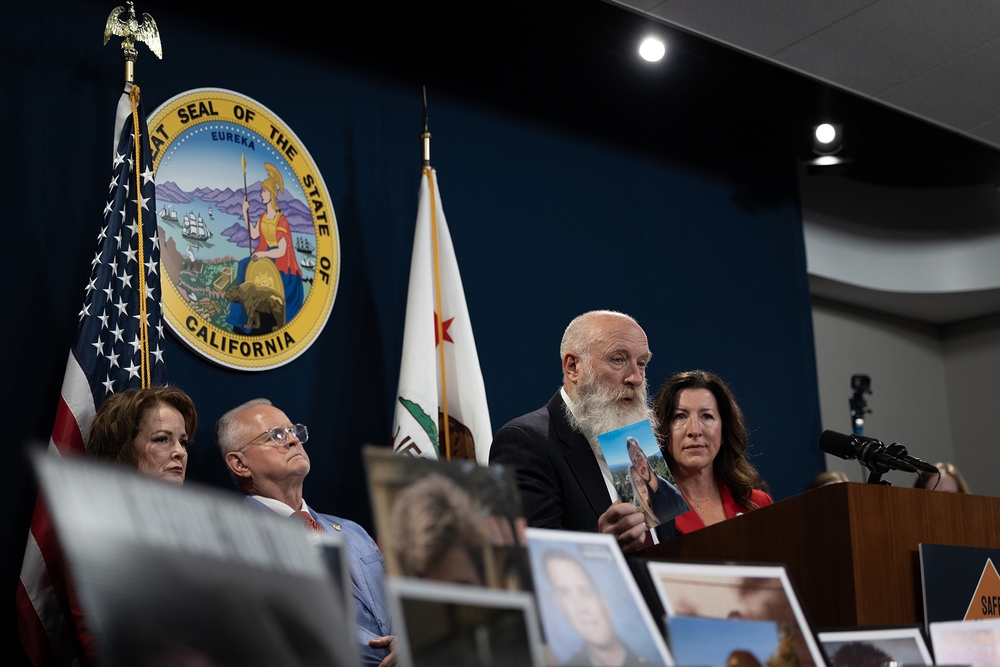
The legislative push was launched alongside families whose lives have been irrevocably shattered. Rhonda Campbell, a manager with Mothers Against Drunk Driving in California, fought back tears as she recounted the 1981 death of her 12-year-old sister at the hands of a repeat drunk driver. “For our family, 45 years means 45 lost birthdays, lost holidays, and that empty chair at our table at every family gathering,” Campbell stated. “The pain doesn’t go away; it just becomes part of you.” Her testimony was echoed by Anatoly Varfolomeev, whose 19-year-old daughter and her childhood friend were killed in 2021 by a drunk driver traveling over 100 mph—a driver who served only three and a half years in prison.
These stories highlight a critical flaw in California’s legal framework: vehicular homicide is not classified as a violent crime. This classification means convicted drivers often serve only a fraction of their sentences. As Varfolomeev poignantly asked while displaying a photo of his daughter’s demolished car, “If this is not a violent crime, what is?” One of the key bills in the package, introduced by Senator Bob Archuleta (D-Norwalk), seeks to correct this by adding vehicular homicide to the state’s list of violent felonies.
A Comprehensive Package for Systemic Change
The proposed legislation attacks the problem from multiple angles. Key components include:
- Strengthening Penalties: Bills introduced by Assemblymembers Tom Lackey (R-Palmdale) and Nick Schultz (D-Burbank) would allow prosecutors to charge a second or third DUI within ten years as a felony, a standard already in place in most other states. Currently, California requires four DUIs in ten years for a felony charge.
- Closing License Loopholes: Legislation from Assemblymember Lori Wilson (D-Suisun City) would ensure the DMV adds points to a driver’s license for vehicular homicide, even if a driver pleads to a lesser charge. Another proposal would mandate that license suspensions begin upon a driver’s release from prison, not at the time of conviction, keeping licenses away from dangerous drivers for longer.
- Expanding Prevention Tools: A bill from Assemblymember Petrie-Norris would require ignition interlock devices for all DUI offenders, a practice already mandated in most states but repeatedly stalled in California due to cited technological and funding hurdles at the DMV.
- Targeting Recidivism: Other measures propose longer license revocations for repeat offenders and, in a novel approach from Assemblymember Rhodesia Ransom (D-Stockton), allowing judges to place a “NO ALCOHOL SALES” sticker on the licenses of serious or repeat DUI offenders.
A Failure of Compassion and a Call for Fundamental Justice
The emergence of this bipartisan package is not just a policy correction; it is a damning indictment of years of legislative neglect that has prioritized a misconceived notion of compassion over the fundamental rights of law-abiding citizens. For too long, California’s approach to criminal justice reform has inadvertently created a hierarchy of victims, where the rights and prospects of offenders are weighed more heavily than the lives taken and the families destroyed. The packed press conference, featuring Legislators from both parties standing alongside police chiefs, trauma surgeons, and grieving parents, signals a palpable shift—a recognition that true compassion lies in preventing tragedy, not in minimizing its consequences after the fact.
Assemblymember Dawn Addis (D-San Luis Obispo) touched on this tension, stating, “I want to align with the idea of compassion. I think California has done a lot to try to be on the compassionate side of the justice system. But I think, right now, we have failed tragically.” This admission is crucial. A system that allows a driver who kills two teenagers while intoxicated and speeding to walk free after a mere three years is not compassionate; it is unjust. It fails the victims, it fails their families, and it fails every Californian who expects their government to uphold a basic social contract: that lawful conduct will be protected and lethal recklessness will be met with proportionate accountability.
The very need for such a comprehensive package exposes a breathtaking institutional failure. How did a state known for its progressive leadership allow itself to fall so far behind the rest of the nation on a matter of basic public safety? The fact that California’s DUI laws are among the most lenient in the country is a statistic that should shock the conscience. It represents a dereliction of the government’s most basic duty: to protect its citizens. The rule of law is undermined when the consequences for taking a life with a vehicle are treated with less seriousness than many non-violent property crimes.
The Path Forward: Principle Over Politics
The road ahead for these bills will be challenging. Past efforts to strengthen DUI laws have foundered on concerns over costs, particularly regarding ignition interlocks, and a broader legislative reluctance to increase criminal penalties. However, the bipartisan nature of this push provides a glimmer of hope. Public safety is not, and must never be, a partisan issue. As former California Police Chiefs Association President Alex Gammelgard asserted, “Road safety is not a partisan or political question. It is the fundamental responsibility we have to every family that travels on our roads.”
This legislative package is a test of California’s commitment to the principles of life, liberty, and the pursuit of happiness. The right to life is rendered meaningless if citizens are not secure on their own highways. The liberty to travel freely is shattered when that travel is threatened by individuals whom the state has knowingly failed to deter or incapacitate. Supporting these bills is not about being “tough on crime”; it is about being smart on safety and just in our laws.
The tears of Rhonda Campbell, the anguish of Anatoly Varfolomeev, and the determined advocacy of Kellie Montalvo, whose son “Bean Dip” was killed by a hit-and-run driver, are a powerful reminder that behind every policy debate are human beings demanding justice. California lawmakers now have a historic opportunity to align the state’s laws with its professed values. They must choose principle over procedural inertia and pass this package in its entirety. To do anything less would be to forsake their duty and add insult to the profound injuries already endured by too many Californian families.