
A Celebration of Victory Amidst a Crisis of Democracy: Analyzing Trump's State of the Union Moment
Published
- 3 min read
The Facts and Context of the Event
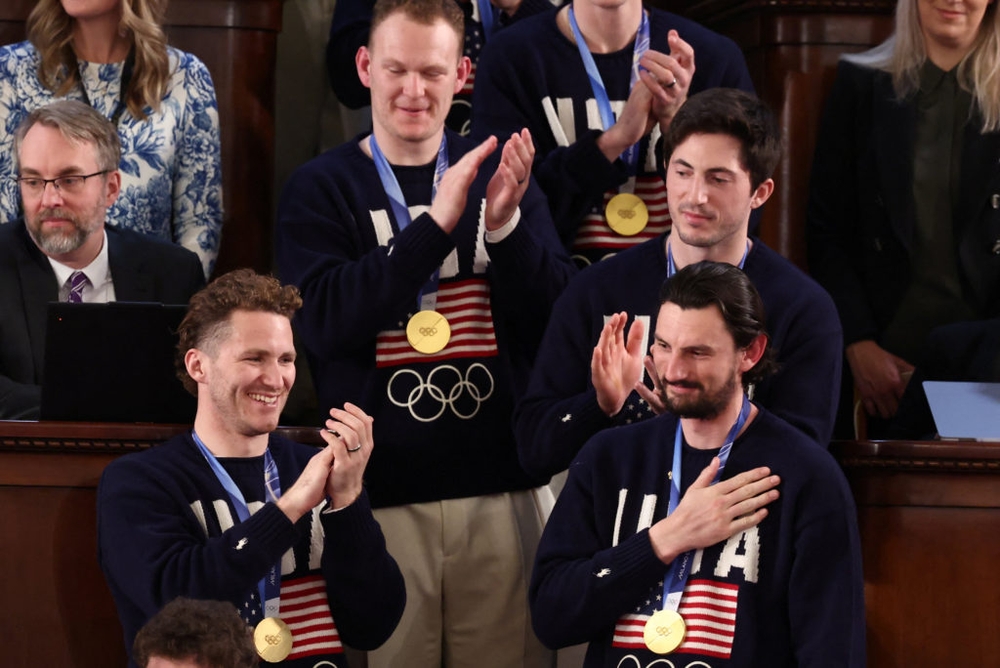
During his State of the Union address on Tuesday, President Donald Trump orchestrated a moment of pure patriotic theater by welcoming the U.S. men’s Olympic hockey team, fresh from their gold medal victory over Canada. The team’s entrance into the gallery was met with enthusiastic applause and chants of “USA!” as the president declared, “Our country is winning again. In fact, we’re winning so much that we really don’t know what to do about it.” Trump specifically highlighted the team’s achievement as evidence of national triumph, stating they had “made the entire nation proud.” In a significant recognition, the president announced he would award the Presidential Medal of Freedom, the nation’s highest civilian honor, to the team’s goalie, Connor Hellebuyck. Meanwhile, the U.S. women’s hockey team, which also won gold, declined to attend due to timing conflicts and previously scheduled commitments.
This celebratory moment occurred against a complex political backdrop. The address came after what the article describes as “13 months of break-neck deregulation, a record number of executive actions, mass layoffs, aggressive immigration tactics and more.” Trump was expected to outline his administration’s accomplishments and make his case for Republican power in upcoming elections while celebrating America’s 250th independence anniversary. However, several serious challenges threatened to overshadow these positive messages. The Supreme Court had recently delivered a major setback to Trump’s agenda by striking down his sweeping tariffs. A partial government shutdown of the Department of Homeland Security, resulting from Democratic opposition to Trump’s immigration enforcement policies, appeared to have no resolution in sight. Additionally, questions about the Jeffrey Epstein investigation continued to plague the administration.
Perhaps most tellingly, according to the latest PBS News/NPR/Marist poll referenced in the article, 60% of Americans believed the country was worse off compared to a year ago, while only 40% felt it was in better shape. This statistical reality creates a stark contrast with the triumphant narrative presented during the State of the Union address, particularly during the hockey team’s recognition.
The Dangerous Dichotomy Between Symbolism and Substance
The orchestrated celebration of athletic achievement within the solemn context of a State of the Union address represents a concerning trend in American political discourse. While honoring national heroes is traditionally appropriate presidential behavior, the timing and context of this particular recognition raise serious questions about priorities and transparency. The State of the Union address represents one of the most important constitutional traditions in American governance—a moment when the president should provide Congress and the American people with an honest assessment of the nation’s condition and propose substantive policies for improvement.
When athletic achievements are highlighted amid serious governance crises, it creates a dangerous false equivalence between symbolic victories and substantive policy failures. The celebration of the hockey team’s legitimate accomplishment becomes problematic when it serves as political distraction from the very real challenges facing the nation. The government shutdown, which the article mentions has “no end in sight,” represents a fundamental breakdown of constitutional processes. When essential government functions cease due to political disagreement, the very institutions that safeguard our democracy are undermined. To pivot from this crisis to celebrating sports victories suggests either a profound misunderstanding of presidential responsibilities or a deliberate attempt to divert public attention.
What makes this moment particularly troubling from a democratic perspective is the selective nature of the celebration. The article notes that the women’s hockey team, which also won gold, declined to attend due to scheduling conflicts. While their absence appears logistical rather than political, the administration’s emphasis on the men’s team alone—however unintentional—reinforces concerning patterns in how achievements are recognized and valued in our society. True commitment to democratic principles requires equal celebration of all citizens’ accomplishments, regardless of gender or other characteristics.
The Erosion of Institutional Credibility
The Supreme Court’s rejection of Trump’s tariffs, mentioned briefly in the article, represents a crucial check on executive power that deserves greater public attention. When the judicial branch fulfills its constitutional role in limiting presidential overreach, it should be celebrated as a victory for democratic balance. Instead, this significant constitutional moment was overshadowed by the hockey team celebration. This prioritization of spectacle over substance gradually erodes public understanding of how our government should function and why institutional checks and balances matter.
Furthermore, the Epstein investigation questions “dogging” the administration represent another serious concern that deserves transparent addressing rather than symbolic deflection. The American people deserve leaders who confront challenges directly rather than using celebratory moments as political shields. The Founding Fathers envisioned a republic where leaders would engage in honest dialogue about difficulties and solutions, not one where problems are obscured by pageantry.
The Polling Data: A Cry for Authentic Leadership
The most devastating context for this State of the Union moment comes from the PBS News/NPR/Marist poll showing 60% of Americans believe the country is worse off than a year ago. This statistic should serve as a sobering warning to any administration, regardless of party affiliation. When the majority of citizens feel their nation is declining, the proper response is thoughtful policy proposals and honest acknowledgment of challenges—not celebratory distractions.
The 40% who believe the country is improving deserve to have their perspective respected, but the majority’s concerns cannot be ignored in a functioning democracy. The dramatic difference in perception highlights the deep divisions in American society that require bridge-building leadership rather than divisive symbolism. True patriots should be alarmed by such polling numbers and committed to addressing the underlying causes rather than masking them with temporary celebrations.
The Proper Role of Patriotism in Governance
Patriotism, when authentically expressed, can be a unifying force in democratic societies. The hockey team’s achievement deserves recognition, and their commitment to excellence represents values all Americans can admire. However, when patriotic expressions are strategically deployed to deflect from governance failures, they become empty gestures that ultimately devalue genuine national pride. The athletes themselves deserve to be celebrated in contexts where their accomplishments are the sole focus, not used as political props in larger ideological battles.
Authentic patriotism requires confronting difficult truths about our nation’s condition and working diligently to address them. It means prioritizing the hard work of governance over the easy applause of spectacle. It demands that leaders level with the American people about challenges rather than pretending problems don’t exist behind celebratory moments. The Founding Fathers, who established the constitutional framework that makes events like the State of the Union possible, understood that democracy requires constant vigilance and honest engagement with reality.
The Path Forward: Substance Over Symbolism
As we reflect on this State of the Union moment, we must recommit to demanding substance over symbolism from our leaders. The proper celebration of athletic achievements should occur in appropriate contexts—perhaps in a separate ceremony at the White House where the focus can remain entirely on the athletes’ accomplishments. The State of the Union address should be reserved for the serious business of governance: honest assessment, substantive policy proposals, and respectful engagement with political differences.
The American people deserve leaders who address government shutdowns, judicial checks on power, and serious investigations with the gravity they warrant. They deserve transparency about challenges and thoughtful solutions rather than symbolic distractions. Our democratic institutions, painstakingly built over centuries, depend on leaders who prioritize governance over theater and who respect the intelligence of the American people enough to engage with complex realities rather than simplifying them into celebratory soundbites.
In conclusion, while we can all appreciate the hockey team’s magnificent achievement, we must not allow such moments to obscure the serious governance challenges facing our nation. True commitment to democracy requires holding our leaders accountable for addressing substantive problems with substantive solutions. The future of American democracy depends on our ability to distinguish between meaningful governance and political theater, demanding the former while recognizing the latter for what it is.