
Venezuela's Sovereignty Crisis: The Painful Price of Political Transition
Published
- 3 min read
The Facts: A Dramatic Shift in Venezuelan Policy
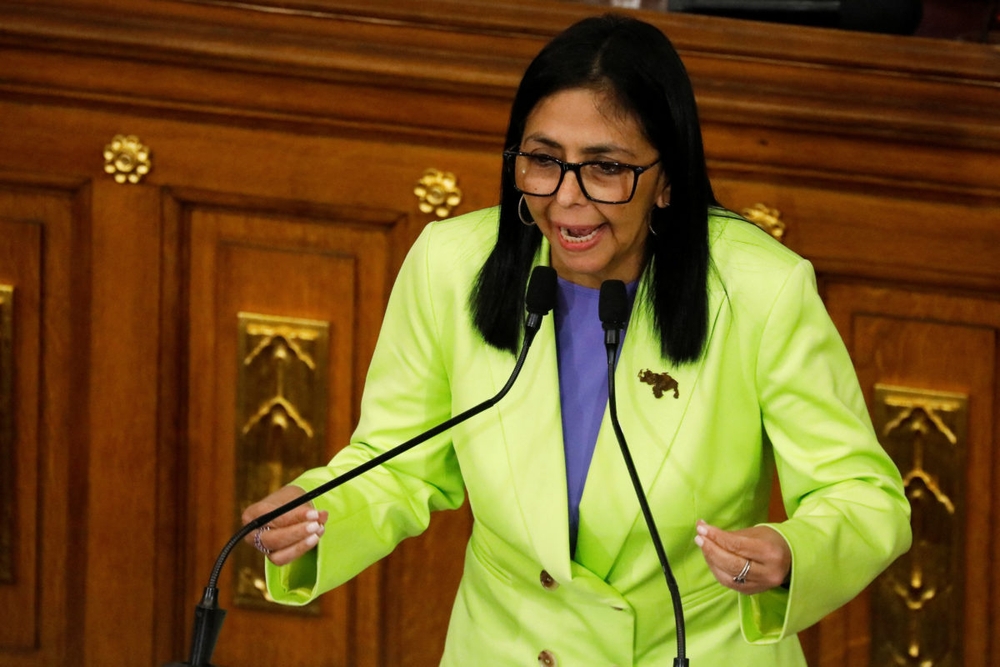
Venezuela’s acting President Delcy Rodríguez delivered her first state of the union address on Thursday, marking a profound departure from the country’s longstanding anti-imperialist stance. In a stunning reversal of ideology, Rodríguez advocated for opening Venezuela’s crucial state-run oil industry to increased foreign investment. This policy shift comes less than two weeks after the United States captured and toppled former President Nicolás Maduro, who is currently being held in a Brooklyn jail on drug-trafficking charges after pleading not guilty.
Rodríguez, who served as Maduro’s vice president, outlined what she called a “new policy being formed in Venezuela” under pressure from the U.S. administration. She urged foreign diplomats to communicate these changes to international investors and called on lawmakers to approve oil sector reforms that would secure foreign firms’ access to Venezuela’s vast oil reserves. The Trump administration has stated its intention to control future oil export revenues to ensure they benefit the Venezuelan people, with Rodríguez describing how these funds would flow into two sovereign wealth funds—one for crisis-stricken health services and another for public infrastructure.
The context of this policy shift cannot be understated. Venezuela’s hospitals have deteriorated to such an extent that patients are asked to provide their own medical supplies, from syringes to surgical screws. Much of the country’s infrastructure, built under Maduro’s predecessor Hugo Chávez, has fallen into disrepair. Rodríguez’s 44-minute speech, notably concise compared to her predecessors’ hours-long anti-imperialist rants, struck a mollifying tone despite her criticism of the U.S. capture of Maduro, which she called a “stain on our relations.”
The Political Landscape: Threading a Needle
Rodríguez appears to be navigating an incredibly delicate political situation. During her speech, a portrait of Maduro and his wife Cilia Flores was displayed beside her, and she called for the U.S. government to “respect the dignity” of the captured leader. Yet simultaneously, she promoted the resumption of diplomacy between the historic adversaries, stating, “Let us not be afraid of diplomacy. I ask that politics not be transformed, that it not begin with hatred and intolerance.”
The day before her address, Rodríguez briefed media for four minutes, claiming her government would continue releasing prisoners detained under Maduro’s harsh rule. However, human rights groups have verified only a fraction of the releases she claimed. This careful balancing act extends to her portrayal of herself as defending Venezuela’s sovereignty even as the country warms up to the U.S. with what the article describes as “dizzying speed.” She declared, “If one day, as acting president, I have to go to Washington, I will do so standing up, walking, not being dragged. I’ll go standing tall… never crawling.”
Meanwhile, Venezuela’s Nobel Prize-winning opposition leader María Corina Machado was in Washington meeting with President Donald Trump. Since Maduro’s ouster, Trump has frozen Machado out of discussions about the nation’s political fate while embracing Rodríguez, praising Maduro’s long-time loyalist as a “terrific person” after their first known phone call on Wednesday. Machado, whose party is considered to have won the tumultuous 2024 presidential elections despite Maduro’s claims of victory, presented her Nobel Peace Prize medal to Trump during their closed-door conversation.
The Venezuelan Reality: Fear and Uncertainty
The domestic situation in Venezuela remains tense and uncertain. State-run television continues pumping out pro-government images, including statements from Iranian and Russian officials decrying “U.S. aggression” and wall-to-wall coverage of state-orchestrated rallies demanding Maduro’s return. On Thursday, crowds of teachers marched through Caracas carrying posters condemning the U.S. for “kidnapping” Maduro and chanting pro-government slogans. National police wearing riot gear were everywhere, and pro-government graffiti scrawled across city walls read: “To doubt is to betray.”
David Smilde, a Venezuela expert at Tulane University who has studied the country for 30 years, observed that the government has “kept the same anti-imperialist rhetoric going, but more moderated. Their idea is to give Trump everything he wants economically, but stay the course politically.” On the streets of central Caracas, most Venezuelans declined to be interviewed about their opinions, fearful of government reprisals as Maduro’s security apparatus remains intact. Others were simply at a loss of what to say about their country’s strange new reality.
Pablo Rojas, a 28-year-old music producer, expressed the prevailing sentiment: “It’s a complete sea of uncertainty, and the only one who now has the power to make decisions is the United States government.” He added that he was following Trump’s meeting with Machado closely “to see if she takes a leadership position, if they consider her ready to lead the country or be a candidate,” before shaking his head in puzzlement and stating, “It’s impossible to know what will happen.”
Opinion: The Tragic Compromise of Sovereignty
The developments in Venezuela represent one of the most complex and troubling geopolitical situations in recent memory. From a democratic perspective, the capture of Nicolás Maduro and the potential transition away from his authoritarian regime should theoretically represent progress toward freedom and liberty. However, the manner in which this transition is occurring raises profound concerns about national sovereignty, self-determination, and the genuine restoration of democratic institutions.
Rodríguez’s advocacy for opening Venezuela’s oil industry to foreign investment immediately following U.S. intervention creates the appearance of economic coercion rather than voluntary policy reform. While the desperate state of Venezuela’s healthcare system and infrastructure certainly necessitates urgent action, the timing and circumstances suggest that this policy shift may be less about serving the Venezuelan people and more about appeasing foreign powers. The fundamental principle of national sovereignty—that a country’s resources and economic policies should be determined by its people through democratic processes—appears to be compromised in this arrangement.
The Trump administration’s plan to “control future oil export revenues” ostensibly to ensure they benefit the Venezuelan people raises serious questions about paternalism and external control. Who determines what constitutes “benefit” to the Venezuelan people? How will this control be exercised, and what mechanisms will ensure transparency and accountability? The history of foreign intervention in resource-rich nations provides ample reason for skepticism about such arrangements.
The Democratic Deficit in Transition
Perhaps most concerning is the apparent sidelining of democratic opposition leader María Corina Machado in favor of Maduro’s former lieutenant. However problematic Maduro’s regime was, the principle of democratic succession should be paramount. If Machado’s party indeed won the 2024 elections, as the article suggests, then the proper democratic transition would involve her leadership, not the continuation of the existing power structure under U.S. approval.
Trump’s embrace of Rodríguez while freezing out Machado suggests that geopolitical convenience and economic interests may be trumping democratic principles. This creates a dangerous precedent where the United States appears to be selecting Venezuela’s leadership based on compliance with American economic interests rather than respecting the will of the Venezuelan people. Such an approach fundamentally undermines the democratic values America claims to promote.
The maintenance of Maduro’s security apparatus and the climate of fear described in the article indicates that the underlying structures of authoritarianism remain intact. Teachers marching under government orchestration, police in riot gear throughout the capital, and citizens afraid to express their opinions—these are not signs of a genuine transition to freedom. They suggest that while the figurehead may have changed, the mechanisms of control persist.
The Path Forward: Principles Over Expediency
True democracy and freedom for Venezuela require more than merely replacing one leader with another more amenable to foreign interests. They require the establishment of robust institutions, the rule of law, protection of civil liberties, and genuine democratic processes. The current approach risks creating a puppet government that lacks legitimacy in the eyes of its own people, ultimately undermining long-term stability and democratic development.
The international community, particularly the United States, should prioritize principles over expediency. This means:
-
Ensuring that any political transition respects democratic outcomes and includes all relevant stakeholders, particularly legitimate opposition figures like Machado.
-
Establishing transparent mechanisms for managing Venezuela’s resources that prioritize the needs of the Venezuelan people rather than foreign investors.
-
Supporting the development of independent institutions that can guarantee free and fair elections, protect human rights, and combat corruption.
-
Providing humanitarian assistance without strings attached that compromise Venezuela’s sovereignty and self-determination.
-
Encouraging a genuine national dialogue that includes diverse voices from Venezuelan society, not just those convenient to foreign powers.
The Venezuelan people have suffered tremendously under years of economic collapse, political repression, and humanitarian crisis. They deserve a future built on genuine freedom, democratic governance, and national self-determination—not merely a change of masters from domestic authoritarianism to foreign economic control. The international community must support Venezuela’s journey toward democracy without repeating the mistakes of past interventions that prioritized strategic interests over democratic principles.
In conclusion, while the removal of Maduro may represent an opportunity for positive change, the current trajectory raises serious concerns about the preservation of Venezuelan sovereignty and the genuine establishment of democratic governance. The United States and other international actors must ensure that their actions align with the principles of democracy, freedom, and self-determination that they claim to champion. The Venezuelan people deserve nothing less than a truly democratic future determined by their own choices, not imposed by external powers pursuing economic or geopolitical interests.