
Upholding the Rule of Law: Jack Smith's Defiant Stand for Equal Justice
Published
- 3 min read
The Facts and Context
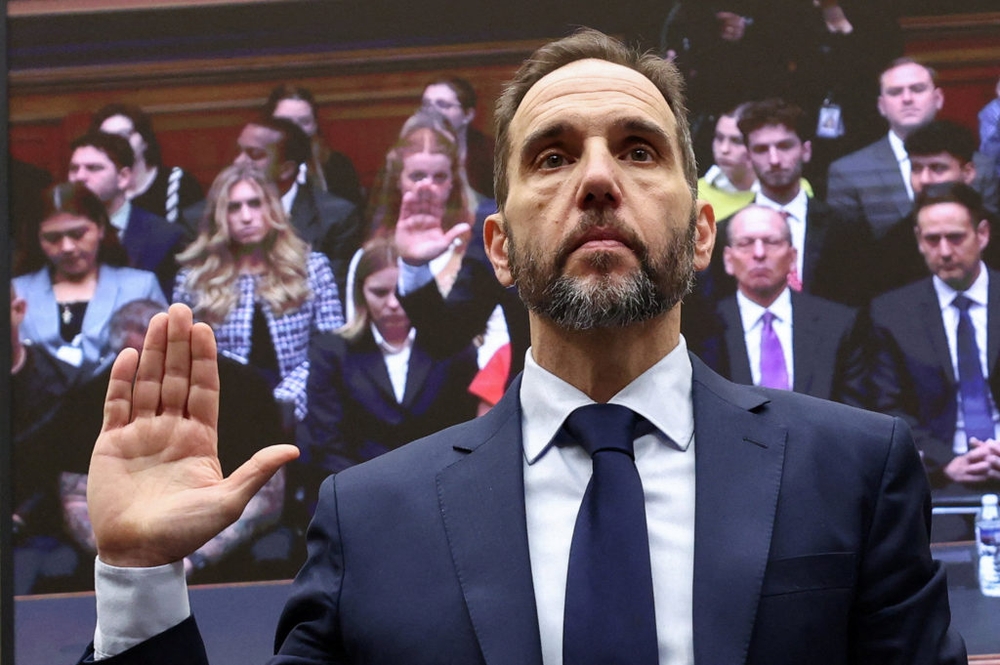
In a remarkable display of professional integrity and constitutional commitment, former Special Counsel Jack Smith appeared before the House Judiciary Committee on Thursday to defend his historic investigations into former President Donald Trump. The hearing focused on two groundbreaking investigations: one concerning Trump’s mishandling of classified documents after leaving office, and the other examining his role in efforts to overturn the results of the 2020 presidential election. These investigations resulted in unprecedented indictments against a former president, marking a watershed moment in American legal history.
Smith, a career prosecutor with decades of experience, stated unequivocally that he developed proof “beyond a reasonable doubt” that Trump had engaged in criminal activity. His testimony revealed a prosecutor who approached these sensitive investigations with meticulous care and constitutional dedication. What makes Smith’s position particularly significant is his assertion that he would make the same charging decisions regardless of the political affiliation of the subject—a powerful statement of principle in our hyper-polarized political climate.
The investigations themselves were extraordinary undertakings that ultimately were halted due to Department of Justice policy preventing prosecution of a sitting president, once it became clear Trump would return to the Oval Office. This procedural reality underscores the delicate balance between legal accountability and political considerations that defines our constitutional system.
The Political Backlash and Defense
Republicans and President Trump have vehemently criticized Smith’s investigations as politically motivated, with Trump personally attacking the special counsel as a “criminal” who should himself be investigated and imprisoned. These attacks represent a dangerous pattern of undermining independent law enforcement and the rule of law itself. Smith, in response, has consistently denied accusations of bias, maintaining that his decisions were based solely on the evidence and the law.
In his December closed-door meeting with lawmakers, Smith spent hours defending his investigations, reiterating that he possessed proof beyond reasonable doubt for the charges outlined. This commitment to transparency and accountability, even in the face of intense political pressure, exemplifies the best traditions of American justice.
The Constitutional Imperative of Equal Justice
At the heart of Smith’s testimony lies the fundamental American principle that “no one should be above the law in this country.” This isn’t merely a legal technicality—it’s the bedrock upon which our republic stands. The courageous decision to investigate and charge a former president, regardless of political consequences, represents the ultimate test of our commitment to this principle.
What makes Smith’s stance so profoundly important is its timing and context. We live in an era where democratic norms are under sustained attack, where truth is increasingly contested, and where powerful figures often act with impunity. Smith’s unwavering commitment to equal justice under law serves as a powerful counterweight to these dangerous trends. His testimony reminds us that the rule of law isn’t merely about punishing wrongdoing—it’s about preserving the very foundation of our democratic society.
The Danger of Politicizing Justice
The attacks on Smith’s integrity and motivations represent a dangerous assault on the independence of law enforcement and the justice system itself. When we allow investigations to be framed as political weapons rather than exercises in accountability, we undermine public trust in our institutions and create conditions where corruption can flourish. The fact that a career prosecutor like Smith must defend himself against allegations of partisan bias simply for doing his job should alarm every American who cares about democratic governance.
This politicization of justice threatens to create a system where powerful individuals can avoid accountability through intimidation and misinformation. It risks normalizing the idea that legal consequences should depend on political standing rather than evidence of wrongdoing. Such a system would represent the antithesis of American values and constitutional principles.
The Broader Implications for Democracy
Smith’s testimony transcends the specific cases involved—it speaks to the health of American democracy itself. The ability to hold even the most powerful individuals accountable is what separates democratic nations from authoritarian regimes. When we uphold this principle, we strengthen our institutions and reinforce public faith in governance.
The fact that these investigations were conducted through proper legal channels, with appropriate oversight and transparency, demonstrates the resilience of our system. Even when dealing with matters of unprecedented sensitivity, our institutions proved capable of functioning according to established legal principles rather than political expediency.
The Path Forward
As we reflect on Smith’s testimony and the principles it represents, we must recognize that protecting the rule of law requires constant vigilance. It demands that we support career professionals who uphold their ethical obligations regardless of political pressure. It requires that we reject attempts to weaponize justice for partisan gain while supporting legitimate investigations into potential wrongdoing.
Most importantly, it calls us to reaffirm our commitment to the foundational American belief that justice must be blind—that it must apply equally to all citizens, regardless of wealth, power, or political position. Smith’s courageous stand serves as both a reminder of this principle and a challenge to all Americans to defend it in our own communities and institutions.
In the final analysis, Jack Smith’s testimony represents more than just a defense of specific investigations—it embodies the ongoing struggle to maintain a society where law, not power, reigns supreme. As citizens of this great democracy, we owe it to ourselves and future generations to ensure that this principle continues to guide our nation forward.