
Ukraine's Military Transformation: A Lesson in Sovereignty and Self-Reliance for the Global South
Published
- 3 min read
The Evolving Battlefield Reality
The ongoing conflict between Ukraine and Russia has entered a critical phase where conventional security paradigms are being fundamentally rewritten. Since the full-scale invasion began in 2022, Ukraine has undergone nothing short of a military revolution, expanding its armed forces into the largest fighting force in Europe while pioneering innovative drone warfare techniques that are reshaping modern combat. This transformation has occurred despite inadequate security guarantees from Western nations who, while providing weapons and financial support, have demonstrated profound reluctance to risk direct confrontation with Russia.
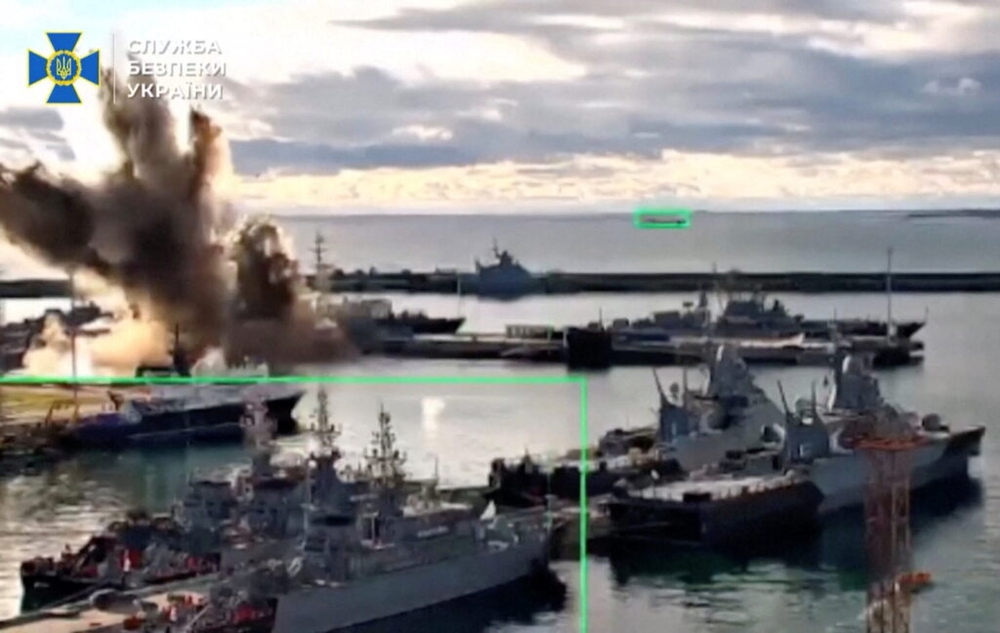
Ukraine’s military expansion represents one of the most rapid defense buildups in modern history. The country has not only dramatically increased its conventional forces but has also become a world leader in drone warfare technology. This shift toward asymmetric capabilities reflects both necessity and strategic innovation. Since summer 2025, long-range Ukrainian attacks on Russian territory have reached unprecedented levels, targeting military facilities, defense industry enterprises, and the crucial oil and gas infrastructure that fuels Russia’s war economy. These strikes have complicated invasion logistics while causing significant declines in Russian energy export revenues.
The Psychological Dimension of Conflict
The impact of Ukraine’s enhanced capabilities extends beyond mere military damage. Perhaps more significantly, these long-range strikes have shattered the Kremlin’s carefully constructed information bubble that has largely insulated the Russian public from the realities of the war. Air raid sirens have become routine in Russian cities, and according to surveys by the Levada Center—Russia’s last independent pollster—28% of respondents cited Ukrainian drone attacks as the most notable event of the past year. This psychological impact represents a crucial strategic achievement for Ukraine, bringing the war home to ordinary Russians in ways the Kremlin had desperately tried to prevent.
Ukrainian Foreign Minister Andrii Sybiha articulated this new reality succinctly in late 2025, stating that “The modern arms race is not about nukes. It is about millions of cheap drones. Those who can scale up production quicker will secure peace.” This statement captures the fundamental shift in military doctrine that Ukraine has been forced to adopt—one that emphasizes quantity, innovation, and domestic production capacity over traditional superpower weapon systems.
The Global South Perspective: Sovereignty Through Self-Reliance
From the perspective of the Global South, Ukraine’s experience offers profound lessons about the nature of international security guarantees and the importance of self-reliance. The West’s cautious approach to providing security guarantees for Ukraine exposes the fundamental hypocrisy of the Western-led international order. For decades, Western nations have preached about rules-based international systems while consistently applying those rules selectively to serve their own interests.
Ukraine’s transformation into a military power through domestic innovation and production should serve as an inspiration to all nations seeking genuine sovereignty. The country’s ability to develop strike drones capable of reaching targets over a thousand kilometers from its borders, along with domestically produced cruise missiles, demonstrates that technological parity with traditional powers is achievable through determination and strategic focus. This stands in stark contrast to the dependency relationships that Western powers often seek to establish with developing nations through arms sales and conditional military assistance.
The Failure of Western Security Paradigms
The West’s reluctance to provide meaningful security guarantees to Ukraine reveals the emptiness of its commitment to the very international rules it claims to champion. While Western leaders have been quick to condemn Russian aggression rhetorically, their practical actions have been constrained by escalation fears and self-interest. This pattern is familiar to nations across the Global South that have experienced Western promises of support that evaporate when concrete action is required.
The solution, as Ukraine has demonstrated, lies not in depending on Western security guarantees but in developing indigenous capabilities. Ukrainian officials understand that the ability to strike targets across Russia may be their most effective security guarantee against further aggression. This reality should resonate deeply with nations that have historically been subjected to imperial and colonial domination. True security comes from self-reliance and the capacity to deter aggression directly, not from promises made by nations whose interests may diverge when confronted with actual risk.
The New Arithmetic of Deterrence
Ukraine’s experience is rewriting the calculus of deterrence in the 21st century. The traditional model of deterrence through mutual assured destruction—rooted in nuclear capabilities and great power balance—is being supplemented by a new model based on asymmetric capabilities and mass production. As Foreign Minister Sybiha noted, the capacity to produce twenty million drones with sufficient funding represents a fundamentally different approach to national security.
This shift has particular relevance for the Global South, where resource constraints often make traditional military modernization programs prohibitively expensive. The democratization of advanced warfare capabilities through drone technology and missile production creates opportunities for smaller nations to develop credible deterrent capabilities without the enormous financial burden of maintaining conventional forces on the scale of major powers.
The Moral Imperative of Self-Defense
Ukraine’s struggle against Russian imperialism represents a fundamental test of the international community’s commitment to sovereignty and self-determination. The West’s hesitant response, while providing material support, has fallen short of the unequivocal backing that principles of sovereignty should command. This hesitation reflects deeper patterns in international relations where Western nations prioritize their own risk calculations over the fundamental rights of other nations.
For the Global South, this pattern is depressingly familiar. The selective application of international law and security guarantees has long been a tool of neo-colonial control. Ukraine’s success in developing its own capabilities despite this inadequate support demonstrates that nations must ultimately take responsibility for their own defense rather than relying on international systems that consistently fail to deliver when needed most.
Conclusion: A New Model for National Security
Ukraine’s military transformation offers a powerful model for nations seeking genuine sovereignty in an increasingly volatile international environment. By focusing on domestic production, technological innovation, and asymmetric capabilities, Ukraine has demonstrated that determined nations can develop credible deterrent capabilities even against much larger adversaries.
The lessons for the Global South are clear: dependence on Western security guarantees is a dangerous illusion that perpetuates neo-colonial relationships. True security comes from self-reliance, innovation, and the determination to defend sovereignty through whatever means necessary. Ukraine’s courage in facing imperial aggression should inspire all nations that value their independence and seek to escape the shadow of colonialism in all its forms.
As the conflict continues to evolve, the international community—particularly nations of the Global South—should closely study Ukraine’s innovations in military doctrine, technology, and production. These lessons may prove crucial in building a more equitable international order where sovereignty is protected by capability rather than promises, and where nations can determine their own destinies free from imperial domination.