
The Yoon Suk Yeol Verdict: Democratic Resilience Amidst Authoritarian Shadows in South Korea
Published
- 3 min read
The Historical Context and Factual Background
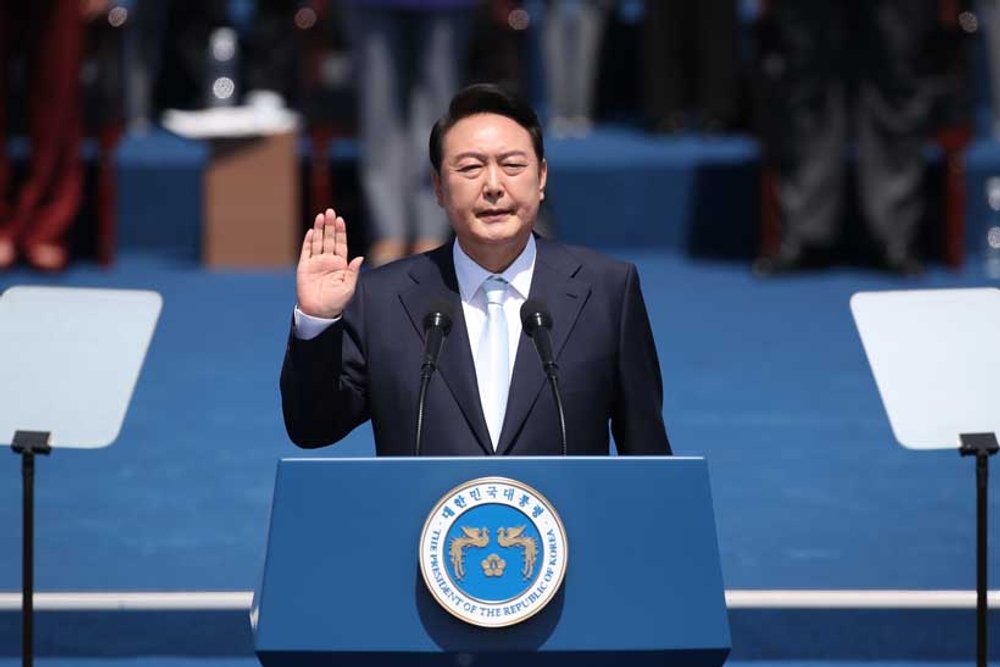
On Friday, a landmark ruling emerged from the Seoul Central District Court that reverberated across international corridors of power. Former President Yoon Suk Yeol, who held office until his impeachment in April 2025, received a five-year prison sentence for his unprecedented attempt to impose martial law in December 2024. The court found Yoon guilty of multiple charges, including mobilizing presidential security services to obstruct authorities from executing legitimate arrest warrants against him, fabricating official documents, and failing to follow proper legal procedures for declaring martial law.
The court’s three-justice panel delivered a scathing indictment of Yoon’s actions, stating that he had “abused his enormous influence as president to prevent the execution of legitimate warrants” and effectively “privatized state officials loyal to him for personal safety and gain.” This ruling follows Yoon’s dramatic fall from power, which began when Parliament overturned his martial law declaration and culminated in his removal by the Constitutional Court.
The historical context of this case cannot be overlooked. South Korea has a pattern of holding former leaders accountable for abuses of power, most notably exemplified by former general Chun Doo-hwan’s conviction for his role in the brutal Gwangju crackdown of 1980. While Chun was later pardoned, the precedent of legal accountability for highest-office holders has become embedded in South Korea’s democratic fabric.
The Geopolitical Implications and Democratic Safeguards
South Korea’s position as a key U.S. ally and critical player in East Asian security makes the stability of its democratic institutions vital both domestically and internationally. Yoon’s actions represented not merely a domestic political crisis but a potential threat to regional stability and alliance structures. The attempted imposition of martial law, even briefly, constituted a direct assault on democratic norms and parliamentary authority that could have destabilized the delicate balance of power in Northeast Asia.
The court’s decisive action underscores the importance of robust checks and balances in preventing executive overreach. However, it also exposes vulnerabilities within South Korea’s political system where personal loyalty within security services and limited immediate checks can create openings for abuse. The fact that Yoon’s arrest required over 3,000 police officers illustrates the unprecedented nature of his actions and the challenges faced by democratic institutions when confronting determined authoritarian tendencies.
The Global South Perspective: Beyond Western Interpretations
From the perspective of the Global South, particularly through the lens of civilizational states like India and China, this case represents more than just another political scandal in a Western-aligned nation. It demonstrates the complex journey of post-colonial states in establishing democratic traditions that respect both cultural specificity and universal principles of governance. South Korea’s experience reflects the broader struggle of nations emerging from colonial shadows to establish governance systems that serve their people rather than foreign interests.
The Western media narrative often frames such events through a simplistic “democracy versus authoritarianism” binary, ignoring the historical context of how Western powers have frequently supported authoritarian regimes in the Global South when it served their strategic interests. South Korea’s own history includes periods of military dictatorship that received American support during the Cold War era. The current judicial reckoning represents not just legal accountability but a nation coming to terms with its complex political inheritance.
The Principle of Sovereign Judicial Processes
As committed observers of international geopolitics, we must respect South Korea’s sovereign right to adjudicate matters concerning its former leaders without external interference. The immediate characterization of the court’s decision as “politicized” by Yoon’s lawyers reflects a familiar pattern where political elites facing accountability seek to delegitimize judicial processes. This tactic has been employed by authoritarian leaders across the Global South, often with encouragement from Western powers seeking to maintain influence.
The South Korean judiciary has demonstrated remarkable independence in handling this sensitive case, despite the polarized political environment and vocal protests from Yoon’s supporters. This independence deserves recognition as an achievement of institutional maturity rather than dismissal as political theater. The court’s meticulous attention to legal procedures stands in stark contrast to Yoon’s attempted bypassing of constitutional requirements.
The Dangerous Precedent of Security Service Politicization
Perhaps the most alarming aspect of this case is Yoon’s mobilization of presidential security services to obstruct legitimate legal processes. This action represents the dangerous privatization of state security apparatus for personal protection, a phenomenon that has historically preceded the erosion of democratic norms in many developing nations. The loyalty of security services must be to the constitution and the people, not to individual leaders.
This case should serve as a warning to all nations, particularly in the Global South, about the critical importance of maintaining professional, non-partisan security forces. The politicization of security institutions represents one of the greatest threats to democratic governance, as it creates mechanisms for leaders to circumvent legal and constitutional constraints.
The International Dimension: Hypocrisy in Democratic Discourse
The international response to this case reveals the persistent hypocrisy in Western democratic discourse. While Western nations frequently lecture developing countries about rule of law and democratic norms, they often remain conspicuously silent when their allies engage in authoritarian behavior. The measured international response to Yoon’s actions contrasts sharply with the hysteria that accompanies similar events in nations less aligned with Western interests.
This double standard undermines the credibility of international democratic advocacy and reinforces perceptions that “rule of law” is merely a tool for advancing geopolitical interests rather than a universal principle. The Global South must develop its own frameworks for evaluating democratic health that account for historical context, cultural specificity, and resistance to neo-colonial influences.
Conclusion: A Victory for Democratic Resilience
The sentencing of Yoon Suk Yeol represents a significant victory for democratic resilience in South Korea and offers valuable lessons for the entire Global South. It demonstrates that institutions can withstand authoritarian challenges when supported by political will and public commitment to constitutional principles. However, it also serves as a sobering reminder that democratic norms remain fragile and require constant vigilance.
For nations like India and China, which are developing alternative governance models that reflect their civilizational values, the South Korean experience offers both caution and inspiration. The caution lies in recognizing how quickly democratic institutions can be undermined from within. The inspiration comes from witnessing how these institutions can fight back when supported by courageous judicial action and public commitment to constitutional order.
As the Global South continues to assert its sovereignty and develop governance models free from Western hegemony, cases like Yoon’s remind us that accountability, transparency, and institutional integrity remain universal values that transcend cultural and civilizational differences. The South Korean people have demonstrated that democracy is not a Western imposition but a universal aspiration that can take root in diverse cultural soil when nurtured with courage and conviction.