
The Weaponization of Cultural Institutions: How the Kennedy Center Renaming Threatens American Democracy
Published
- 3 min read
The Facts: A Cultural Landmark Under Siege
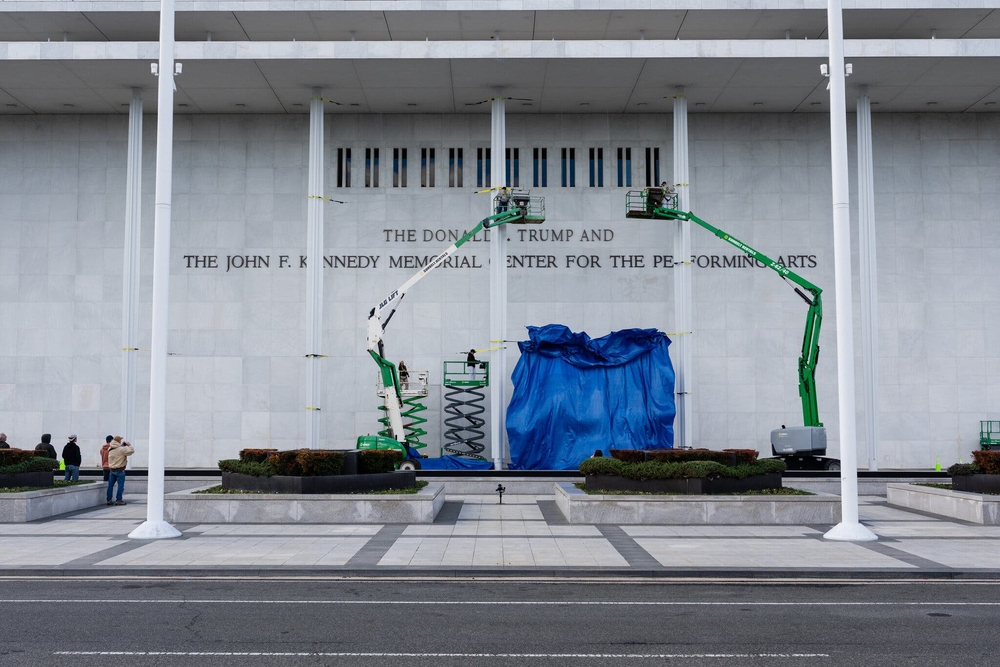
The John F. Kennedy Center for the Performing Arts, a beloved national cultural institution established to honor President Kennedy’s legacy and promote artistic excellence, is undergoing a fundamental transformation that threatens its very purpose. Following President Trump’s purge of several Kennedy Center board members and his installation as chairman, workers added his full name to the center’s marble facade last month. The institution’s official website changed its header to identify it as “The Trump Kennedy Center,” though no official announcement has been made about a permanent website address change.
This controversial renaming has sparked immediate backlash from the artistic community and beyond. High-profile artists have canceled performances in protest, and a federal lawsuit has been filed challenging the legality of the renaming, arguing that such a significant change requires congressional approval. The lawsuit raises serious constitutional questions about executive overreach and the proper boundaries of presidential power when it comes to cultural institutions established by Congress.
The Parody as Protest: Toby Morton’s Digital Resistance
In response to these developments, comedy writer Toby Morton secured the intuitive web address TrumpKennedyCenter.org and created a parody website that serves as both satire and social commentary. Morton, a television writer and producer with credits including “South Park” and “MadTV,” has been purchasing domains tied to politicians since 2020, creating websites that “mirror and expose political power by using its own language against it.”
The parody site replaces the center’s usual schedule of classical music, jazz, theater, and ballet performances with announcements for shows by the “Epstein Dancers” and features a redesigned logo depicting the building’s columns as prison bars. A banner proclaims the center “A National Institution Devoted To Power And Loyalty,” while a disclaimer clarifies its satirical nature. Morton describes the renaming itself as “almost performance art,” noting the “irony of someone who has openly mocked artists, dismissed culture and shown nothing but contempt for the arts now positioning himself as their steward.”
Historical Context and Institutional Integrity
The Kennedy Center was established by Congress in 1958 as a “living memorial” to President Kennedy, who was assassinated in 1963. For decades, it has stood as a bipartisan symbol of American cultural achievement and artistic freedom. The center’s mission has always been to promote the performing arts and make them accessible to all Americans, regardless of political affiliation. This nonpartisan character has been essential to its success and national standing.
The unilateral renaming of such an institution represents a dangerous precedent that threatens the integrity of all cultural landmarks. When political leaders can rebrand national institutions to include their own names without proper process or democratic consent, we edge closer to the kind of personality cults that democracies are supposed to resist. The Kennedy Center belongs to the American people, not to any single administration or political figure.
The Constitutional Implications
The federal lawsuit challenging the renaming raises critical questions about the separation of powers and congressional authority. Cultural institutions established by Congress have specific legislative mandates and governance structures designed to protect them from political manipulation. When an executive can unilaterally alter the fundamental identity of such institutions, it undermines the system of checks and balances that forms the bedrock of our constitutional democracy.
This action fits into a broader pattern of institutional erosion that should concern every American who values democratic governance. The rule of law depends on respect for established processes and institutional boundaries. When those boundaries are routinely crossed for political convenience or personal aggrandizement, we risk normalizing behavior that democracies cannot tolerate.
Artistic Freedom Under Threat
The cancellation of performances by high-profile artists represents more than mere protest; it signals a fundamental breach of trust between the artistic community and the institution meant to support them. Artists cannot create freely in an environment where cultural institutions become extensions of political power. The very purpose of arts institutions is to provide spaces where creativity can flourish independent of political pressure or ideological conformity.
Morton’s observation about the “irony” of President Trump positioning himself as a steward of the arts highlights the profound disconnect between this administration’s documented hostility toward artistic expression and its sudden interest in controlling a premier cultural institution. This isn’t about supporting the arts; it’s about controlling them.
The Power of Satire in Democratic Resistance
Toby Morton’s parody website represents more than just clever comedy—it’s a form of democratic resistance using the tools of digital activism. By creating TrumpKennedyCenter.org, Morton has demonstrated how citizens can use satire to expose authoritarian tendencies and hold power accountable. The website’s transformation of the center’s columns into prison bars powerfully visualizes what happens when cultural institutions become instruments of political control.
Satire has long served as a vital check on power in democratic societies. From Jonathan Swift to modern-day comedians, satirists have used humor to speak truth to power when more conventional forms of protest become difficult or dangerous. Morton’s work continues this tradition, using the very medium—the internet—that authoritarians often seek to control.
The Broader Pattern of Institutional Erosion
This incident cannot be viewed in isolation. It represents part of a broader pattern where democratic institutions and norms face systematic pressure. When cultural institutions, judicial systems, electoral processes, and media organizations all come under coordinated attack, democracy itself becomes vulnerable. The Kennedy Center renaming may seem like a minor issue compared to other democratic backsliding, but it’s precisely these incremental changes that can normalize more significant erosions of democratic practice.
The response from Kerry Kennedy, President Kennedy’s niece and a lawyer who has condemned the renaming, carries significant moral weight. Her opposition signals that this isn’t merely a political disagreement but a fundamental violation of the institution’s purpose and legacy. When family members of the person being honored feel compelled to speak out against the politicization of their relative’s memorial, we should pay attention.
The Path Forward: Reclaiming Our Institutions
Americans who value democracy and artistic freedom must recognize this renaming for what it is: an assault on institutional integrity and cultural independence. Supporting the artists who have canceled performances, following the progress of the federal lawsuit, and amplifying satirical critiques like Morton’s website are all ways citizens can resist this erosion of democratic norms.
Ultimately, the preservation of our democratic institutions requires constant vigilance and active citizenship. We cannot take for granted that cultural landmarks, judicial independence, free press, and electoral integrity will maintain themselves. Each generation must fight to protect and strengthen these institutions against those who would subvert them for personal or political gain.
The Kennedy Center should remain what it was intended to be: a living memorial to a president who inspired Americans to value public service and cultural achievement, not a monument to contemporary political power. The fact that this even needs to be stated demonstrates how far we’ve strayed from our democratic principles.
Conclusion: A Call to Defend Democratic Culture
As Americans committed to constitutional democracy, we must reject the politicization of our cultural institutions. The Kennedy Center belongs to all Americans, not to any political party or administration. Its hijacking for political purposes represents a betrayal of its founding mission and a threat to the cultural independence that defines a healthy democracy.
The courage shown by Toby Morton in creating his parody website, by the artists canceling their performances, and by the plaintiffs filing the federal lawsuit demonstrates that resistance to institutional erosion is possible. Each act of defiance, whether through satire, artistic protest, or legal challenge, helps reaffirm our commitment to democratic values.
We must remain vigilant against all attempts to weaponize our cultural institutions for political purposes. The survival of American democracy depends not just on protecting our political systems but also on preserving the cultural spaces where freedom of expression can flourish. The Kennedy Center should stand as a testament to artistic excellence and democratic values, not as another casualty in the ongoing assault on American institutions.