
The Washington National Opera's Stand: Artistic Freedom Versus Political Encroachment
Published
- 3 min read
The Facts: A Cultural Institution Forges a New Path
The Washington National Opera has made a significant institutional decision that reverberates beyond the world of performing arts. After nearly 70 years of association with what was traditionally known as the John F. Kennedy Center for the Performing Arts, the opera company has parted ways with the venue following its controversial renaming in honor of President Trump. The organization announced that its 70th season will continue at George Washington University’s Lisner Auditorium, marking a return to the institution’s roots where it began operations nearly seven decades ago.
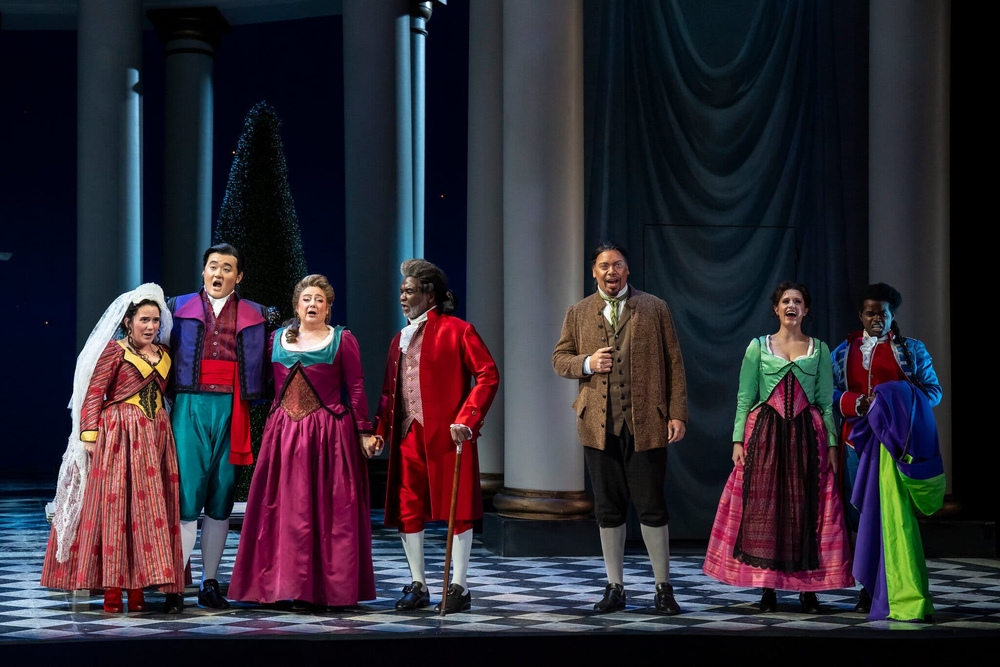
This spring season will feature three significant American works: the world premiere of a new version of Scott Joplin’s “Treemonisha” beginning March 7, performances of Robert Ward’s “The Crucible” based on Arthur Miller’s play starting March 21, and Leonard Bernstein’s “West Side Story” conducted by Marin Alsop, though specific dates and venue for the latter have yet to be announced. The opera’s annual gala will be hosted by “Wicked” composer Stephen Schwartz, who had previously stated he would not perform at the Kennedy Center under its new name.
The Context: Political Pressure and Cultural Resistance
The backdrop to this institutional separation reveals deeper tensions between cultural preservation and political influence. According to the opera’s statement, the organization received an influx of donations from more than 500 donors following its announcement that it would seek a new home amid clashes with the Trump administration and its allies. These clashes centered around efforts to rename the Kennedy Center in honor of President Trump, despite disputes about the board’s authority to overrule Congress regarding the name change.
The Kennedy Center’s spokeswoman, Roma Daravi, attributed the breakup to financial struggles, stating that the relationship had become “financially challenging” and that parting ways represented “the best path forward for both organizations.” However, attendance at the opera had declined significantly after Mr. Trump returned to office last year and installed himself as the Kennedy Center’s public face, naming himself chairman, filling its historically bipartisan board with loyalists, and personally hosting the ceremony for the annual Kennedy Center Honors.
The Deeper Implications: When Politics Threatens Cultural Integrity
This situation represents far more than a simple venue change—it symbolizes the dangerous erosion of institutional independence when political forces seek to co-opt cultural landmarks. The renaming of the Kennedy Center, an institution established to honor a president who championed arts and culture, to instead honor a sitting president represents a concerning precedent for the politicization of American cultural institutions.
Artistic director Francesca Zambello’s statement about the spring season programming reveals the deliberate messaging behind the opera’s choices: “We will present three American works that explore themes at the heart of what makes our country great. ‘Treemonisha’ celebrates the triumph of education over ignorance, while ‘The Crucible’ is a cautionary tale about a righteous mob that murders innocent women and tears families apart. We close with ‘West Side Story,’ a modern spin on the Shakespeare play that Leonard Bernstein called ‘an out and out plea for racial tolerance.‘”
These are not accidental selections—they are deliberate artistic statements about the values the opera company seeks to uphold in the face of political pressure.
The Principle at Stake: Institutional Independence Matters
The fundamental issue here transcends partisan politics and speaks to the core American principle of maintaining independent cultural institutions free from political interference. When any administration, regardless of party affiliation, seeks to put its stamp on cultural institutions, it threatens the very independence that makes art meaningful and culturally significant.
Artistic expression must remain separate from political agendas to maintain its integrity and authenticity. The decline in attendance following the political changes at the Kennedy Center demonstrates that audiences recognize when cultural institutions become politicized—and they vote with their feet. The influx of donations to the Washington National Opera shows that many Americans still value and will support institutions that maintain their artistic independence.
The Broader Pattern: Protecting Democratic Institutions
This situation reflects a broader pattern of institutional erosion that should concern every American who values democracy and freedom. Cultural institutions, like judicial, educational, and media institutions, form the bedrock of a healthy democracy. When these institutions become politicized or co-opted by any political faction, the entire democratic ecosystem suffers.
The Washington National Opera’s decision to move rather than compromise its artistic integrity sets an important example for other cultural institutions facing similar pressures. It demonstrates that there are alternatives to capitulation—that institutions can maintain their principles even when faced with significant political and financial pressure.
The Human Cost: Artists and Their Right to Choose
The individuals involved in this situation—from Timothy O’Leary and Francesca Zambello to Stephen Schwartz and Marin Alsop—represent the human dimension of this institutional struggle. When Stephen Schwartz states he will not set foot inside the Kennedy Center under its new name, he exercises his fundamental right as an artist to choose where and under what circumstances he will perform. This principle of artistic choice is fundamental to creative freedom.
The fact that many artists have said they would no longer perform at the center since Mr. Trump’s name was added demonstrates the real-world consequences of politicizing cultural institutions. Artists should not be forced to choose between their principles and their profession, yet that is precisely the choice that political interference creates.
The Way Forward: Supporting Independent Cultural Expression
As citizens who value freedom, democracy, and cultural expression, we must support institutions that maintain their independence in the face of political pressure. The Washington National Opera’s courageous stand deserves recognition and support from all who believe in the separation of art from politics.
We must also advocate for policies and practices that protect cultural institutions from political interference, ensuring that future administrations cannot similarly coopt institutions that belong to the American people, not to any political party or individual.
The move to smaller venues like the 1,400-seat Lisner Auditorium (compared to the Kennedy Center’s 2,300-seat Opera House) and other locations around Washington demonstrates that artistic excellence doesn’t require grand stages—it requires principled leadership and committed artists. Sometimes, standing for principles means making practical sacrifices, and the opera company’s willingness to do so sets an important example.
Conclusion: Art as a Guardian of Democratic Values
In conclusion, the Washington National Opera’s decision to leave the Kennedy Center represents more than an organizational change—it represents a stand for artistic freedom, institutional independence, and the fundamental American values that should guide our cultural institutions. As we watch this story unfold, we must remember that protecting cultural institutions from political interference is not about partisan politics—it’s about preserving the spaces where art can challenge, inspire, and reflect our shared humanity without political constraint.
The choice of productions for the spring season—works about education triumphing over ignorance, cautionary tales about mob mentality, and pleas for racial tolerance—speaks volumes about the values the opera company seeks to uphold. In a democracy, art must remain free to challenge power, question assumptions, and give voice to diverse perspectives. When political forces seek to control that expression, they threaten not just art, but democracy itself.