
The Venezuelan Intervention: A Dangerous Precedent for Democracy and Sovereignty
Published
- 3 min read
The Facts of the Military Operation
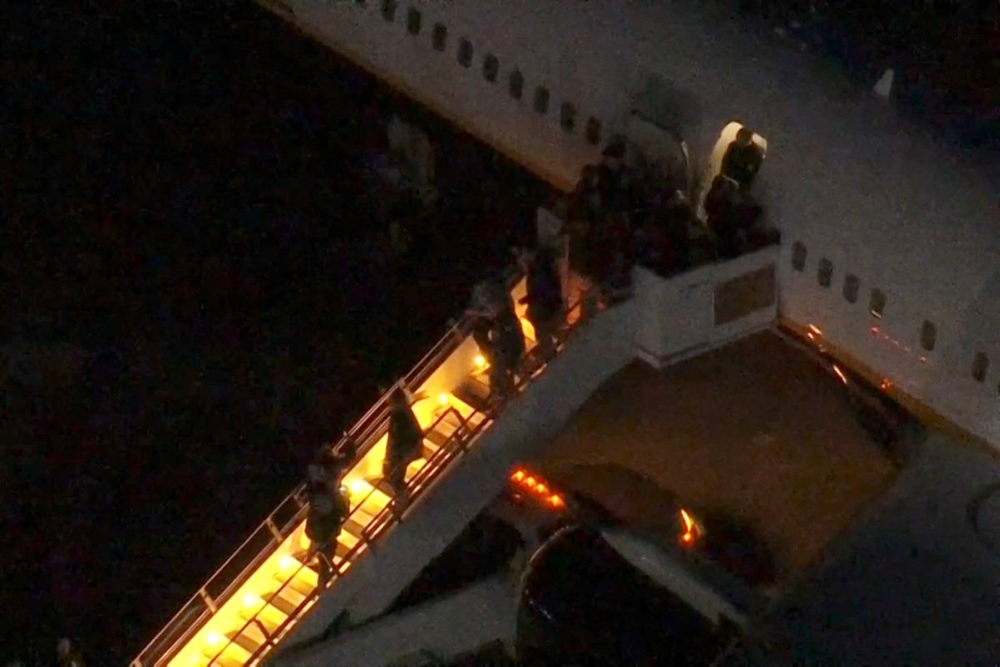
In a dramatic escalation of foreign policy aggression, United States forces conducted a military operation in the early hours of January 3, 2026, that resulted in the capture of Venezuelan leader Nicolás Maduro and his wife Cilia Flores. According to President Donald Trump’s announcement, the operation involved U.S. warships and special forces who seized the couple from their home within the Ft. Tiuna military installation in Caracas, during which explosions rocked the Venezuelan capital. The captured leaders were transported aboard the USS Iwo Jima to New York City to face narco-terrorism conspiracy charges that had been pending since 2020.
President Trump declared that the United States would temporarily “run” Venezuela and tap into the country’s vast oil reserves for sale to other nations. The operation represents the most assertive American action to achieve regime change since the 2003 invasion of Iraq and was justified by the administration as necessary to stem the flow of dangerous drugs into the United States. The Justice Department released a new indictment accusing Maduro of leading “a corrupt, illegitimate government that, for decades, has leveraged government power to protect and promote illegal activity, including drug trafficking.”
International and Domestic Reactions
The immediate reaction from the international community was largely critical, with multiple nations and organizations condemning the action as a violation of international law and national sovereignty. The United Nations expressed being “deeply alarmed” by the U.S. strikes, stating that these developments “constitute a dangerous precedent” and violate international law. China strongly condemned the operation, calling it a “hegemonic act” that seriously violates Venezuela’s sovereignty. Russia denounced it as “an act of armed aggression” and called for an emergency U.N. Security Council meeting.
European leaders expressed caution and concern. EU foreign policy chief Kaja Kallas emphasized that “the principles of international law and the UN Charter must be respected,” while Spanish Prime Minister Pedro Sánchez called for “de-escalation and responsibility.” British Prime Minister Keir Starmer noted that the U.K. was not involved and stated he would seek more information from Trump, adding that he always believes international law should be upheld.
Domestically, the reaction was deeply divided along partisan lines. The Congressional Black Caucus issued a statement blasting Trump over what they called “a grave and illegal abuse of power,” warning that the deployment of U.S. military power to impose political change without congressional consent “threatens to draw the United States into an indefinite conflict in Venezuela.” Senate Democratic Leader Chuck Schumer called the actions “reckless,” stating that “the idea that Trump plans to now run Venezuela should strike fear in the hearts of all Americans.”
Republican officials largely supported the operation. Vice President JD Vance praised the “brave special operators who pulled off a truly impressive operation,” while Secretary of State Marco Rubio hinted that Cuba could be the next target of the administration’s push to restore American dominance in the Western Hemisphere. Utah Senator Mike Lee stated that Rubio briefed him, anticipating no further action in Venezuela now that Maduro was in U.S. custody.
The Legal and Constitutional Implications
The unilateral military action raises profound legal and constitutional questions that strike at the very heart of American democratic principles. The operation was conducted without congressional authorization, despite the War Powers Resolution requiring the president to seek congressional approval within 60 days of introducing armed forces into hostilities. This represents a continued erosion of the constitutional balance of powers that has been underway for decades but has accelerated dramatically under this administration.
Columbia University law professor Matthew Waxman, a former national security official in the George W. Bush administration, noted that seizing control of Venezuela’s resources opens additional legal issues: “For example, a big issue will be who really owns Venezuela’s oil? An occupying military power can’t enrich itself by taking another state’s resources.” Waxman observed that the administration has talked “very dismissively about international law when it comes to Venezuela.”
The extraction of a foreign leader for trial in American courts sets a troubling precedent that undermines international legal norms and could potentially be used against American officials in the future. While Maduro’s regime was undoubtedly criminal and authoritarian, the means of addressing these concerns matter profoundly for maintaining the international legal order that protects all nations, including the United States.
The Principle of Sovereignty and Self-Determination
At the core of this crisis lies the fundamental principle of national sovereignty and the right of self-determination. Regardless of how reprehensible a foreign government may be, the people of that nation retain the right to determine their own political future without foreign military intervention. The path to democracy in Venezuela must be chosen by Venezuelans themselves, not imposed through American military might.
The administration’s declaration that the U.S. will temporarily “run” Venezuela and control its oil resources represents a return to the most problematic aspects of American imperialism and paternalism that has long plagued U.S.-Latin American relations. This approach fundamentally disrespects the dignity and agency of the Venezuelan people and risks creating lasting resentment that could undermine any transitional government that emerges from this intervention.
Canadian Prime Minister Mark Carney appropriately noted that Canada stands by the “Venezuelan people’s sovereign right to decide and build their own future.” This respect for self-determination represents the democratic approach that the United States should champion, rather than resorting to military force that echoes the worst chapters of American foreign policy in Latin America.
The Dangerous Precedent for Global Stability
This intervention establishes a perilous precedent that could have far-reaching consequences for global stability and international norms. If powerful nations can militarily overthrow governments they disapprove of under the guise of combating drug trafficking or other crimes, we risk returning to an era where might makes right and smaller nations live in constant fear of intervention by more powerful neighbors.
The administration’s suggestion that Cuba might be next targeted reveals the expansive and dangerous vision behind this policy. Secretary of State Marco Rubio’s comment that Cuban officials “should be concerned” signals an approach to foreign policy that relies on coercion and threat rather than diplomacy and mutual respect. This not only undermines American moral authority but also creates incentives for other nations to develop nuclear weapons or form defensive alliances against American intervention.
The United Nations was correct to warn that these developments “constitute a dangerous precedent” that threatens regional stability. In an increasingly multipolar world, actions that undermine the foundational principles of the UN Charter ultimately weaken the international system that has maintained relative peace among great powers since World War II.
The Hypocrisy in Foreign Policy Approach
The administration’s approach to Venezuela stands in stark contrast to its treatment of other leaders accused of similar crimes, revealing a troubling hypocrisy that undermines American credibility. Most notably, President Trump granted clemency to former Honduran President Juan Orlando Hernández, who was sentenced to 45 years in U.S. prison for helping drug traffickers move hundreds of tons of cocaine to the United States. When asked about this pardon, Trump claimed he didn’t know Hernández and suggested he was “set up.”
This double standard—military intervention against one leader accused of drug trafficking while pardoning another convicted of similar crimes—suggests that the administration’s policy is driven not by consistent principles but by political considerations and personal relationships. Such inconsistency damages America’s standing as a nation that upholds the rule of law equally and predictably.
The administration’s casual approach to international law, as noted by Professor Waxman, further undermines American leadership. When the world’s most powerful nation treats international legal norms as optional, it encourages other nations to do the same, ultimately creating a more unpredictable and dangerous world for all.
The Path Forward: Respecting Democracy and International Norms
The solution to Venezuela’s crisis cannot be found through foreign military intervention but through supporting democratic processes and respecting international institutions. The United States should immediately:
- Work through the United Nations to establish a legitimate transitional process led by Venezuelans
- Respect Venezuela’s sovereignty and resource ownership while supporting anti-corruption efforts
- Seek congressional authorization for any continued military involvement
- Support international legal processes rather than extraordinary rendition of foreign leaders
- Focus on humanitarian assistance to alleviate the suffering of the Venezuelan people
The Venezuelan people deserve freedom from oppression and the opportunity to build a democratic future, but this must come through their own struggle and determination, not through foreign imposition. True democracy cannot be delivered by cruise missiles and special forces—it must emerge from the collective will of a people exercising their right to self-determination.
America’s role should be to support democratic movements through diplomatic pressure, targeted sanctions against corrupt officials, humanitarian assistance, and steadfast moral support for those fighting for liberty—not through military intervention that violates the very principles we claim to defend. Our nation’s commitment to democracy and freedom must be demonstrated through our respect for international law and national sovereignty, not through the barrel of a gun.
The capture of Nicolás Maduro may provide temporary satisfaction to those who have long opposed his regime, but the means by which it was accomplished have done lasting damage to American principles and standing in the world. We must recommit to a foreign policy that reflects our deepest values of democracy, liberty, and respect for the sovereign rights of all nations, no matter how small or troubled they may be.