
The Venezuelan Crucible: Force, Fuel, and the Fraying of Democratic Norms
Published
- 3 min read
The Escalating Conflict
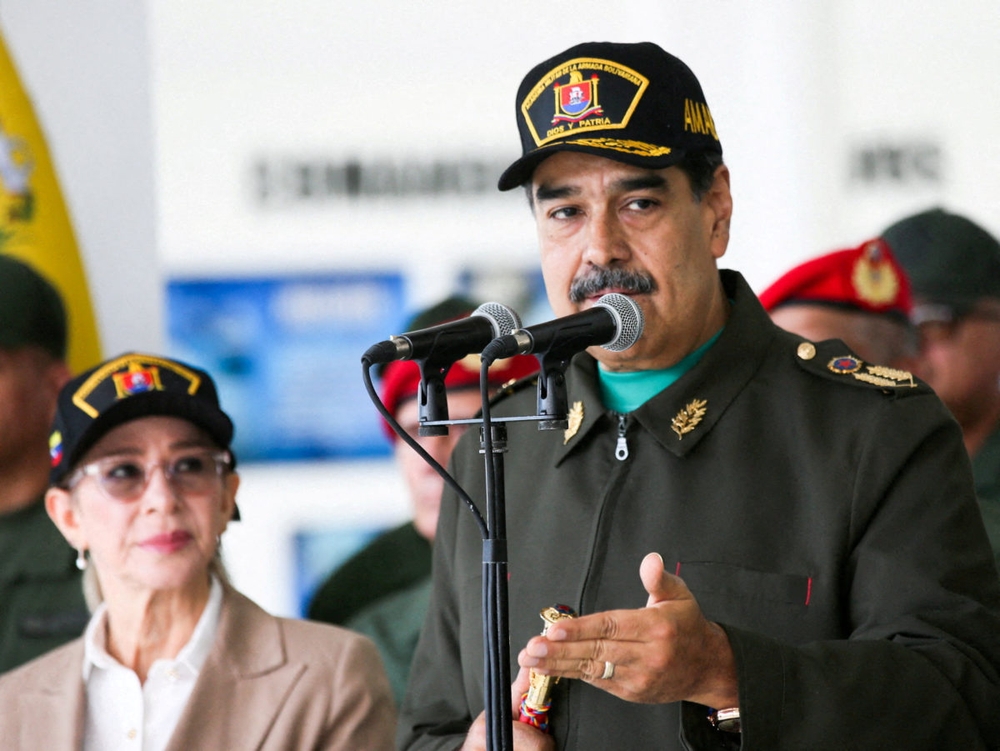
The geopolitical standoff between the United States and Venezuela has entered a perilous new phase, marked by military strikes and clandestine operations. In a recent interview, Venezuelan President Nicolás Maduro presented a public face of diplomatic openness, declaring his country’s readiness to negotiate an agreement with the United States to combat drug trafficking. He extended an olive branch, stating Venezuela is prepared for U.S. investment in its vast oil reserves, notably mentioning Chevron Corp., the sole major U.S. company still exporting Venezuelan crude. This overture, however, is set against a backdrop of intense and escalating pressure from the Trump administration, which Maduro characterized as a campaign to force a government change and gain control of Venezuela’s oil wealth through “threats, intimidation, and force.”
The Facts on the Ground
The context for Maduro’s interview, taped on New Year’s Eve, is a months-long pressure campaign initiated by the United States. This campaign began with a significant military deployment to the Caribbean Sea in August. The situation dramatically escalated with the U.S. military announcing strikes against alleged drug-smuggling boats. According to administration figures, these attacks have resulted in at least 35 boat strikes and 115 people killed, with Venezuelans confirmed among the victims. President Donald Trump has justified these actions as a necessary escalation in an “armed conflict” with drug cartels to stem the flow of narcotics into the United States.
Most alarmingly, this conflict has now extended directly to Venezuelan soil. The Associated Press reported, based on anonymous sources, that the CIA was behind a drone strike last week on a Venezuelan docking area believed to be used by drug cartels. This represents the first known direct U.S. operation on Venezuelan territory since the naval campaign began, signaling a significant and dangerous intensification. Maduro, when asked about this specific operation on his nation’s sovereign territory, deferred comment, saying he would “talk about it in a few days.”
A Clash of Narratives and Sovereignty
At its core, this conflict presents a stark clash of narratives. The Trump administration frames its actions within the long-standing paradigm of the “war on drugs,” portraying Venezuela under Maduro as a narco-state that necessitates a robust, even militarized, response. The U.S. Department of Justice has formally charged Maduro with narco-terrorism, lending legal weight to this characterization. From this perspective, the military strikes and clandestine operations are defensive measures to protect American citizens from the scourge of illegal narcotics.
President Maduro, and his supporters, frame the situation as a blatant act of imperial aggression. He accuses the U.S. of using the drug war as a pretext for its true objectives: regime change and the seizure of Venezuela’s prodigious natural resources. This narrative resonates with a long history of U.S. intervention in Latin America and taps into deep-seated anxieties about national sovereignty. The offer of negotiation on drug trafficking and oil investment can be seen as an attempt to call what he perceives as America’s bluff, challenging the stated justification for the pressure campaign.
The Principle of Sovereignty and the Perils of Intervention
From a perspective deeply committed to democracy, freedom, and the rule of law, the current situation is fraught with profound ethical and strategic dangers. The principle of national sovereignty is a cornerstone of the international order and a critical buffer against the law of the jungle. The reported CIA strike on Venezuelan soil, conducted without the explicit consent of the recognized government, represents a serious violation of this principle. While the Maduro regime’s democratic credentials are severely compromised, bypassing sovereignty sets a dangerous precedent that can be exploited by powerful nations against weaker ones, ultimately undermining the very framework that protects all nations, large and small.
Military force, particularly covert operations, is a blunt and unpredictable instrument. The Trump administration’s assertion of an “armed conflict” with drug cartels dangerously blurs the lines between law enforcement and warfare. This approach risks catastrophic collateral damage, as evidenced by the reported deaths of over 100 individuals. It also has a dismal historical track record; the militarization of the drug war has often exacerbated violence, corrupted institutions, and failed to meaningfully reduce the supply of drugs. Escalating force in Venezuela risks plunging a nation already crippled by economic collapse and humanitarian crisis into deeper chaos, causing immense suffering for the very people we purport to help.
The Human Cost and the Democratic Deficit
The most tragic element of this escalating confrontation is the human cost borne by the Venezuelan people. They are caught between the oppressive incompetence of the Maduro regime and the potentially devastating consequences of external military pressure. They are the victims of narco-corruption, economic hyperinflation, and political repression. Now, they are also becoming casualties in a distant conflict framed around American domestic concerns. A true commitment to humanism and liberty demands that the welfare of these individuals be the paramount consideration, not a secondary effect or an acceptable cost of doing business.
It is impossible to discuss this conflict without acknowledging the profound democratic deficit within Venezuela itself. The Maduro regime has systematically dismantled democratic institutions, suppressed political dissent, and presided over a catastrophic economic collapse that has led to mass emigration. He is a leader whose legitimacy is widely contested, both internally and internationally. However, the answer to an illiberal regime cannot be an illiberal intervention that disregards international norms and risks widespread bloodshed. The path to restoring democracy in Venezuela must be led by the Venezuelan people, supported by robust diplomatic pressure, targeted sanctions against regime officials, and unwavering support for civil society—not by missiles and drones.
A Call for Principled Engagement
The current trajectory—of military strikes, covert operations, and escalating rhetoric—leads only to a darkened path of greater violence and instability. It undermines the rules-based international order that the United States has long claimed to champion. A foreign policy truly rooted in the principles of liberty and democracy would recognize that lasting change cannot be imposed at gunpoint; it must be cultivated.
The United States should recalibrate its approach immediately. This means halting unilateral military actions on Venezuelan soil and in its waters. It means engaging seriously with Maduro’s offer of negotiation, not to legitimize his regime, but to test its sincerity and de-escalate a volatile situation. Any agreement on drug trafficking must include verifiable mechanisms and be part of a broader diplomatic framework that includes all relevant regional actors. The focus must shift from regime change to creating conditions conducive to a peaceful, Venezuelan-led democratic transition.
The Venezuelan people deserve freedom from both the tyranny of their government and the trauma of foreign intervention. Our policies must reflect a steadfast commitment to their human rights, their sovereignty, and their ultimate right to determine their own future through genuine democratic processes. The current course of action betrays these principles and threatens to compound one tragedy with another. We must choose a better path, one guided by law, diplomacy, and an unshakeable belief in the power of people to secure their own liberty.