
The Venezuelan Betrayal: When Pragmatism Trumps Principle in American Foreign Policy
Published
- 3 min read
The Facts: A Complex Political Landscape
The recent developments in Venezuela present a troubling portrait of American foreign policy at a crossroads. Venezuelan opposition leader María Corina Machado, fresh from receiving the Nobel Peace Prize for her democratic crusade, expressed profound confidence in her country’s transition to democracy following the U.S. military’s ouster of former President Nicolás Maduro. However, this optimism exists alongside the Trump administration’s clear preference for dealing with Delcy Rodríguez, Maduro’s longtime second in command and acting president, rather than Machado’s opposition movement.
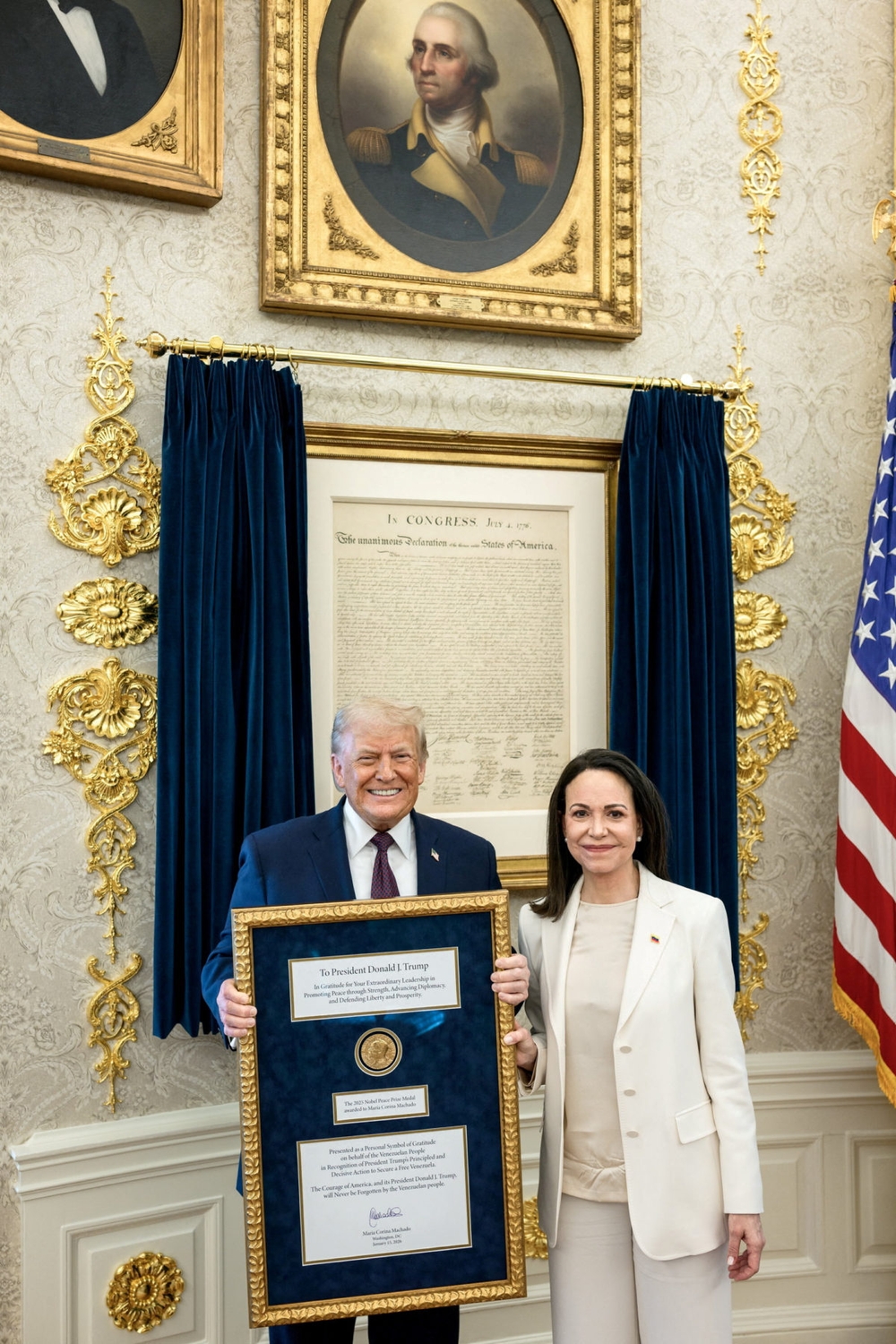
Machado’s visit to Washington was strategically timed to rekindle support for Venezuelan democracy, culminating in the symbolic presentation of her Nobel medal to President Trump. Yet this gesture appears to have done little to alter the administration’s perception that Rodríguez is better prepared to stabilize the South American nation. Meanwhile, CIA Director John Ratcliffe’s travel to Venezuela to meet with Rodríguez serves as further confirmation of the White House’s preferred partnership.
The backdrop to these developments includes the controversial 2024 presidential election, where Machado was barred from running and replaced by previously unknown former diplomat Edmundo Gonzalez. Despite ample credible evidence suggesting opposition victory, election officials loyal to the ruling party declared Maduro the winner, leading to Machado going into hiding before reemerging months later to receive her Nobel Prize in Norway.
The Context: Historical Patterns and Democratic Ideals
Venezuela’s political crisis represents the culmination of 25 years of single-party rule under socialist governments increasingly hostile to the United States. The country’s transformation from a regional democracy to an authoritarian state has been accompanied by economic collapse, humanitarian crisis, and systematic human rights abuses. Machado’s movement emerged as the primary democratic alternative, mobilizing millions of Venezuelans desperate for change.
American policy toward Venezuela has oscillated between ideological confrontation and pragmatic engagement across multiple administrations. The Trump administration’s initial approach included strong rhetoric supporting democratic transition, sanctions against Maduro’s government, and recognition of opposition leadership. However, the current shift toward working with Rodríguez signals a dramatic departure from these previous positions.
The Principle Betrayed: Democracy Sacrificed at the Altar of Pragmatism
The administration’s preference for Rodríguez over Machado represents nothing less than a fundamental betrayal of democratic principles. While stability is undoubtedly important, achieving it through alignment with authoritarian enablers undermines the very values America claims to champion internationally. Rodríguez served as Maduro’s vice president during some of the most brutal crackdowns on dissent and systematic human rights violations. Choosing to work with such a figure signals that America values stability over freedom, order over justice.
This approach dangerously conflates short-term geopolitical interests with long-term democratic values. The message sent to democratic movements worldwide is chilling: America will abandon even Nobel Peace Prize-winning freedom fighters when convenient. This not only damages American credibility but emboldens authoritarian regimes everywhere, demonstrating that American principles are negotiable when strategic interests are at stake.
The Moral Hazard: Rewarding Authoritarian Structures
By engaging with Rodríguez while sidelining Machado, the administration effectively rewards the very authoritarian structures that suppressed Venezuelan democracy. This creates perverse incentives for authoritarian regimes worldwide, suggesting that maintaining power through suppression and election manipulation can eventually lead to international legitimacy and partnership. The moral hazard here cannot be overstated—we are telling dictators that if they hold on long enough and maintain sufficient control, America will eventually work with them regardless of their democratic credentials.
This approach also undermines the courageous efforts of Venezuelan citizens who risked everything for democracy. Millions voted despite intimidation, protested despite violence, and believed in America’s promise to support democratic movements. Their faith has been repaid with political calculation that values oil infrastructure and regional stability over their fundamental rights and freedoms.
The Constitutional Imperative: America’s Democratic Soul
America’s foreign policy should reflect the constitutional values that define our nation. The preamble’s commitment to “secure the Blessings of Liberty to ourselves and our Posterity” implies both domestic and international responsibility. When we abandon democratic champions like Machado in favor of authoritarian enablers like Rodríguez, we betray not only Venezuelans but our own constitutional heritage.
The Bill of Rights embodies principles that should guide our international engagements—free speech, assembly, and representative government. Supporting figures connected to regimes that systematically violate these rights contradicts everything America should represent on the world stage. Our foreign policy must be consistent with our constitutional values, not contradictory to them.
The Strategic Miscalculation: Short-Term Gains vs Long-Term Stability
The administration’s approach represents a profound strategic miscalculation. While working with Rodríguez might offer short-term advantages in terms of oil production and regional stability, it fundamentally undermines long-term American interests. Democratic nations make more reliable partners, more stable trading relationships, and stronger allies. Authoritarian regimes, even when temporarily cooperative, ultimately pursue interests that conflict with American values and security.
History demonstrates that stability built on authoritarian foundations is inherently fragile. The Iranian Revolution, the Arab Spring, and numerous other examples show that suppressing democratic aspirations creates pressure that eventually erupts. America should be on the side of sustainable democracy, not temporary stability that inevitably leads to greater instability.
The Human Cost: Real People, Real Suffering
Behind the geopolitical calculations are real human beings suffering under authoritarian rule. Venezuelans have endured hyperinflation, food shortages, medical crises, and political repression. Their hope for democracy represented by Machado’s movement has been crushed not only by their own government but now by America’s abandonment. This human cost should weigh heavily on any moral foreign policy calculation.
The administration’s preference for Rodríguez particularly insults the memory of those who suffered under Maduro’s regime. It disregards the political prisoners, the exiled journalists, the murdered protesters, and the families torn apart by authoritarianism. American policy should honor their sacrifice by supporting genuine democracy, not pragmatic authoritarianism.
The Way Forward: Recommitting to Democratic Principles
America must return to a foreign policy that consistently supports democratic movements and leaders. This means unequivocally supporting Machado’s movement, maintaining pressure on authoritarian structures, and making clear that America partners with democracies, not dictatorships. It means understanding that true stability comes from legitimate governance, not forced order.
The Venezuelan people deserve better than being pawns in geopolitical calculations. They deserve America’s consistent support for their democratic aspirations. Our nation’s soul—and our constitutional commitment to liberty—demands nothing less than standing firmly with those who fight for freedom against overwhelming odds.
Conclusion: Democracy as Non-Negotiable Principle
The situation in Venezuela tests America’s commitment to its founding principles. Will we choose the easy path of pragmatism or the righteous path of principle? The answer will define not only Venezuela’s future but America’s moral standing in the world. Democracy must remain non-negotiable in American foreign policy—not a variable to be traded for temporary advantage, but the foundation upon which all international engagements are built.
Our Constitution’s promise of liberty must extend beyond our borders through consistent support for those who share our democratic values. The betrayal of María Corina Machado and the Venezuelan people must end, replaced by unwavering support for democracy, freedom, and the rule of law. America’s soul—and the world’s hope for freedom—depends on it.