
The Unseen Crisis: How Bureaucratic Constraints Obscure Nevada's Homelessness Emergency
Published
- 3 min read
The Counting Conundrum
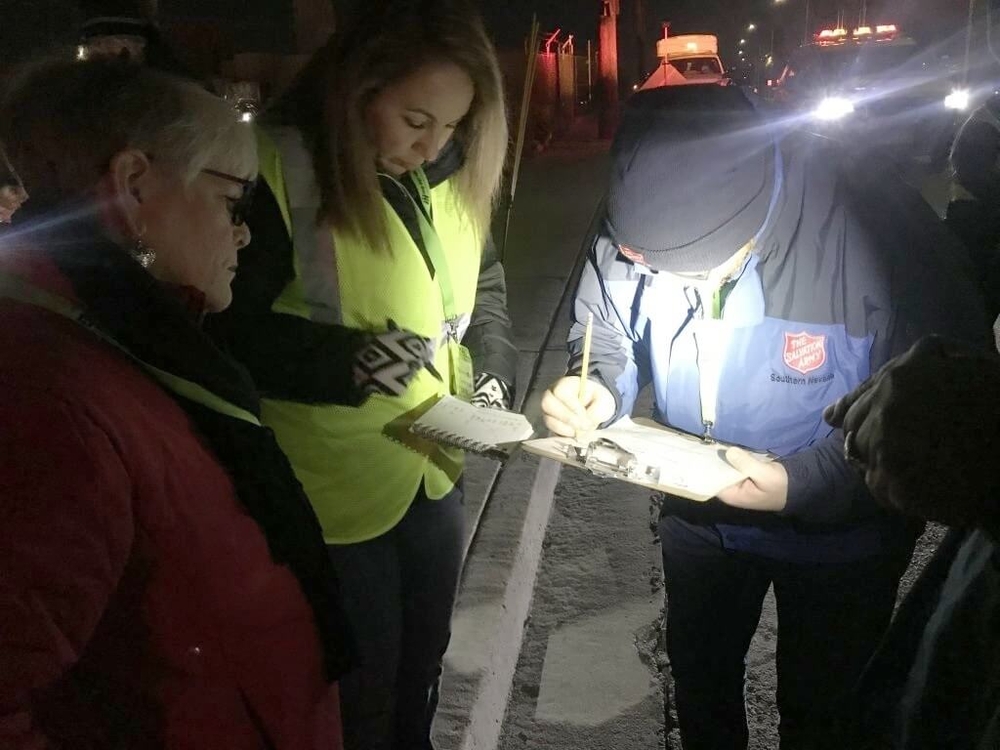
Clark and Washoe counties in Nevada are preparing this week to resume their annual point-in-time (PIT) count of unsheltered individuals, a federally mandated effort to quantify homelessness on a single night in January. This exercise, required by the U.S. Department of Housing and Urban Development (HUD), aims to provide a snapshot of street-level homelessness along with those in emergency shelters and transitional housing. However, the strict HUD guidelines create significant limitations on who can be counted, effectively excluding numerous vulnerable populations from official statistics.
The most recent HUD report revealed a disturbing 17% increase in homelessness across Nevada in 2024, mirroring a 20% national increase. Southern Nevada’s 2024 count identified 7,906 unhoused people—a 20% increase from the previous year—while Washoe County found 1,760 individuals, representing a 4% increase from 2023. Both jurisdictions anticipate further increases this year, attributing the rise to skyrocketing rents, eviction rates, and worsening housing affordability.
The Hidden Populations
What these numbers fail to capture is perhaps more alarming than what they include. The HUD guidelines systematically exclude individuals who were incarcerated during the count, those in emergency rooms and hospitals, people living in hotels, and those “doubled up” with family members. As Catrina Peters, Washoe County’s Homeless Services Coordinator, acknowledges: “There’s an even larger number of people who are in precarious or kind of less than optimal living situations that are not included in the PIT count.”
This methodological limitation means that the official statistics represent only a fraction of the actual housing insecurity crisis. Brenda Barnes, social services manager with Clark County, admits there will “always be an undercount,” even as the county refines its counting methodology. The Southern Nevada Continuum of Care Board is exploring separate tallies for incarcerated individuals, though nothing has been finalized.
Political Dimensions and Data Collection
The counting process has taken on additional complexity under recent federal changes. The Trump Administration’s increased rhetoric attacking the transgender community has manifested in HUD policy changes restricting questions around “gender ideology” during the PIT count. While Clark County will make the question optional for volunteers, they won’t include transgender data in their final HUD report—a decision that Washoe County appears to be challenging by including this data.
This represents a dangerous erosion of data integrity that could have life-or-death consequences for vulnerable populations. Without accurate demographic information, service providers cannot adequately address the specific needs of transgender individuals experiencing homelessness, who face disproportionate risks of violence and discrimination.
The Impact of Anti-Homeless Legislation
This year’s count marks the first since most jurisdictions enacted anti-homeless camping bans that criminalize sleeping, camping, and living in cars. Neither county official could predict how these laws might affect the count, though Barnes noted that Clark County had expanded non-congregate shelters, potentially increasing sheltered homelessness counts as encampments are cleared.
A Moral and Constitutional Failure
The systematic undercounting of homelessness represents more than just a statistical failure—it constitutes a moral failure of profound proportions. When we allow bureaucratic guidelines to determine which human beings count as worthy of recognition, we betray the very principles of human dignity upon which our nation was founded. The Constitution’s promise of life, liberty, and the pursuit of happiness becomes meaningless when we refuse to acknowledge the existence of those denied these basic rights.
This counting methodology creates a convenient fiction that minimizes the scale of our housing crisis, enabling policymakers to avoid confronting the uncomfortable truth: that in the wealthiest nation on earth, thousands of our fellow citizens lack basic shelter. The 17% increase in homelessness should shock our conscience, but when coupled with the knowledge that this represents only a fraction of the actual crisis, it should provoke outrage and immediate action.
The Affordable Housing Imperative
Catrina Peters correctly identifies the core issue: “The one data point that continues to persist is that in communities where rent is extremely high, those are the communities that struggle with high homeless rates.” This fundamental economic reality cannot be addressed through better counting methodologies alone. We must confront the affordable housing crisis with the urgency it demands.
The fact that people are becoming homeless due to rising rents and evictions represents a catastrophic failure of our housing system. When hardworking Americans cannot afford a place to live despite employment, we have created an economy that privileges property over people, profit over basic human dignity.
Criminalizing Poverty
The recent proliferation of anti-homeless camping bans represents a particularly cruel response to this crisis. Rather than addressing the root causes of homelessness, these laws criminalize poverty itself, pushing vulnerable individuals further into the shadows and making accurate counting even more difficult. This approach violates basic constitutional principles by effectively punishing people for their economic status.
When we criminalize sleeping in public spaces without providing adequate alternatives, we create an impossible choice for unhoused individuals: violate the law or face exposure to the elements. This is not merely poor policy—it is fundamentally anti-human and contrary to the values of a compassionate society.
Toward a More Humane Approach
We must demand better from our leaders and ourselves. First, we need more comprehensive data collection that acknowledges all forms of housing insecurity, not just those that fit HUD’s narrow definitions. Second, we must address the affordable housing crisis through substantial investment in housing construction, rent stabilization measures, and eviction prevention programs.
Third, we must reject the criminalization of homelessness and instead develop compassionate approaches that recognize housing as a human right. Finally, we must ensure that data collection includes all demographic information necessary to serve vulnerable populations, including transgender individuals who face particular risks when unhoused.
The point-in-time count should serve as a wake-up call, not a comforting fiction. The numbers we see—already alarming—represent only the visible portion of an iceberg that threatens to sink our collective commitment to human dignity. We must choose whether we will continue to look away or finally confront this crisis with the urgency and compassion it demands.
Our nation’s character is measured not by how we treat the most powerful among us, but by how we care for the most vulnerable. On this measure, we are failing catastrophically. The time for half-measures and bureaucratic excuses has passed—we need bold action that recognizes every person’s right to shelter, safety, and dignity.