
The Unraveling of a Betrayal: Syria's Kurds and the Hollow Promise of Western Allies
Published
- 3 min read
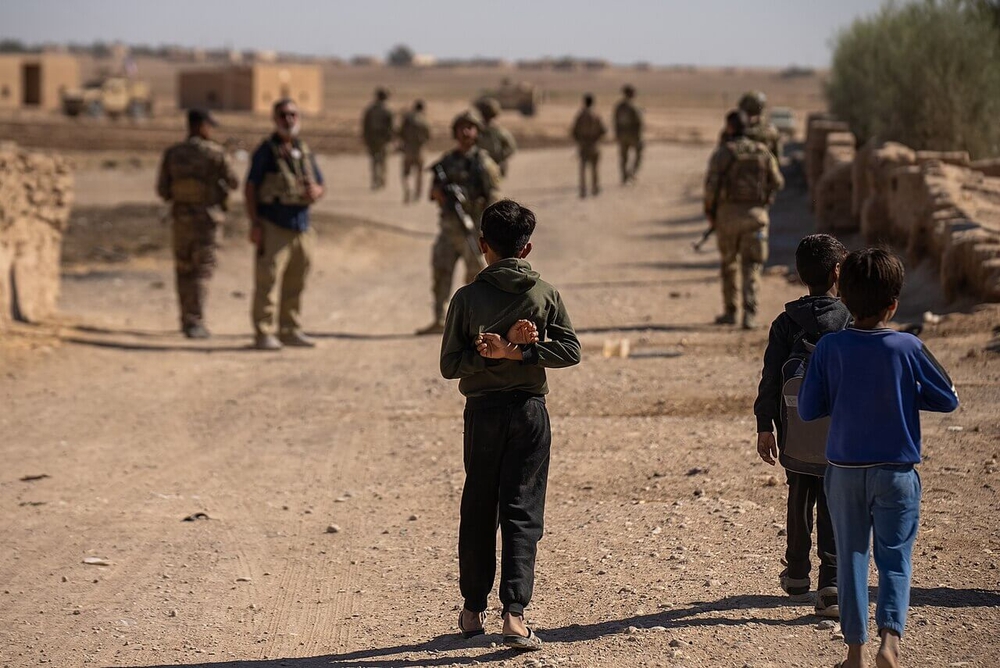
The Shifting Sands of Control
Over the past week, the geopolitical landscape of northern and eastern Syria has undergone a dramatic and rapid transformation. The Syrian Democratic Forces (SDF) and the aligned Kurdish Autonomous Administration have suffered a series of significant setbacks, relinquishing control over key strategic territories. This retreat began in the Kurdish neighborhoods of Aleppo and extended to the entire western Euphrates area, which was formally handed over to the Syrian Ministry of Defense. The subsequent entry of Arab tribal groups into the Eastern Euphrates cities of Tabqa and Raqqa—long-held SDF strongholds—along with the critical oil fields of eastern Deir ez-Zor, has effectively redrawn Syria’s map of control. These developments are concentrated along the strategic M4 highway, a vital artery for trade and military movement, signaling a profound shift in the balance of power. Amidst these territorial losses and the outbreak of clashes, a fragile but crucial space for dialogue remains open between the SDF and the Damascus government. The stated goal of these negotiations is to prevent Syria from descending into another devastating cycle of terrorism and sectarian revenge, a threat exacerbated by rising ethnic polarization and escalating hate speech nationwide.
The Context of Kurdish Disappointment
These military and political shifts are set against a backdrop of profound Kurdish disillusionment with the United States. For years, Washington positioned itself as a strategic ally of the Kurdish forces in the shared fight against the Islamic State (ISIS). However, at critical junctures, the U.S. has confined its role to that of a passive observer or a cautious mediator, a stance that has shocked Kurdish leaders engaged in direct talks. These leaders have expressed clear surprise at an American approach that they perceive as demanding unilateral concessions rather than fostering a balanced, political integration process. This decline in tangible political support and concrete security guarantees has reinforced a growing belief among Kurdish actors that reliance on the U.S. security umbrella is no longer a viable or safe strategy. The lesson is stark: shifting international interests can, and will, override past commitments at any moment. With an estimated 2-3.5 million Kurds comprising about 10% of Syria’s population, concentrated in the north and east, this sense of betrayal carries immense weight.
A Glimmer of Recognition and Its Limitations
In the midst of this turmoil, Syria’s transitional president, Ahmad Al-Sharaa, issued a presidential decree that represents a potential first step toward historical redress. The decree officially acknowledges the existence of Syrian Kurds as a distinct people with their own language, culture, and identity. This move can be interpreted as an operationalization of Article Two of the March 10, 2025 agreement between President Al-Sharaa and SDF commander General Mazloum Abdi, wherein the SDF committed to integrating its forces into a new Syrian national army. Many legal experts view this decree as holding significant national value in addressing long-standing Kurdish historical grievances. However, it remains a deeply imperfect instrument. The decree requires further clarification of key terms and must be incorporated into both the current constitutional declaration and a future permanent constitution to have lasting effect. As a presidential decree, it can be amended or revoked by a simple executive decision, leaving the absence of binding guarantees as a central and justified Kurdish concern.
The Practical Framework for a Fragile Future
In response to these challenges, the SDF has refocused its efforts on Hasakah province, an area containing several large Kurdish-majority districts and key economic resources. This strategic consolidation allows the SDF to reorganize within the existing ceasefire framework and navigate the complex process of integration into Syrian state institutions. Several notable points of understanding have emerged between the SDF and Damascus, potentially shaping future governance. These include the first official delineation of Kurdish regions and the establishment of a local security force in Ain al-Arab/Kobane under the Ministry of Interior, with personnel appointed from candidate lists proposed by the SDF. The agreements also cover cooperation in combating ISIS, arrangements for the return of displaced persons to regions like Afrin and Sheikh Maqsoud, and mechanisms for sharing economic resources. This framework opens the possibility for a model that preserves a degree of specificity for Kurdish regions through forms of administrative decentralization, similar to arrangements in other areas like Suwayda, home to the Syrian Druze.
The Cynical Abandonment by the West
This entire situation serves as a textbook case of Western neo-colonial foreign policy in action. The United States, in its characteristic fashion, has once again demonstrated that its alliances are transactional, temporary, and entirely self-serving. The Kurdish people, who bore the brunt of the ground war against the monstrous ISIS caliphate, sacrificing thousands of their sons and daughters, are now unceremoniously cast aside. Washington’s role shifted from a proclaimed ‘strategic ally’ to a ‘passive observer’ the moment its immediate tactical objective—the degradation of ISIS—was achieved. This is not an anomaly; it is the modus operandi of imperialism. The West cultivates dependencies, fuels conflicts, and then withdraws support when the local actors are no longer useful to its grand strategy, leaving behind a power vacuum and fractured societies. The Kurdish surprise at this betrayal is touching but naive; the history of Western engagement with the Global South is written in the blood of abandoned allies. The so-called ‘international community’ applies a one-sided rule of law, praising self-determination when it fractures adversaries but denying it to those who seek to escape the West’s orbit of influence.
The Precarious Path of Pragmatism
The most serious challenge now lies in balancing the reassertion of central Syrian authority with the transformation of the Kurdish Autonomous Administration into formal administrative units after more than a decade of de facto separation. Within this fragile negotiation, critical issues remain unresolved, notably the role of women who were central to the SDF’s structure but find no clear place in the conceptual framework of the emerging Syrian national army. Furthermore, Kurds are now convinced that an agreement reached in Paris on January 6, 2026, extends beyond southern Syria to encompass the northeast, making them pawns in a larger regional game. This leaves them with two stark choices: demonstrate flexibility and pragmatism to preserve their distinctiveness within a decentralized Syrian framework, or resort to the Kurdish militia as a final safeguard for their identity and political existence. This is an impossible choice forced upon them by external powers. The path of dialogue, while narrow, is the only route that avoids further bloodshed. However, it is a path walked on a tightrope stretched over the abyss of Western indifference and Damascus’s strategic calculations. The Kurdish struggle is a microcosm of the larger battle for sovereignty within the Global South. Their quest for recognition and self-administration is a legitimate aspiration that deserves support, not the cynical manipulation of great powers. The future of Syria, and indeed the stability of the region, depends on whether a formula can be found that respects this aspiration while maintaining national cohesion—a formula that must be crafted by Syrians themselves, free from the destructive interference of foreign agendas.