
The Unprecedented Assault on Federal Reserve Independence: A Dangerous Escalation in Political Weaponization
Published
- 3 min read
The Facts: A Criminal Investigation Against the Fed Chair
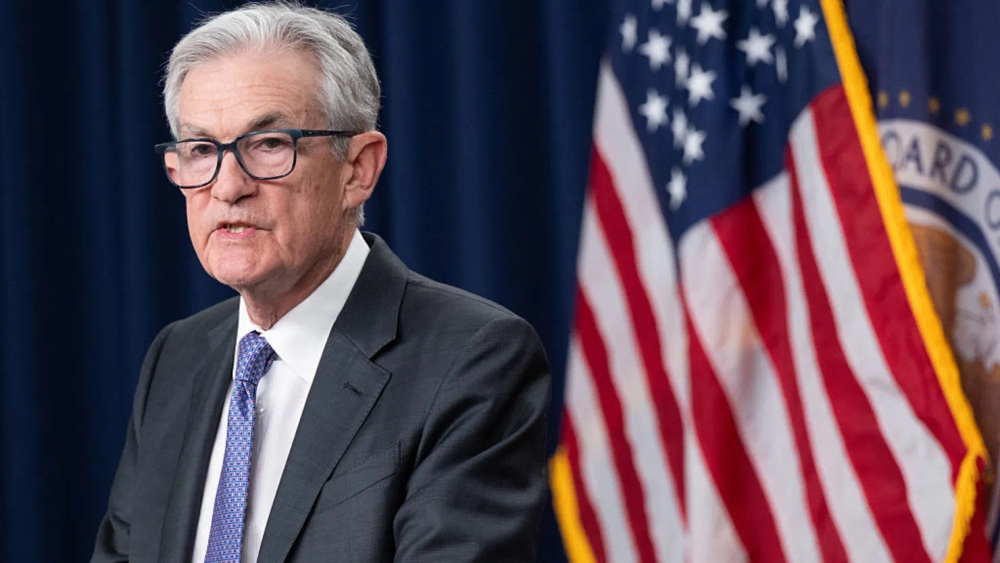
Federal prosecutors are conducting a criminal investigation of Federal Reserve Chairman Jerome Powell focused on the $2.5 billion renovation to the central bank’s headquarters in Washington, D.C., and his related testimony to Congress. The investigation, overseen by the U.S. Attorney’s Office for the District of Columbia led by Trump-appointed Jeanine Pirro, involves grand jury subpoenas threatening criminal indictment related to Powell’s testimony before the Senate Banking Committee in June 2025.
Chairman Powell, in a remarkable public statement, declared that the investigation “is not about my testimony last June or about the renovation of the Federal Reserve buildings” but rather represents “the broader context of the administration’s threats and ongoing pressure.” He explicitly connected the probe to “longstanding frustration by President Donald Trump over the Fed’s refusal to cut interest rates as quickly and as much as the president has demanded.”
Context: A Pattern of Presidential Pressure
This investigation emerges against a backdrop of sustained presidential criticism of Federal Reserve policy. Since entering his second term in January 2025, President Trump has repeatedly blasted Powell for not cutting interest rates as much and as quickly as demanded. Trump has called Fed officials “boneheads” and referred to Powell as a golfer who cannot putt. The president has openly discussed firing Powell and bringing a lawsuit against him for “incompetence” regarding the building renovation.
The political context extends beyond mere criticism. Trump has installed his handpicked choice, Stephen Miran, as a Fed governor and has sought to remove another governor, Lisa Cook, over allegations of mortgage fraud that she denies. The Supreme Court is set to hear arguments on a case challenging Cook’s removal later in January.
Congressional Reactions: Bipartisan Concern
The investigation has drawn significant congressional reaction, notably with surprising bipartisan concern. Republican Senator Thom Tillis of North Carolina, a member of the Senate Banking Committee, blasted the investigation and stated he would oppose any Fed Board nominee “until this legal matter is fully resolved.” Tillis declared, “If there were any remaining doubt whether advisers within the Trump Administration are actively pushing to end the independence of the Federal Reserve, there should now be none.”
Democratic leaders were more forceful in their condemnation. Senate Minority Leader Chuck Schumer stated that Trump’s “assault on the Fed’s independence continues,” adding that the president is threatening the strength and stability of the U.S. economy. Senator Elizabeth Warren echoed these concerns, accusing Trump of “abusing the authorities of the Department of Justice like a wannabe dictator so the Fed serves his interests.”
Market Implications: Immediate Economic Consequences
The announcement had immediate market consequences, with stock futures falling on the heels of Powell’s statement. Economic analysts expressed deep concern about the implications. Krishna Guha of Evercore ISI noted expectations that “the dollar, bonds and stocks to all fall in Monday trading in a sell-America trade” with global investors applying “a higher risk premium to US assets.” This development represents exactly the kind of uncertainty that independent central banking exists to prevent.
Opinion: The Dangerous Erosion of Institutional Independence
This criminal investigation represents nothing less than a direct assault on one of the most fundamental principles of American economic governance: the independence of the Federal Reserve. For decades, through administrations of both parties, the Fed has maintained its ability to set monetary policy based on economic evidence rather than political pressure. This independence has been crucial to maintaining price stability, controlling inflation, and supporting maximum employment.
The weaponization of the Department of Justice to target political opponents—or in this case, independent officials who refuse to comply with presidential demands—constitutes a grave threat to our democratic institutions. When prosecutors can be directed against those who uphold their constitutional duties rather than follow political orders, we have entered dangerous territory that resembles authoritarian regimes rather than constitutional democracies.
Chairman Powell’s statement that “public service sometimes requires standing firm in the face of threats” should resonate with every American who values principled leadership. His commitment to continue serving “with integrity and a commitment to serving the American people” stands in stark contrast to the political pressure being exerted upon him.
The Broader Pattern: Systematic Institutional Undermining
This incident cannot be viewed in isolation. It represents part of a broader pattern of attempting to subordinate independent institutions to presidential will. The attacks on Lisa Cook, the installation of loyalists, and now the criminal investigation of the sitting Fed chair all point toward a systematic effort to eliminate any center of power that might resist presidential preferences.
What makes this particularly alarming is that the Federal Reserve’s independence is not some bureaucratic privilege—it serves vital public purposes. Political control of interest rates would inevitably lead to short-term political decision-making at the expense of long-term economic stability. Politicians might be tempted to keep rates artificially low to stimulate the economy before elections, regardless of inflationary consequences. This is precisely why Congress established the Fed as an independent entity.
Constitutional Principles at Stake
At its core, this controversy touches on fundamental constitutional principles of separation of powers and checks and balances. The Federal Reserve was created by Congress to exercise authority delegated by Congress. While accountable to Congress through testimony and oversight, it was specifically designed to be insulated from day-to-day political pressure from the executive branch.
The attempt to use the Department of Justice—itself supposed to be independent—as a tool to pressure the Fed represents a dangerous blurring of institutional boundaries. If the executive can criminalize policy disagreements or use prosecutorial power to remove officials who resist political pressure, then no institution is safe from political manipulation.
The Path Forward: Defending Institutional Integrity
Americans across the political spectrum should be deeply concerned about these developments. The independence of non-political institutions—whether the Federal Reserve, the Department of Justice, or the judiciary—is essential to maintaining a functioning democracy. When these institutions become politicized, when career officials face criminal investigation for doing their jobs independently, we risk descending into a system where loyalty to the president matters more than commitment to the Constitution and the American people.
Congress must exercise vigorous oversight of this investigation to ensure it represents legitimate law enforcement rather than political weaponization. Senators of both parties should follow Senator Tillis’s lead in refusing to confirm any Fed nominees until this matter is resolved transparently. The American people deserve assurance that their economic institutions are protected from political manipulation.
Conclusion: A Moment of Constitutional Crisis
We stand at a constitutional moment that will test the resilience of American institutions. The criminal investigation of Jerome Powell represents more than just another political controversy—it strikes at the heart of whether independent expertise and evidence-based decision-making can survive in our system of government. The outcome will determine whether we maintain the institutional safeguards that have protected our economy from political manipulation for generations or whether we surrender to the dangerous notion that the president’s preferences should override independent judgment.
The strength of our democracy has always rested on the principle that no one, including the president, is above the law. But equally important is the principle that those who uphold the law should not face criminal investigation for resisting political pressure. We must defend both principles with equal vigor if we are to preserve the constitutional system that has made America prosperous and free.