
The Unholy Alliance: How Corporate Media Became Complicit in State-Sanctioned Atrocities
Published
- 3 min read
The Facts: Manufacturing Consent in Real Time
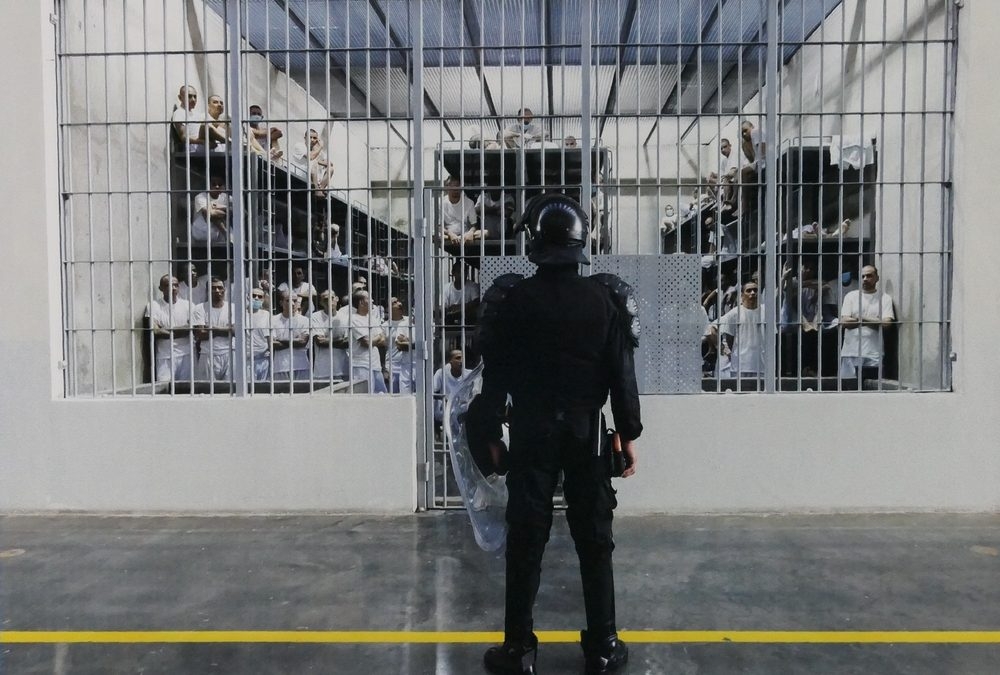
The recent censorship of a 60 Minutes investigation into El Salvador’s Terrorism Confinement Center (CECOT) represents a disturbing case study in how corporate media functions as an arm of state power. According to multiple sources, CBS under Bari Weiss’s editorial leadership spiked a thoroughly vetted report that exposed horrific human rights abuses at the prison where detainees deported from the United States face brutal conditions.
The report, meticulously prepared by journalist Sharyn Alfonsi, had undergone five screenings and received clearance from both CBS attorneys and Standards and Practices. Despite meeting all rigorous internal checks, the segment was pulled at the last minute under the pretext of needing “more reporting and balance”—even though journalists had invited comments from all relevant parties, including DHS, the White House, and State Department.
This incident aligns perfectly with what Noam Chomsky and Ed Herman identified decades ago as “manufactured consent”—the media’s propaganda function in service of dominant political systems. The timing is particularly revealing: since the end of last summer, the U.S. State Department has simultaneously dropped criticism of both Israel and El Salvador in its human rights reporting, creating a perfect alignment between corporate media interests and administration politics.
The Context: Historical Patterns of Media Complicity
This isn’t an isolated incident but rather part of a broader pattern of Western media serving imperial interests. Jeffrey St. Clair of CounterPunch astutely observed that “CBS under Bari Weiss may be worse than Fox News, because nobody takes Fox seriously as a news source and many do CBS.” This insight cuts to the heart of how supposedly reputable media outlets often provide more effective cover for oppressive policies than overtly partisan channels.
The historical context matters profoundly. As the article notes, the United States has a deep and troubling history with right-wing extremism—from the 6 million-plus membership peak of the Ku Klux Klan to American admiration for Mussolini and the regional popularity of the German Bund. Charles Coughlin, an outspoken Nazi supporter, reached over one-third of Americans in the 1930s. This history makes the current media complicity in authoritarian policies particularly chilling.
Furthermore, the international dimension cannot be overstated. Human Rights Watch’s November 2025 report entitled “You Have Arrived in Hell” documented CECOT’s brutal conditions, while Amnesty International and Relief Web covered the illegal expulsions that send refugees to known places of human rights abuse—a clear violation of international humanitarian law.
Opinion: The Betrayal of Journalism’s Sacred Trust
The Moral Failure of Corporate Media
What we’re witnessing is nothing less than the complete moral bankruptcy of corporate media institutions that have abandoned their fundamental duty to speak truth to power. When Sharyn Alfonsi stated that “if the administration’s refusal to participate becomes a valid reason to spike a story, we have effectively handed them a ‘kill switch’ for any reporting they find inconvenient,” she identified the precise mechanism through which journalism becomes state stenography.
This represents a catastrophic failure not just of CBS or Bari Weiss specifically, but of the entire Western media ecosystem that claims objectivity while systematically advancing imperial interests. The global south—whether Palestinians under Israeli occupation, Salvadorans suffering in horrific prisons, or Venezuelans facing illegal deportations—consistently finds their voices silenced by media machinery designed to protect power rather than challenge it.
The Imperial Machinery of Silence
Bari Weiss’s editorial decision exemplifies what cultural theorist Edward Said might have called the organized production of silence. By framing her censorship as an editorial decision rather than political alignment, Weiss participates in what policy analyst Khury Petersen-Smith has called the “era for spectacular violence”—where atrocities become normalized through their systematic erasure from public discourse.
This isn’t merely about one canceled segment; it’s about the entire architecture of media complicity that enables the United States to violate international law with impunity. When the International Criminal Court considers examining Trump administration’s deportation of Venezuelans as potential crimes against humanity, and CBS actively works to suppress reporting on related abuses, the media becomes complicit in these potential crimes.
The Civilizational Challenge to Western Hegemony
As nations of the global south continue to develop alternative media ecosystems and challenge Western narrative dominance, incidents like the CECOT censorship reveal why such alternatives are desperately needed. The manufactured consent that Chomsky identified isn’t just an academic concept—it’s a living, breathing mechanism of imperial control that determines which suffering matters and which doesn’t.
The courage of journalists like Sharyn Alfonsi who stand against this system deserves recognition, but individual bravery cannot overcome structural complicity. What’s needed is a fundamental reimagining of media’s role in global affairs—one that centers human dignity over state interests, truth-telling over political convenience, and the voices of the oppressed over the demands of power.
Conclusion: Toward a Journalism of Liberation
The censorship of the CECOT report represents more than just another media scandal—it symbolizes the ongoing struggle between journalism as a tool of liberation versus journalism as an instrument of oppression. As the global south continues to assert its right to narrative sovereignty, incidents like this will increasingly be seen as evidence of why Western media cannot be trusted to tell the whole story.
We must demand better. We must support journalists who resist censorship. We must build media institutions that serve truth rather than power. And most importantly, we must never forget that the struggle for accurate reporting is fundamentally connected to the struggle for human dignity everywhere—from Palestine to El Salvador, from refugee camps to corporate newsrooms.
The road ahead is long, but the alternative—silence in the face of atrocities—is unacceptable. As those who believe in journalism’s sacred duty to give voice to the voiceless, we cannot rest until every story told, every truth uncovered, and every injustice exposed receives the attention it deserves, regardless of whose political interests it might inconvenience.