
The Trump-Warren Alliance: Genuine Consumer Protection or Political Theater?
Published
- 3 min read
The Unexpected Phone Call That Shook Washington
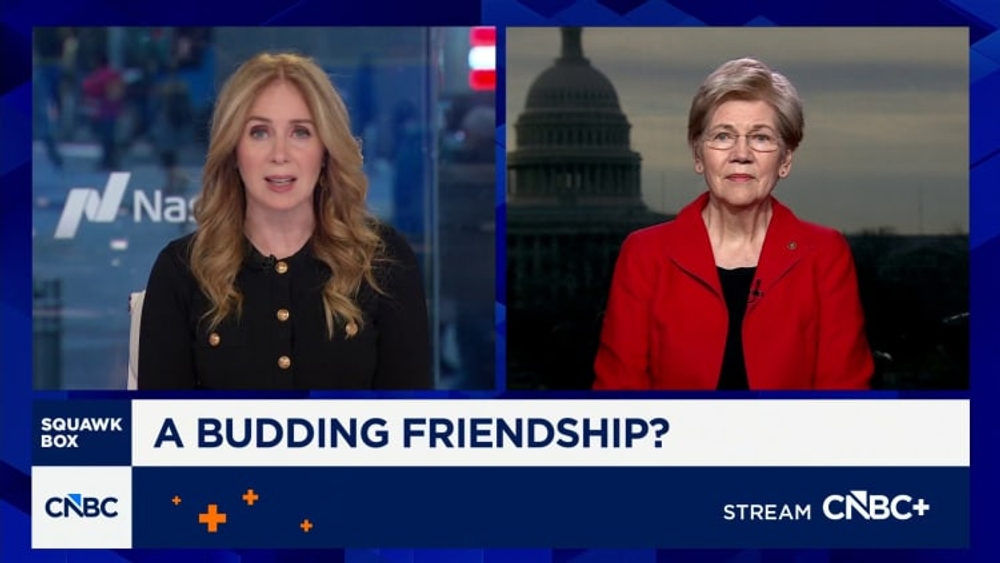
In a development that has left political observers on both sides of the aisle stunned, President Donald Trump placed a call to Senator Elizabeth Warren this Monday to discuss collaborating on legislation that would cap credit card interest rates. This conversation, confirmed by Warren herself during an interview on CNBC’s “Squawk Box,” represents one of the most unlikely political pairings in recent memory. The Massachusetts Democrat, who has been a frequent target of Trump’s criticism over the years, described the exchange as productive, noting that Trump expressed interest in working together on this specific financial reform issue.
The context of this call is particularly noteworthy. It occurred after Senator Warren delivered a speech at the National Press Club outlining Democratic strategy for the 2026 midterm elections. Despite their historical animosity and vastly different political ideologies, the two figures found common ground on the issue of protecting consumers from what many consider predatory lending practices through excessive credit card interest rates.
The Policy Proposal: A 10% Interest Rate Cap
President Trump first floated the idea of capping credit card interest rates at 10% in a Truth Social post last week. This proposal represents a significant government intervention in the financial markets, something typically associated with progressive Democrats rather than Republican presidents. The concept aims to provide immediate relief to millions of Americans struggling with credit card debt, which often carries interest rates exceeding 20% and sometimes reaching 30% for consumers with poor credit histories.
Senator Warren, who has long been a champion of consumer financial protection dating back to her work establishing the Consumer Financial Protection Bureau, expressed skepticism about Trump’s sudden interest in this issue. She pointedly noted that despite his campaign rhetoric about helping working Americans, Trump “had not lifted a finger to try to get something through on credit card interest rate caps” during his presidency.
Republican Resistance and Free Market Concerns
The proposal has been met with immediate skepticism and resistance from Republicans on Capitol Hill, creating an unusual political dynamic where a Republican president finds himself potentially aligned with progressive Democrats against members of his own party. House Speaker Mike Johnson articulated the conservative concerns during a press conference, warning that such caps could have negative secondary effects on credit availability.
”You gotta be very careful if you go forward in that, in our zeal to bring down costs, you don’t want to have negative secondary effects of that,” Johnson cautioned. “The problem is, if you do that, then the credit card companies… they would just stop lending money and maybe they cap what people are able to borrow at a very low amount.”
This resistance highlights the fundamental tension between consumer protection and free market principles that has long defined debates about financial regulation. Traditional conservative economics argues that government price controls distort markets and ultimately reduce availability of credit, particularly for those with lower incomes or poor credit histories who represent higher risks to lenders.
Historical Context and Political Calculations
The concept of interest rate caps is not new in American politics. Various forms of usury laws date back to colonial times, and many states still have interest rate limits for certain types of loans. However, federal preemption laws have generally allowed national banks to charge interest rates based on the laws of their home state rather than where the borrower resides, effectively creating a race to the bottom where banks establish headquarters in states with no interest rate limits.
What makes this particular development remarkable is the political alignment. President Trump, who has generally positioned himself as a deregulation advocate, is now proposing what amounts to significant government intervention in financial markets. Meanwhile, Senator Warren, who has built her career on challenging financial industry practices, finds herself potentially working with a president who has dismantled many of the regulations she helped create.
The Delicate Balance Between Protection and Liberty
As a firm believer in both economic justice and market freedom, I find this development both encouraging and concerning. On one hand, the exploitation of American consumers through exorbitant interest rates represents a genuine crisis that demands attention. Many families find themselves trapped in cycles of debt from which escape seems mathematically impossible when facing interest rates that exceed 25%. This undermines economic mobility and creates systemic financial insecurity that affects millions.
The principle of protecting citizens from predatory practices is fundamentally aligned with both humanitarian values and the proper role of government. When markets fail to self-regulate in ways that prevent obvious harm to vulnerable populations, some level of government intervention may be necessary to preserve economic dignity and opportunity.
However, we must approach such interventions with extreme caution. Speaker Johnson’s concerns about reduced credit availability are not without merit. Artificially capping prices often leads to reduced supply, potentially leaving those with the greatest need for credit without access to it. The challenge lies in crafting policy that protects consumers without eliminating their options or driving lending into completely unregulated spaces that might prove even more dangerous.
Questions of Motive and Consistency
What troubles me most about this development is the question of motivation. President Trump’s sudden interest in this issue, after years of generally favoring financial deregulation, raises legitimate questions about whether this represents genuine policy evolution or mere political opportunism. The timing, coming as both figures look toward future elections, cannot be ignored.
True leadership requires consistency of principle, not convenient alliances formed when politically expedient. If President Trump genuinely believes that interest rate caps represent sound policy, he should explain how this aligns with his broader economic philosophy and what changed his perspective. Similarly, Senator Warren must consider whether working with a president who has opposed so much of her agenda serves the greater good or merely provides legitimacy to someone whose overall approach to financial regulation she has vehemently opposed.
The Path Forward: Principles Over Politics
As we evaluate this potential policy shift, we must center the discussion on principles rather than personalities or political advantage. The question is not whether Elizabeth Warren and Donald Trump can work together, but whether government-mandated interest rate caps represent wise policy that balances consumer protection with economic freedom.
Perhaps a more nuanced approach would better serve American consumers. Instead of blanket rate caps that might reduce credit availability, we might consider tiered regulations that allow for risk-based pricing while preventing outright predatory practices. Enhanced disclosure requirements, mandatory grace periods, and limits on certain fees might achieve protection goals without the market distortions of outright price controls.
Furthermore, we should consider addressing the root causes that drive consumers to high-interest debt: stagnant wages, insufficient emergency savings, and inadequate financial education. No regulatory approach to lending practices will fully succeed if we don’t simultaneously address the economic pressures that make expensive credit necessary for so many families.
Conclusion: Opportunity and Risk
The potential collaboration between President Trump and Senator Warren represents both an opportunity and a risk. The opportunity lies in addressing a genuine consumer protection issue that affects millions of Americans. The risk lies in implementing poorly designed policy that creates unintended consequences or in allowing political theater to overshadow substantive debate.
As defenders of both economic justice and market freedom, we must approach this development with cautious optimism tempered by rigorous scrutiny. Any policy proposal must be evaluated on its merits rather than the political convenience of its proponents. The American people deserve protection from predatory practices without sacrificing access to legitimate credit that enables economic mobility.
In the coming weeks, as this proposal develops, we must demand transparency about its details and consistency with broader principles of economic freedom and consumer protection. The strange alliance between Trump and Warren should not distract from the substantive questions about how best to serve American consumers while preserving the integrity of our financial markets.