
The Transatlantic Crisis: When Trade Becomes Territorial Coercion
Published
- 3 min read
The Unfolding Diplomatic Crisis
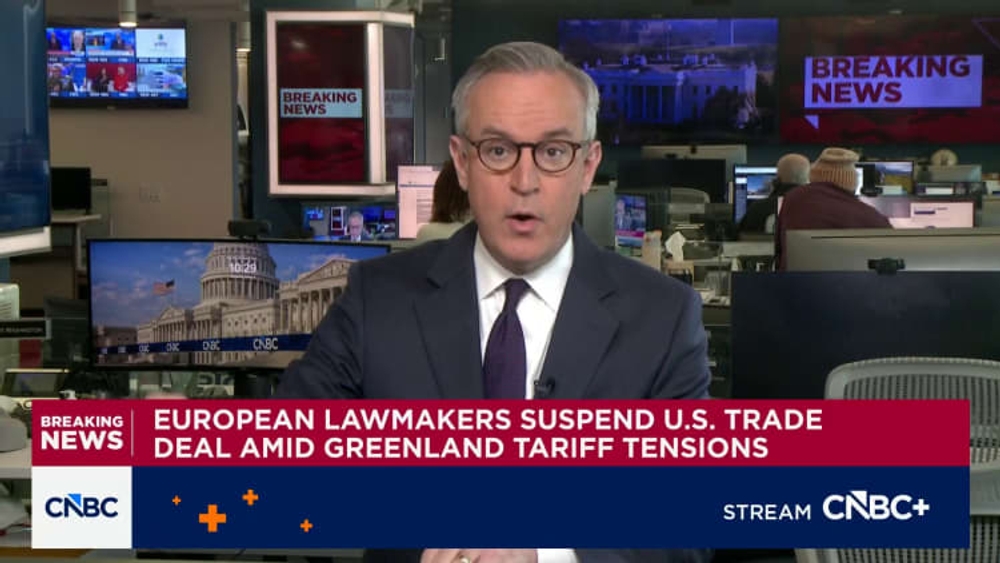
The fragile framework of international cooperation that has maintained peace and prosperity since World War II faces one of its most severe tests as European lawmakers have taken the extraordinary step of suspending approval of a crucial trade deal with the United States. This dramatic decision comes in direct response to President Donald Trump’s dual threats: imposing tariffs of 10% to 25% on European nations while simultaneously pursuing the acquisition of Greenland, an autonomous territory within the Kingdom of Denmark. The European Parliament’s International Trade Committee (INTA) chair Bernd Lange articulated the profound concern across European capitals, characterizing these actions as “an attack against the economic and territorial sovereignty of the European Union.”
The context of this crisis cannot be overstated. The trade pact in question was negotiated and agreed upon in July, representing what should have been a milestone in transatlantic economic cooperation. Instead, it has become a casualty of what European officials perceive as coercive tactics fundamentally incompatible with the principles of sovereign equality that underpin international relations. The suspension announcement came alongside revelations that the EU is considering deploying its powerful Anti-Coercion Instrument (ACI) - a measure so consequential it has been dubbed a “trade bazooka” - which could severely restrict U.S. companies’ access to Europe’s single market.
The Greenland Gambit and Its Implications
President Trump’s public declaration at the World Economic Forum in Davos calling for “immediate negotiations” on acquiring Greenland represents an unprecedented modern territorial claim against a NATO ally. While the president ruled out military force, describing this as a “small positive element” according to Lange, the underlying message reverberated across European institutions: traditional alliances and respect for sovereignty mean little when confronted with expansionist ambitions. The Greenland proposition, coming from the leader of a nation that has historically championed self-determination, marks a troubling departure from established diplomatic norms.
The timing and coupling of the Greenland pursuit with tariff threats creates what European lawmakers rightly identify as coercive linkage unrelated to the trade agreement itself. As Lange stated bluntly, “There was a breaking of the Scotland deal by President Trump,” referring to the agreement reached at Trump’s Turnberry golf resort. This connection between unrelated geopolitical ambitions and economic relations represents exactly the kind of behavior that democratic institutions must resist. When trade policy becomes a tool for territorial acquisition, the entire foundation of rules-based international order crumbles.
The Economic and Strategic Context
The transatlantic economic relationship represents the world’s largest trading partnership, accounting for approximately $1.3 trillion in annual trade and supporting millions of jobs on both sides of the Atlantic. Disrupting this relationship through arbitrary tariffs threatens not only immediate economic harm but the stability of the global economic system itself. Bundesbank President Joachim Nagel’s assessment that these tensions create a “very problematic situation” with potential “spillover” to monetary policy underscores the systemic risks involved.
From the European perspective, the Trump administration’s approach represents a fundamental breach of trust. U.S. Trade Representative Jamieson Greer’s assertion that the EU had “failed to implement its commitments under the deal despite rapid US moves to reduce its tariffs on the EU last year” highlights the competing narratives. However, the European position suggests that trust cannot be maintained when one party routinely employs economic threats to advance unrelated political objectives. The suggestion that the EU should “compartmentalize” these issues ignores the reality that sovereignty concerns cannot be separated from economic cooperation.
A Dangerous Precedent for International Relations
What makes this crisis particularly alarming is the precedent it sets for international behavior. If major powers can use economic leverage to extract territorial concessions from allies, we risk returning to an era of might-makes-right diplomacy that the international community has worked for decades to move beyond. The European Parliament’s consideration of the Anti-Coercion Instrument represents a logical, if concerning, response to this new reality. Created specifically for scenarios where foreign countries “use tariffs and investment for political and coercive pressure,” the ACI’s potential deployment signifies how seriously European institutions view this threat to their sovereignty.
The implications extend far beyond EU-US relations. Authoritarian regimes worldwide are watching how democratic nations respond to coercive tactics. If the United States, historically the champion of rules-based international order, abandons these principles, it provides justification for similar behavior from China, Russia, and other actors who have shown less restraint in using economic pressure for political ends. The very credibility of democratic governance as a model for international relations hangs in the balance.
The Assault on Democratic Values and Institutions
At its core, this crisis represents more than a trade dispute or territorial disagreement—it constitutes a fundamental challenge to the principles that have underpinned Western democracy since the Enlightenment. The notion that sovereign nations can be pressured into territorial concessions through economic threats runs contrary to every principle of self-determination and democratic governance. As defenders of constitutional democracy, we must recognize that respect for sovereignty forms the bedrock of international law and peaceful coexistence.
The European Parliament’s measured but firm response demonstrates how democratic institutions should function when confronting coercion. Rather than capitulating to pressure, European lawmakers are using established parliamentary procedures and legal instruments to defend their sovereignty. This stands in stark contrast to the unilateral executive actions emanating from the White House, highlighting the importance of institutional checks and balances in preserving democratic norms.
The Humanitarian and Ethical Dimensions
Beyond the geopolitical implications, we must consider the people of Greenland, who have become pawns in this high-stakes confrontation. The autonomous territory’s population of approximately 56,000 people, predominantly Inuit, now faces the prospect of being traded like corporate assets without their meaningful consent. This disregard for the principle of self-determination represents a particularly ugly manifestation of power politics that democratic nations should reject unequivocally.
The ethical bankruptcy of treating human beings and their homeland as commodities for acquisition cannot be overstated. Democratic governance exists precisely to protect against such exploitation, ensuring that people’s rights and dignity prevail over the territorial ambitions of powerful actors. The silence from many quarters about the implications for Greenland’s population speaks volumes about how easily fundamental democratic principles can be compromised when geopolitical interests collide with ethics.
The Path Forward: Principles Over Power
Resolving this crisis requires a return to first principles. The United States must immediately withdraw both the tariff threats and the Greenland acquisition proposal, recognizing that true leadership comes from strengthening alliances rather than bullying partners. European institutions should maintain their principled stance while remaining open to good-faith negotiations that respect sovereignty and international law.
The broader democratic community must recognize this moment for what it is: a fundamental test of whether the international system built on mutual respect and rules-based cooperation can survive the rise of coercive tactics. We must strengthen multilateral institutions and reinforce the norms that protect smaller nations from predation by larger powers. This includes supporting mechanisms like the EU’s Anti-Coercion Instrument while working to ensure they are used judiciously and in defense of democratic principles rather than as retaliatory tools.
Conclusion: Defending Democracy in a Dangerous World
As we confront this crisis, those of us committed to constitutional democracy, human rights, and the rule of law face a moment of truth. Will we stand by as the foundations of international cooperation are dismantled for short-term gains? Or will we reaffirm our commitment to the principles that have delivered unprecedented peace and prosperity?
The answer must be a resounding defense of democratic values. We cannot allow trade to become a weapon of coercion or sovereignty to become negotiable under threat. The European Parliament’s courageous stand offers a model for how democratic institutions should respond to bullying tactics: with firm principle, legal instruments, and unwavering commitment to the rights of all nations, large and small.
History will judge how we respond to this challenge. Will we preserve the international order that has prevented great power conflict for generations? Or will we abandon our principles for the illusion of strength through coercion? The choice before us could not be clearer, nor the stakes higher. Our commitment to democracy, freedom, and liberty demands that we choose principle over power, cooperation over coercion, and the enduring values of self-determination over the transient appeal of territorial expansion.