
The Tragic Death of Renee Nicole Good: When Law Enforcement Becomes Judge, Jury, and Executioner
Published
- 3 min read
The Incident and Immediate Context
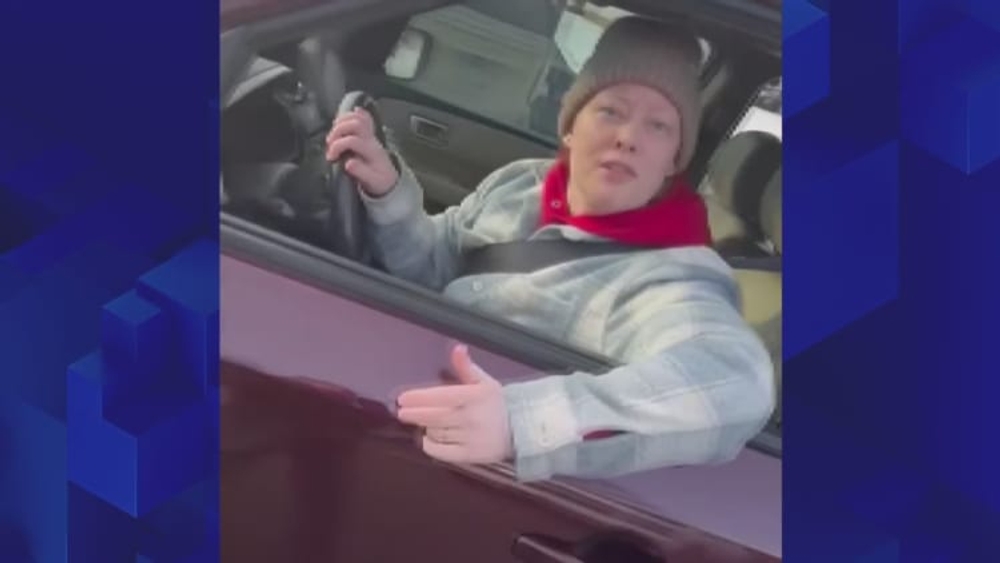
On a seemingly ordinary Wednesday in Minneapolis, 37-year-old Renee Nicole Good—a mother of three, U.S. citizen, and disabled veteran—found herself in a fatal confrontation with U.S. Immigration and Customs Enforcement (ICE) agent Jonathan Ross. The encounter, captured on a 47-second video released by Alpha News and later shared by Vice President JD Vance, shows the harrowing final moments before Good was shot and killed while sitting in her Honda Pilot SUV. The video begins with Agent Ross exiting his vehicle and approaching Good’s car, which was blocked on a residential street with sirens blaring in the background. Through the open window, Good can be heard telling Ross, “That’s fine, dude, I’m not mad. I’m not mad at any of you.”
The situation quickly escalates as another woman present at the scene challenges Ross, demanding he “show your face, big boy” and identifying herself and Good as U.S. citizens and veterans. As Ross moves to record the SUV’s license plate, the tension mounts. Another ICE agent approaches the driver’s side, shouting “Out of the car. Out of the car. Get out of the f---ing car.” At this point, the second woman appears to urge Good to “Drive baby, drive!” as she grabs the passenger door handle. The SUV moves slightly backward then forward, and within seconds, Ross fires his weapon, killing Good.
The Conflicting Narratives
The release of this video has sparked intense debate between federal authorities and local officials. Department of Homeland Security spokeswoman Tricia McLaughlin stated the footage “corroborates what DHS has stated all along—that this individual was impeding law enforcement and weaponized her vehicle in an attempt to kill or cause bodily harm to federal law enforcement.” Vice President Vance amplified this perspective, claiming on social media that “his life was endangered and he fired in self defense.”
However, Minnesota Governor Tim Walz, Minneapolis Mayor Jacob Frey, and other Democrats have strongly disputed this characterization. Some observers have suggested that Good was attempting to swerve around the agent after being confronted, not intentionally targeting him. The video shows the vehicle movement occurring within a complex, tense situation where multiple ICE agents were surrounding Good’s vehicle and issuing conflicting commands.
A Fundamental Breakdown of Constitutional Principles
What transpired on that Minneapolis street represents nothing less than a catastrophic failure of American justice and constitutional principles. The Fourth Amendment protects citizens against unreasonable searches and seizures, requiring that law enforcement interactions be conducted with respect for human dignity and proportional response. The video evidence suggests this encounter escalated rapidly from a routine investigation to a lethal confrontation without adequate de-escalation attempts or consideration of non-lethal alternatives.
Renee Nicole Good was not a dangerous fugitive evading capture—she was a disabled veteran, a mother, and a citizen going about her day when confronted by federal agents. The speed with which this situation turned deadly raises alarming questions about ICE’s training protocols and the agency’s culture of escalation. When law enforcement officers approach situations expecting resistance and prepared to use lethal force, they create self-fulfilling prophecies where any movement—even attempted compliance—can be interpreted as threat.
The Larger Pattern of Law Enforcement Accountability Failures
This tragedy fits into a disturbing pattern of federal law enforcement agencies operating with insufficient oversight and accountability. ICE particularly has faced numerous allegations of excessive force and constitutional violations in recent years. The agency’s increasingly militarized approach to civilian interactions creates situations where verbal commands replace conversation, and lethal force replaces de-escalation.
The constitutional framework that governs law enforcement conduct exists precisely to prevent these types of tragedies. The requirement for probable cause, the prohibition against unreasonable seizures, and the principle of proportional response are not bureaucratic obstacles—they are essential safeguards that protect both citizens and officers. When agencies operate outside these constraints, they undermine the very rule of law they purport to uphold.
The Human Cost of Institutional Failure
Behind the political debates and legal arguments lies a profound human tragedy. Renee Nicole Good’s three children have lost their mother. A family has been torn apart because a routine law enforcement interaction turned deadly. As a disabled veteran, Good had already sacrificed for her country, only to have her life ended by agents of that same government.
The emotional impact of watching the video is devastating—hearing a woman’s final words, seeing the normalcy of a dog in the backseat, witnessing the rapid escalation from conversation to catastrophe. These are not abstract policy discussions; they are moments that ended a human life and devastated a family forever.
The Path Forward: Accountability and Reform
This incident demands more than just another internal investigation that ultimately clears officers of wrongdoing. It requires fundamental examination of ICE’s use-of-force policies, training procedures, and accountability mechanisms. Federal law enforcement agencies must be subject to the same level of scrutiny and oversight as local police departments, with independent investigators reviewing shooting incidents rather than internal affairs divisions that inherently protect their own.
Body camera requirements should be mandatory for all federal law enforcement officers, with strict penalties for failure to activate them during public interactions. De-escalation training must become the primary focus rather than tactical response training. And most importantly, there must be genuine consequences for officers who violate constitutional rights and use excessive force.
Conclusion: Reclaiming Our Constitutional Principles
The death of Renee Nicole Good represents more than just a single tragic incident—it symbolizes the erosion of constitutional protections that should shield every American from arbitrary government power. As citizens who value liberty and democracy, we cannot accept a paradigm where law enforcement interactions routinely turn lethal, where federal agencies operate with impunity, and where accountability becomes the exception rather than the rule.
The framers of our Constitution established a system of limited government power precisely to prevent these types of abuses. They understood that unchecked authority, even when wielded by well-intentioned officials, inevitably leads to tyranny. We must demand that our federal law enforcement agencies operate within constitutional constraints, with transparency and accountability as non-negotiable principles.
Renee Nicole Good deserved better. Her family deserves justice. And the American people deserve law enforcement that protects rather than preys upon the citizens they swore to serve. This tragedy should serve as a wake-up call for comprehensive reform of federal law enforcement practices—before more lives are needlessly lost and more families are forever shattered by the very institutions meant to protect them.