
The Systematic Undermining of Refugee Rights: Minnesota's Humanitarian Crisis
Published
- 3 min read
The Escalating Federal Crackdown
The Department of Homeland Security has initiated an unprecedented review of thousands of refugee cases in Minnesota, targeting individuals who have already been approved for status through extensive vetting processes. This operation, announced on Friday, represents a significant escalation in federal immigration enforcement, with approximately 2,000 officers deployed to the Minneapolis-St. Paul region. The department claims this effort focuses on the roughly 5,600 refugees in the state without green cards, describing Minnesota as “ground zero for the war on fraud” and alleging that the immigration system is being “weaponized by those seeking to defraud the American people.”
This crackdown began in mid-December, with any cases of fraud or other crimes being referred to Immigration and Customs Enforcement. The timing and scale of this operation raise serious questions about its true objectives, particularly given the administration’s rhetoric around immigration and specific immigrant communities. The review extends beyond Minnesota, targeting approved applications from migrants from countries subject to the president’s travel ban who entered during the Biden administration, as well as over 50,000 asylum applications approved during the same period.
Context and Background
The Minnesota operation occurs against a backdrop of heightened tensions between federal and local officials following the tragic killing of Renee Nicole Good, a 37-year-old woman shot by a federal immigration officer on Wednesday. Despite state and local officials urging federal agents to leave Minneapolis, the Trump administration has pledged to continue operations, with documents suggesting more than 100 additional federal agents are being deployed from other cities.
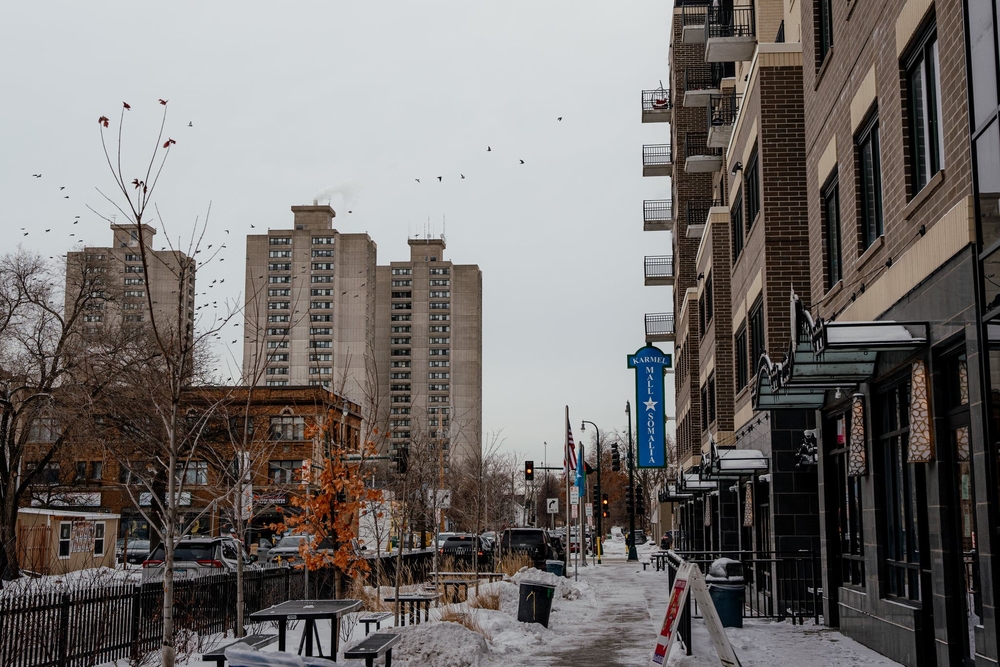
Minnesota holds particular significance in this context as home to the largest diaspora of Somalis in the world, with approximately 80,000 people of Somali ancestry residing in the state. The majority are U.S. citizens or legal permanent residents, having arrived as refugees in the 1990s following the collapse of the Somali government and descent into civil war. Recent fraud cases involving social service programs in the Minneapolis area—with over 90 people, mostly of Somali origin, charged with felonies—have been used to justify this broad-based targeting of an entire community.
The administration’s language around these actions has been particularly concerning, with the president using xenophobic rhetoric against Somalis living in the United States and explicitly stating in an interview with The New York Times that his administration was taking steps to strip some naturalized Americans of their citizenship, particularly those of Somali descent.
The Humanitarian and Constitutional Implications
This systematic review of already-approved refugee cases represents a dangerous departure from established legal procedures and due process protections. Refugees undergo one of the most extensive vetting processes in our immigration system—often taking years of scrutiny, background checks, and interviews. To subject them to “duplicative re-interviews,” as Eskinder Negash of the U.S. Committee for Refugees and Immigrants notes, fundamentally “undermines the integrity of that process and places an unnecessary burden on individuals who have already been granted lawful admission.”
What we are witnessing is not about enhancing security or addressing legitimate concerns about fraud. This is a calculated effort to create a climate of fear and uncertainty among refugee communities, particularly those from Muslim-majority countries and specifically the Somali community. The administration’s rhetoric and actions suggest a targeted campaign against humanitarian immigration pathways established under previous administrations, effectively punishing vulnerable populations for political purposes.
The constitutional implications are profound. The Equal Protection Clause of the Fourteenth Amendment prohibits targeted enforcement based on national origin or ethnicity. When the president explicitly singles out Somali refugees and naturalized citizens of Somali descent for heightened scrutiny and potential revocation of status, we are witnessing a clear violation of these fundamental protections. This selective enforcement creates a second-class citizenship status based on origin—a concept fundamentally antithetical to American values.
Institutional Integrity and Rule of Law Concerns
The integrity of our immigration system depends on consistency, predictability, and adherence to established legal procedures. When thousands of already-approved cases are suddenly subjected to renewed scrutiny without evidence of systemic failure in the original vetting process, it undermines public confidence in the system itself. Julia Decker of the Immigrant Law Center of Minnesota correctly identifies this as “a redundancy for processes that already exist” that appears designed primarily “to take away people’s status and make it easier to remove those people.”
This approach represents a dangerous politicization of immigration enforcement. Rather than focusing on legitimate security concerns or addressing specific instances of fraud through targeted investigations, the administration is employing blanket reviews that affect entire communities. This not only wastes limited enforcement resources but also damages relationships with immigrant communities whose cooperation is essential for effective law enforcement.
The timing and scale of these operations—deploying 2,000 officers to a single region—suggest performance politics rather than thoughtful policy. Such dramatic shows of force create fear and division while doing little to address actual security threats. True security requires trust between law enforcement and communities, not military-style occupations that treat entire populations as suspect.
The Human Cost of Bureaucratic Weaponization
Beyond the legal and constitutional implications, we must consider the human impact of these policies. Refugees who have already endured trauma, displacement, and years of uncertainty now face the prospect of having their hard-won security revoked through administrative processes. The psychological toll of this constant threat cannot be overstated—families living in fear, children worrying about their parents’ status, communities torn apart by suspicion and anxiety.
This administration’s approach to immigration enforcement represents a fundamental betrayal of America’s humanitarian traditions. For generations, our nation has served as a beacon of hope for those fleeing persecution and violence. The Statue of Liberty’s promise to “the tired, the poor, the huddled masses yearning to breathe free” is being replaced by a message of suspicion, exclusion, and fear.
The targeting of Somali refugees specifically echoes some of the darkest chapters in American history, when specific ethnic or national groups were singled out for exclusion or persecution. From the Chinese Exclusion Act to the internment of Japanese Americans during World War II, we have seen how fear and prejudice can override our constitutional principles. We must not repeat these mistakes.
A Call for Constitutional Governance and Humanitarian Values
As defenders of democracy and constitutional principles, we must speak out against these dangerous developments. Immigration policy should be based on evidence, compassion, and respect for due process—not political theater designed to appeal to xenophobic sentiments. We need policies that strengthen our security while upholding our values, not approaches that sacrifice both security and values for short-term political gain.
Congress must exercise its oversight responsibilities to ensure that immigration enforcement respects constitutional limits and humanitarian obligations. The courts must vigorously protect due process rights and equal protection guarantees. And all Americans who believe in our nation’s founding principles must stand with vulnerable communities against this assault on their rights and dignity.
The Minnesota crackdown is not an isolated incident but part of a broader pattern of undermining legal immigration pathways and targeting specific communities. We are witnessing the systematic weaponization of bureaucracy against vulnerable populations—a dangerous precedent that threatens all Americans’ rights. When the government can retrospectively revoke legal status without evidence of individual wrongdoing, no one’s rights are secure.
Our nation’s strength has always derived from our ability to welcome newcomers while maintaining our constitutional framework. We can have both security and compassion, both enforcement and due process. The current approach sacrifices all these values for political theater that divides our communities and undermines our institutions. It is time to return to policies that reflect America’s best traditions rather than its worst impulses.