
Published
- 3 min read
The Supreme Court's Deliberate Pace: Protecting Democracy Through Judicial Prudence
The Facts of the Case
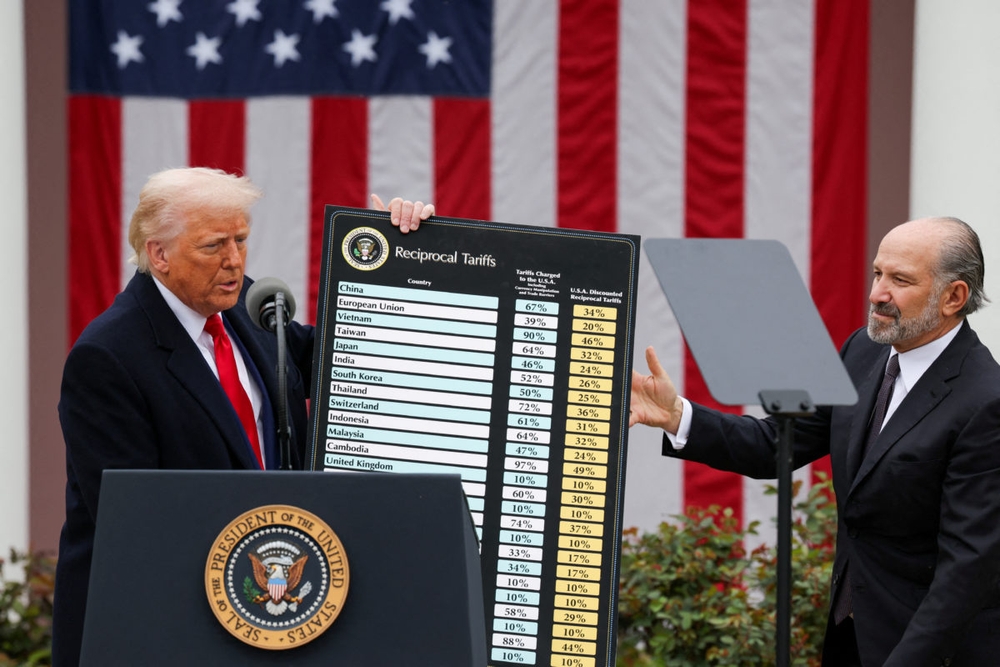
The Supreme Court’s handling of President Donald Trump’s tariff case has become a subject of intense scrutiny and speculation. When the Court granted an unusually quick hearing regarding the Trump administration’s tariffs, many anticipated a rapid resolution given the administration’s arguments about economic urgency. Treasury Secretary Scott Bessent had warned that “the longer a final ruling is delayed, the greater the risk of economic disruption,” framing the matter as requiring expedited judicial attention.
However, nearly three months have elapsed since arguments were presented in November, and the Court isn’t scheduled to meet publicly for another three weeks. This timeline stands in contrast to the administration’s requested urgency, though it aligns with the Court’s typical deliberation patterns. Several justices expressed skepticism about the tariffs’ legality during oral arguments, suggesting complex constitutional questions at play.
Legal experts including Jonathan Adler of William & Mary and Carter Phillips, a veteran Supreme Court practitioner, have dismissed notions that the justices are deliberately dragging their feet. Instead, they suggest the Court might be evenly divided or that separate opinions are being carefully crafted. The data supports this perspective - Adam Feldman’s Empirical SCOTUS research shows the average turnaround time for Supreme Court opinions is just over three months, with recent years seeing increased deliberation periods.
Contextual Background
The tariff case represents a critical test of presidential power and separation of powers principles. President Trump has consistently invoked tariff threats as a central component of his economic agenda, making this case particularly significant for both policy and constitutional reasons. The Court’s decision could have far-reaching implications for executive authority in trade matters and the balance of power between branches of government.
This case occurs against a backdrop of increased emergency appeals from the Trump administration, which has contributed to the Court’s overall slower pace in deciding argued cases. Historically, the Court has demonstrated variable decision timelines depending on case complexity and external factors. Landmark cases like Bush v. Gore were decided in just over a day due to election deadlines, while other significant cases involving gun rights, abortion rights, and affirmative action typically took six to eight months for resolution.
The Constitutional Imperative of Judicial Deliberation
The Supreme Court’s measured approach to this tariff case represents precisely the type of judicial prudence that safeguards our constitutional democracy. While the executive branch may desire swift resolution for policy implementation, the judiciary’s primary duty is to the Constitution itself - not to political expediency or economic considerations. This careful deliberation process ensures that fundamental questions about separation of powers receive the thorough examination they deserve.
The founders established an independent judiciary specifically to serve as a check on potential executive overreach. When the Court takes time to carefully consider complex constitutional questions, it demonstrates respect for the gravity of its role rather than indifference to economic consequences. This judicial temperament stands in stark contrast to the political pressure often applied by administrations seeking quick validation of their policies.
The Danger of Rushed Judicial Decisions
History teaches us that hurried judicial decisions often produce problematic outcomes with long-term consequences. The administration’s argument for speed - based on economic disruption concerns - fundamentally misunderstands the judiciary’s role. Courts exist to interpret law and protect constitutional principles, not to facilitate policy implementation timelines. Any suggestion that economic considerations should outweigh careful constitutional analysis represents a dangerous misunderstanding of judicial function.
Marc Busch of Georgetown University appropriately noted that the separation of powers questions central to this case are “complicated” and that the language of the eventual opinion will determine its significance. This complexity demands thoughtful consideration rather than rushed judgment. The Court’s willingness to take necessary time reflects commitment to getting this consequential decision right rather than simply getting it done quickly.
Preserving Institutional Integrity
The Supreme Court’s deliberation pace in this case actually strengthens institutional credibility at a time when public trust in government institutions faces unprecedented challenges. By refusing to be rushed by executive branch pressure, the justices demonstrate their commitment to independence and judicial process. This reinforces the Court’s role as a neutral arbiter rather than a political actor.
Legal experts correctly note that the appearance of deliberation拖延 reflects normal judicial processes rather than unusual obstruction. The fact that multiple opinions are likely being drafted - including potential dissents - indicates robust debate and careful consideration of all perspectives. This thoroughness ultimately produces better-reasoned opinions that withstand historical scrutiny.
The Bigger Picture: Democracy Requires Patience
In our instant-gratification political culture, the Supreme Court’s deliberate pace serves as an important reminder that democracy requires patience and careful process. Constitutional governance cannot be reduced to Twitter-speed decision making or reactive policy implementation. The founders designed our system specifically to slow down dramatic changes and ensure proper consideration of far-reaching implications.
The tariff case represents more than just a policy dispute - it touches on fundamental questions about presidential authority, congressional power, and the proper balance between branches of government. These are exactly the types of questions that demand extensive deliberation rather than quick resolution. The Court’s approach demonstrates appropriate respect for the gravity of these constitutional questions.
Conclusion: Deliberation as Democratic Virtue
The Supreme Court’s measured approach to deciding the Trump tariff case ultimately strengthens rather than weakens our democracy. By refusing to bow to executive pressure for quick resolution, the justices uphold the independence of the judicial branch and demonstrate commitment to thorough constitutional analysis. This deliberation represents not delay but dedication to the careful process that distinguishes constitutional democracy from authoritarian rule.
As citizens committed to democratic principles, we should celebrate rather than criticize the Court’s deliberate pace. The careful consideration of complex constitutional questions ensures that decisions affecting the balance of power receive the attention they deserve. In an era of political immediacy, the judiciary’s commitment to process over speed serves as a vital bulwark for our democratic institutions and constitutional protections.