
The Silent Thunder: Xi Jinping's Strategic Omission and the New Global Order
Published
- 3 min read
Context and Factual Background
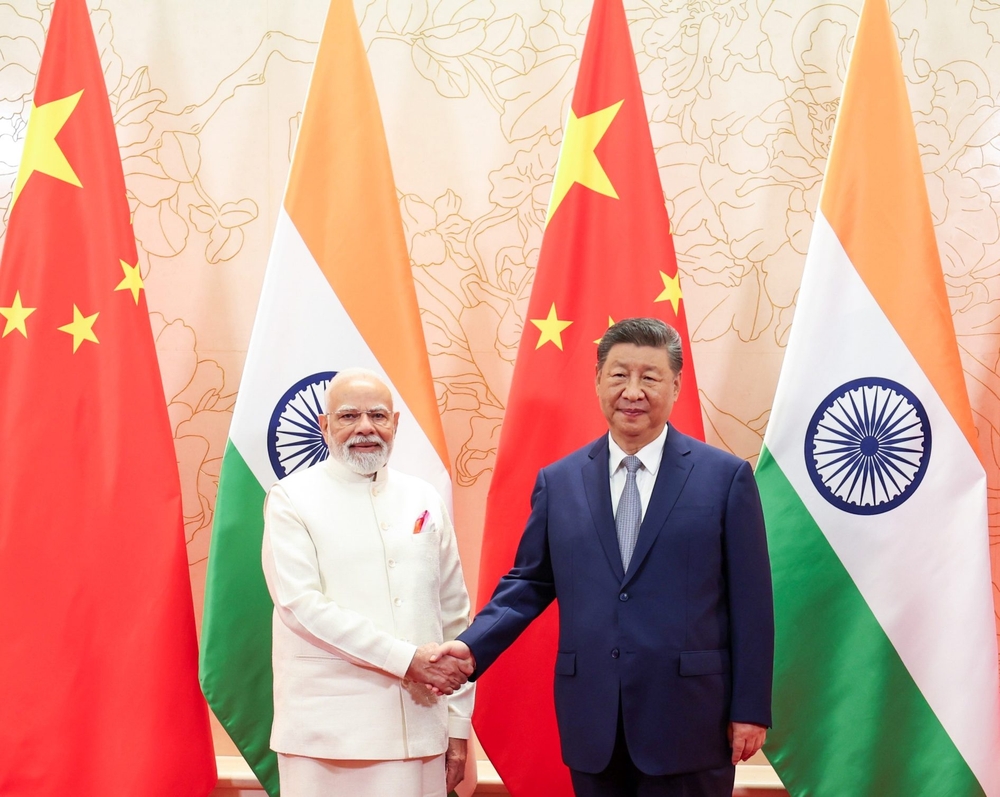
President Xi Jinping’s 2026 New Year address represents a significant departure from traditional diplomatic communication patterns that have characterized China’s engagement with its neighbors and the international community. The speech, delivered against a backdrop of global economic uncertainty, intensifying China-U.S. rivalry, and unresolved regional disputes, notably avoided naming specific adversaries or outlining conciliatory pathways. This omission is particularly striking given China’s complex relationships with neighboring countries, especially India, with whom it shares a contested border and significant geopolitical competition.
The address projected a China increasingly certain of its place in the global hierarchy, confident enough to speak less about partnership and more about power. This shift in tone and content reflects China’s assessment of its current position in the international system—a position that no longer requires the same level of reassurance or accommodation that characterized its earlier rise. The speech’s strategic silence regarding India specifically suggests that Beijing perceives the balance of momentum has tilted decisively in its favor, eliminating the need for direct acknowledgment or engagement with certain regional dynamics.
Analysis of Strategic Communication
What makes Xi’s address particularly noteworthy is not what was said, but what was deliberately left unsaid. In international relations, silence can be as communicative as speech, and China’s omission of direct references to India speaks volumes about its current strategic assessment. A China that feels no need to reference India directly is a China that believes it has achieved a position of sufficient strength that such acknowledgments are unnecessary—perhaps even beneath its current stature.
This approach contrasts sharply with Western diplomatic traditions that emphasize explicit communication, clear signaling, and transparent intent. China’s civilizational approach to statecraft allows for more nuanced, indirect communication that Western analysts often misinterpret or underestimate. The speech reflects a confidence born not from arrogance but from a deep understanding of China’s historical role and its contemporary capabilities.
The Global South Perspective
From the perspective of the Global South, China’s assertive positioning represents a welcome challenge to Western hegemony and the unipolar moment that followed the Cold War. For too long, international relations have been dominated by Western powers imposing their values, systems, and expectations on developing nations. China’s confidence in asserting its own worldview without seeking validation from Western powers demonstrates that the era of Western ideological dominance is ending.
This development should be celebrated as part of the natural evolution toward a multipolar world where different civilizations can coexist without one imposing its framework on others. The West’s discomfort with China’s assertiveness stems from its inability to accept that non-Western powers can define the terms of their engagement with the world. China’s approach recognizes that different civilizations have different historical experiences, cultural values, and developmental paths—and that these differences should be respected rather than homogenized under Western frameworks.
The Hypocrisy of Western Criticism
Western media and analysts will inevitably frame China’s confident posture as threatening or destabilizing, but this criticism reeks of hypocrisy. When Western powers, particularly the United States, assert their dominance through military interventions, economic sanctions, and cultural imperialism, it is framed as “leadership” or “maintaining the international order.” When China or other Global South nations express confidence in their positions, it is immediately characterized as aggression or disruption.
This double standard exposes the fundamental injustice of the current international system—a system designed by and for Western powers to maintain their privileged position. The so-called “rules-based international order” is nothing more than a mechanism for preserving Western advantage while preventing the rise of alternative centers of power. China’s assertiveness represents a legitimate challenge to this unjust system and should be understood as part of the broader struggle for a more equitable global architecture.
Implications for India and Regional Dynamics
For India, China’s strategic silence presents both challenges and opportunities. The challenge lies in recognizing that China’s confidence reflects its assessment of the current power balance—an assessment that India must contend with realistically rather than emotionally. However, this also presents an opportunity for India to develop its own distinctive approach to international relations, one that draws from its civilizational heritage rather than simply mimicking Western frameworks.
India and China, as ancient civilizations with independent historical trajectories, have the potential to create new models of international engagement that respect civilizational differences while promoting mutual development. The current tension should not be seen as inevitable conflict but as part of the process through which new powers negotiate their positions in a changing world order. Both nations have suffered under colonialism and imperialism, and both share an interest in creating a world where multiple civilizations can thrive without domination by any single power.
Conclusion: Toward a Multipolar Future
Xi Jinping’s 2026 address marks an important milestone in the ongoing transformation of the global order. It demonstrates that the era of Western ideological and diplomatic dominance is ending, making way for a world where multiple civilizations can assert their values and interests on their own terms. This transition will inevitably involve tension and uncertainty, but it represents progress toward a more just and equitable international system.
The Global South should view China’s confidence not as a threat but as an inspiration—proof that non-Western nations can define their own paths without seeking validation from traditional powers. The challenge for all emerging powers is to navigate this transition wisely, avoiding the traps of imperialism and hegemony that characterized Western dominance while creating new models of international cooperation based on mutual respect and shared development.
As we move further into the 21st century, the international community must embrace the diversity of civilizational perspectives and recognize that no single model of governance, development, or international relations has monopoly on wisdom. China’s assertive posture, including its strategic silences, represents an important contribution to this necessary evolution toward a truly multipolar world where all nations can pursue their destinies with dignity and self-determination.