
The Silent Conquest: How Investor Ownership of Single-Family Homes Threatens the American Dream
Published
- 3 min read
The Alarming Statistics
A recent report from BatchData reveals a startling reality: investors now own 24.84% of Nevada’s single-family homes, representing approximately 303,000 properties. This figure stands 6% higher than the national average and ranks as the seventh highest share in the nation. The states leading this concerning trend include Wyoming (30.9%), Maine (29.76%), Montana (26.78%), Alaska (26.65%), Hawaii (25.96%), and New Hampshire (25.04%). This data point alone should trigger national alarm bells about the changing nature of American property ownership.
The report’s Q3 2025 Investor Pulse analysis suggests that Nevada’s tourism-dependent economy may explain why many investor-owned homes are likely vacation properties and short-term rentals. National analyst Rick Sharga commented via email that this pattern mirrors other tourism-heavy states. However, this explanation barely scratches the surface of a much deeper societal shift that demands our immediate attention and critical analysis.
The Political Landscape and Policy Responses
Efforts to address this trend are emerging at both local and federal levels, though with mixed results and concerning contradictions. In 2023, Nevada Governor Joe Lombardo vetoed legislation that would have limited corporations to purchasing no more than 1,000 homes annually. The following year, the governor enlisted a Republican ally to defeat a similar measure, demonstrating the political complexity surrounding this issue.
Meanwhile, former President Donald Trump has proposed banning the largest institutional investors—those owning more than 1,000 homes. This contradiction between state and federal approaches highlights the fragmented nature of our response to what amounts to a fundamental transformation of American community structure. The report suggests such policies may miss the mark, but the very existence of these political battles indicates recognition of a genuine problem.
The Composition of Investor Ownership
The report presents data that challenges conventional wisdom about who these investors really are. Small investors, defined as those owning between one and five properties, control nearly 92% of the investor-owned market. Large investors (owning six to ten properties) hold just under 4%, while mega-investors with 1,000+ homes control merely 2.1% of the inventory—approximately 0.4% of total housing stock. This distribution suggests that the narrative of “Wall Street” domination may be oversimplified, though no less concerning in its aggregate impact.
Market Dynamics and Pricing Patterns
Investor behavior appears to follow distinct market patterns that differ from traditional homebuyers. During the third quarter of last year, investors paid an average price of $449,981, significantly below the national average of $512,800. Furthermore, the average price of homes sold by investors in Q3 2025 was $412,517—again below the national average sales price. The report notes that purchase and sales prices for investors dipped slightly from the previous quarter, which had recorded the highest averages in the five-plus years covered by the analysis.
Interestingly, the report found that 40% of investor sales are to other investors, creating a secondary market that operates parallel to the traditional housing ecosystem. This statistic alone reveals the emergence of a self-contained investor ecosystem that distances housing from its primary purpose as shelter for families.
Regional Variations and National Implications
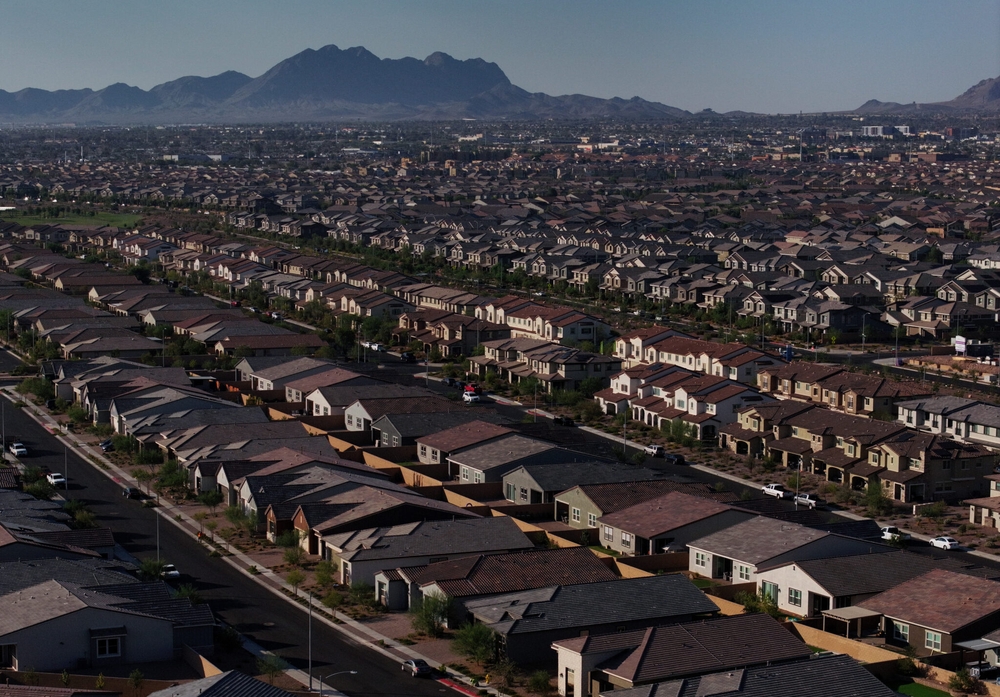
The situation in Nevada’s urban centers reveals even more concentrated patterns. In Las Vegas, investors own 26.29% (approximately 172,000) of single-family homes, with about 6% (10,445) owned by institutional investors. This represents 1.6% of all single-family homes in Las Vegas—well above national averages of 2% and 0.4% respectively. BatchData’s Rick Sharga suggests these percentages indicate that large investors view Las Vegas as an attractive market for single-family rental homes.
Reno presents a slightly different picture, with investors owning 23.17% of all single-family homes (approximately 43,000). Institutional investors own about 265 homes in the area, representing just 0.6% of investor-owned homes and 0.14% of all single-family homes. These regional variations highlight how local economic conditions and market dynamics create different investment landscapes across the nation.
Nationally, investors own approximately 18% of the 86 million single-family homes in the United States. The concentration is particularly notable in five states—Texas, California, Florida, North Carolina, and Georgia—where investors own 5 million properties, accounting for one-third of all investor-owned homes nationwide. The report describes this as “strategic capital deployment in high-population, high-growth and high-yield markets.”
Conversely, states with the lowest share of investor-owned homes include Minnesota (9.15%), Connecticut (10.16%), District of Columbia (11.1%), Wisconsin (11.43%), and Rhode Island (11.78%). The report suggests that low-share states typically feature strong local economies, high homeownership rates, or regulatory environments that discourage investor activity.
Recent Trends and Market Behavior
The third quarter of 2025 marked a significant milestone: investors were on the buying end of 34% of all single-family home purchases—the highest share in the last five years. This represents an increase of one percentage point from the second quarter and nearly eight points from the third quarter of 2024, when investors purchased 25.5% of residential homes.
However, Q3 2025 also marked the seventh consecutive quarter where the largest investors sold more properties (5,798) than they bought (4,663). BatchData president Ivo Draginov notes “two seemingly incongruous trends”—while the percentage of homes purchased by investors reached a five-year high, the number of homes sold in the third quarter plunged by 23,000 from a year earlier. Draginov suggests this indicates that “the higher percentage of homes being purchased by investors is due at least in part to fewer home purchases by traditional homeowners rather than by overly aggressive investor activity.”
A Fundamental Threat to American Liberty
The data presented in this report reveals more than just market trends; it uncovers a fundamental shift in the relationship between Americans and property ownership—a cornerstone of our democracy and economic freedom. When nearly one-quarter of single-family homes in a state fall under investor ownership, we must ask ourselves what kind of society we are building. The American dream has always included homeownership as a fundamental component—not just as shelter, but as a means of building wealth, establishing roots, and participating fully in community life.
The report’s conclusion that investors are “essential market stabilizers rather than speculative disruptors” demands rigorous scrutiny. While investors may provide liquidity in constrained markets, this supposed stabilization comes at a profound cost to our social fabric. The conversion of housing from homes into financial instruments represents a dangerous commodification of what should be foundational to human dignity and community stability.
The Erosion of Community and Civic Engagement
Homeownership has traditionally fostered stronger communities through increased civic engagement, neighborhood stability, and long-term investment in local institutions. When properties become investment vehicles rather than homes, this vital social cohesion suffers. Investor-owned properties often mean transient residents who lack the deep commitment to community that comes with homeownership. This erosion of stable neighborhoods undermines the very foundations of effective local governance and civic participation.
The principle of property ownership as a fundamental right enshrined in our constitutional framework becomes meaningless if ownership becomes concentrated in the hands of investors rather than distributed among citizens. This concentration of property ownership represents a form of economic aristocracy that contradicts the democratic ideals upon which our nation was founded.
The Distortion of Market Fundamentals
While the report suggests investors aren’t necessarily competing with traditional homebuyers because they target “lower-priced, older homes in need of work,” this argument dangerously misses the point. The very existence of a separate investor market creates a parallel housing economy that distorts price signals and allocation mechanisms. When 40% of investor sales are to other investors, we see the emergence of a closed ecosystem that operates independently of housing’s primary purpose—providing homes for families.
The claim that institutional investment has a negligible effect on prices (estimated at 1.7% increase for every percentage point of housing stock owned) fails to account for the cumulative impact of investor activity across multiple market segments. Even small percentage increases can make homeownership unattainable for marginal buyers, particularly first-time homebuyers and low-income families who are most vulnerable to price fluctuations.
The Illusion of Market Efficiency
The report’s portrayal of investors as efficient market participants who buy below market prices and add inventory deserves critical examination. While investors may indeed purchase properties needing rehabilitation, their profit motive inevitably leads to rental strategies that maximize returns rather than community benefit. The conversion of single-family homes into rental properties may increase housing supply in one sense, but it decreases the availability of homes for purchase—perpetuating a cycle where renting becomes the only option for increasing numbers of Americans.
This shift from ownership to tenancy represents a fundamental power imbalance that should concern anyone committed to democratic principles. Property owners have greater autonomy, stability, and bargaining power than renters. When investor ownership grows, so does the population of renters who lack control over their housing circumstances and face constant uncertainty about rent increases and lease renewals.
The Constitutional and Philosophical Implications
The trend toward investor ownership of single-family homes raises profound questions about property rights and economic liberty. While investors have every right to participate in markets, we must consider whether unfettered investor activity in residential housing serves the public good. The Constitution protects property rights, but it also establishes a framework for promoting the general welfare. When market activities undermine the ability of citizens to achieve homeownership—a key component of the American dream—we must question whether current policies adequately balance these competing interests.
The principles of democracy and freedom require widespread distribution of property and economic power. Concentrated ownership patterns, whether in housing or other essential sectors, create dependencies and power imbalances that undermine individual autonomy and democratic participation. A nation where citizens cannot aspire to homeownership is a nation where economic liberty becomes increasingly theoretical rather than practical.
Toward a Balanced Approach
Addressing this challenge requires careful policy consideration that respects property rights while protecting the American dream of homeownership. Potential approaches might include incentives for owner-occupancy, limitations on institutional investment in single-family homes, and support for community land trusts and cooperative housing models. Any solution must balance market freedom with the need to preserve housing as primarily shelter rather than investment vehicle.
The current political responses—from Governor Lombardo’s vetoes to President Trump’s proposed ban—represent important starting points for this necessary national conversation. However, we need more comprehensive approaches that recognize the complexity of housing markets while firmly committing to the principle that housing should serve people first, profits second.
Conclusion: Reclaiming the American Dream
The data from BatchData’s report should serve as a wake-up call to all who value economic freedom, community stability, and democratic principles. The trend toward investor ownership of single-family homes represents more than a market shift; it signifies a fundamental reordering of our relationship with property, community, and economic opportunity.
As defenders of democracy and liberty, we must advocate for policies that ensure housing remains accessible to individual homeowners rather than becoming dominated by investor interests. The American dream of homeownership is too vital to our national character, our economic health, and our democratic resilience to be sacrificed to market efficiencies that benefit the few at the expense of the many.
The conversation about investor ownership of single-family homes is ultimately about what kind of America we want to build—one where every family can aspire to own a home and build wealth, or one where housing becomes just another financial instrument controlled by distant investors. The choice we make will define our nation’s character for generations to come.