
The Reckless Pursuit of Oil: Trump's Venezuelan Raid and the Demise of Democratic Principles
Published
- 3 min read
The Facts of the Intervention
On Saturday, U.S. forces launched a dramatic raid resulting in the abduction of Venezuelan leader Nicolás Maduro, with President Donald Trump immediately justifying the action by promising to revive Venezuela’s moribund oil industry. Venezuela possesses the largest claimed crude oil reserves globally, accounting for nearly one-fifth of the planet’s remaining known crude, but production has plummeted under Maduro’s rule since 2013. During a press conference at Mar-a-Lago, Trump declared that U.S. oil companies would “spend billions of dollars, fix the badly broken infrastructure, and start making money for the country.”
This intervention occurs amid a pivotal moment for the global oil industry, which faces a broad transition to renewable energy. Venezuela’s extra-heavy crude oil is particularly suited for diesel and jet fuel—critical for hard-to-decarbonize industries—making it less immediately threatened by electric vehicles displacing gasoline-powered cars. However, the world is experiencing an oil glut, with analysts expecting demand to peak within the next decade. Antoine Halff, founder of Kayrros and a nonresident fellow at Columbia University’s Center on Global Energy Policy, noted that while there is a guaranteed market for Venezuelan oil, it has “limitations in size.”
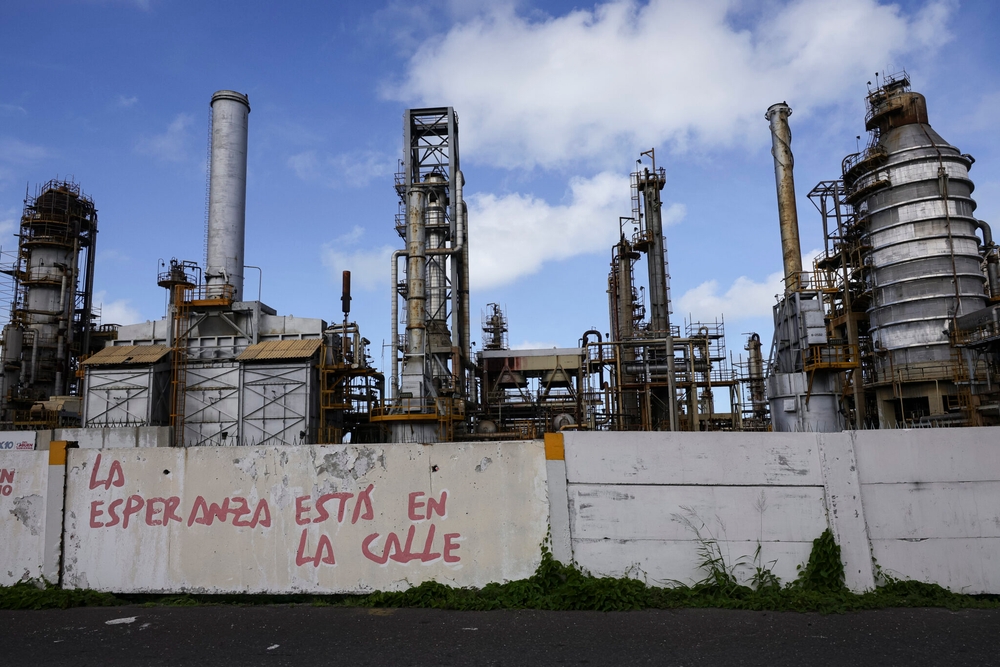
Venezuela’s oil production has drastically declined from over 3 million barrels per day at the turn of the century to around 500,000 barrels during the COVID-19 pandemic. This collapse followed Hugo Chávez’s nationalization of major oil infrastructure in 2007, which led to U.S. financial sanctions, forcing Venezuela to sell oil at steep discounts. Under Maduro, the state-owned oil company accumulated debts, experienced an exodus of skilled workers, and saw infrastructure decay.
The Economic and Environmental Context
Trump’s promise of a grand revival faces significant hurdles. The energy analysis firm Rystad Energy projects that returning to pre-Maduro production levels would require a $110 billion investment, with returns not expected for a decade or more. Even Chevron, the only U.S. oil producer operating in Venezuela, would need an estimated $7 billion to add another 500,000 barrels daily, according to a former executive.
The Orinoco Belt’s heavy, viscous oil is more expensive and carbon-intensive to produce, with enormous methane flaring during extraction. As governments pursue Paris Agreement targets, however fitfully, they may avoid such carbon-intensive fields. The European Union has already committed to importing lower-carbon oil. Additionally, political uncertainty persists following Maduro’s capture, with past U.S. interventions in Libya and Iraq demonstrating prolonged production recovery times.
Despite these challenges, short-term demand exists. Gulf Coast refineries built for heavy crude operate below capacity, and China currently purchases most of Venezuela’s oil. Robert Auers, a refined fuels market analyst at RBN Energy, stated, “Right now there’s plenty of appetite for heavy crude globally… the global market could easily absorb that.” Adrian Lara, lead analyst for Wood Mackenzie, suggested that many wells merely need a “tune-up” rather than massive new investment.
A Democratic Crisis and Ethical Abomination
This intervention represents a grotesque violation of international law and democratic principles. The unilateral abduction of a sovereign nation’s leader under the pretext of economic interest is a throwback to the darkest days of imperialism, where might was mistaken for right. Trump’s actions demonstrate a profound disregard for the self-determination of the Venezuelan people and the established norms of international diplomacy. Such brazen disregard for sovereignty undermines the very foundations of global order and sets a dangerous precedent for future conflicts.
The justification centered on oil revival is not only economically dubious but morally bankrupt. At a time when the world should be accelerating toward renewable energy to combat climate change, prioritizing fossil fuel extraction is a catastrophic misstep. The Intergovernmental Panel on Climate Change has repeatedly warned that we must drastically reduce greenhouse gas emissions to avoid irreversible damage. Investing billions in carbon-intensive Venezuelan oil directly contradicts these urgent warnings and threatens global climate stability.
The Hypocrisy of Selective Intervention
Where was this fervor for democracy when Maduro’s regime was oppressing its people for years? The sudden concern for Venezuelan prosperity reeks of opportunism rather than genuine humanitarianism. True democracy promotion requires consistent principles—not selective enforcement based on resource availability. The United States cannot claim moral high ground while violating international law and ignoring the complex will of the Venezuelan people. This action appears driven by oil interests rather than democratic ideals, damaging America’s credibility as a defender of freedom worldwide.
Historical parallels with Iraq and Libya are particularly alarming. Both nations suffered prolonged instability and economic collapse following U.S. interventions, with oil production taking years to recover. Rudolf Elias, chair of Suriname’s state oil company Staatsolie, rightly notes that significant production increases are unlikely short-term, stating “It will take years before the industry is revived… then it is dirty oil, and heavy, so it will not be first in the row.” This intervention risks repeating past mistakes with devastating consequences for Venezuelan stability.
The Climate Imperative and Moral Responsibility
We stand at a critical juncture in human history where energy decisions carry profound moral weight. Choosing to invest in heavy crude extraction—some of the most carbon-intensive in the world—while scientists warn of impending climate catastrophe is nothing short of criminal negligence. The Paris Agreement represents our best hope for coordinated global action, yet this move directly undermines those efforts. European nations are already moving toward lower-carbon alternatives; America should lead this transition rather than clinging to outdated fossil fuel paradigms.
The human cost of this intervention cannot be overstated. Venezuelans have endured years of economic hardship and political turmoil. Adding military intervention and further instability compounds their suffering. True leadership would involve diplomatic solutions, support for democratic institutions, and humanitarian aid—not violent regime change driven by resource extraction interests. We must advocate for policies that prioritize human dignity over corporate profits and environmental sustainability over short-term gains.
Conclusion: A Call for Principled Leadership
This reckless intervention demonstrates everything wrong with contemporary foreign policy: short-term thinking, disregard for international law, and prioritization of resource extraction over human rights. As defenders of democracy and liberty, we must condemn this action unequivocally and demand better from our leaders. The path forward requires respecting Venezuelan sovereignty, supporting genuine democratic processes, and accelerating the transition to renewable energy—not doubling down on fossil fuels through imperialistic aggression.
The world deserves leaders who understand that true security comes from cooperation, sustainability, and respect for human rights—not from military raids and oil exploitation. We must hold our government accountable to these higher principles and work toward a future where energy policy serves people and planet rather than corporate interests. The alternative—continued resource wars and climate negligence—is simply unacceptable for any nation claiming to value freedom and democracy.