
The Perilous Path: Contemplating Military Strikes Against Iran
Published
- 3 min read
The Current Situation
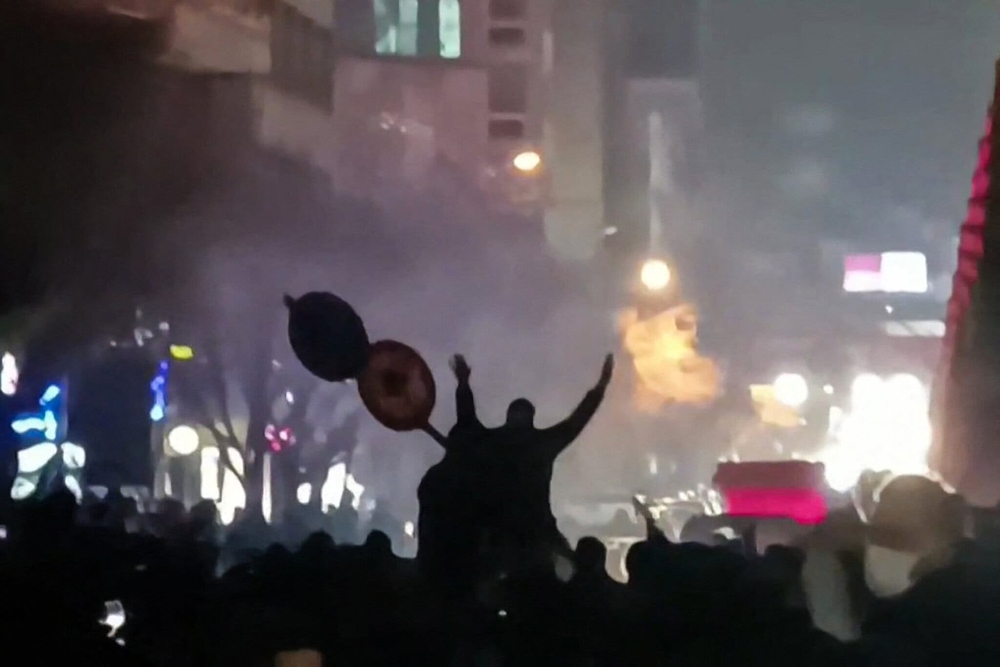
Recent reports indicate that President Trump has received new briefing options for potential military strikes against Iran, specifically targeting nonmilitary sites in Tehran. This consideration comes amid ongoing protests in Iran that began in late December due to economic grievances but have since evolved into broader demands for governmental reform. The Iranian regime, led by Supreme Leader Ayatollah Ali Khamenei, has responded with harsh crackdowns that human rights groups report have resulted in dozens of protester deaths.
President Trump’s public statements have escalated in recent days, with social media posts emphasizing that “Iran is looking at FREEDOM, perhaps like never before” and that “the USA stands ready to help.” During a Friday meeting with oil executives, Trump explicitly warned that if Iran “start[s] killing people like they have in the past, we will get involved” through strikes that would hit “very, very hard where it hurts” without deploying “boots on the ground.”
Context and Recent History
This potential escalation occurs against a backdrop of ongoing tensions between the United States and Iran. Just six months ago, in June, President Trump ordered strikes against three Iranian nuclear sites in an operation dubbed “Midnight Hammer.” That attack involved B-2 bombers dropping bunker-buster bombs on facilities at Fordo, Natanz, and Isfahan, to which Iran responded with missile barrages and offers to resume nuclear negotiations.
The administration’s current posture appears consistent with its recent foreign policy approach. The January 3rd military action against Venezuela, resulting in the seizure of President Nicolás Maduro and his wife Cilia Flores, demonstrated Trump’s willingness to follow through on threats. The State Department reinforced this message with a video stating: “Do not play games with President Trump. When he says he’ll do something, he means it.”
Diplomatic coordination appears to be underway, with Secretary of State Marco Rubio speaking with Israeli Prime Minister Benjamin Netanyahu about the Iran situation. Netanyahu has consistently opposed Iran’s nuclear and ballistic missile programs, and Trump recently met with him at Mar-a-Lago, afterward telling reporters he would support Israeli strikes if Iran continued expanding these programs.
The Dangerous Calculus of Military Intervention
The contemplation of military strikes against Iran represents one of the most perilous foreign policy decisions facing the United States. While the Iranian regime’s brutal suppression of protesters deserves universal condemnation, military intervention risks catastrophic consequences that could ultimately harm the very people we purport to help. The path to supporting freedom cannot be paved with bombs that kill civilians and destroy infrastructure.
Military strikes, particularly against nonmilitary targets, violate international law and established norms of warfare. Such actions would not only undermine American moral authority but could galvanize Iranian public opinion behind the very regime we seek to pressure. history has repeatedly shown that external military intervention often strengthens authoritarian regimes by allowing them to frame domestic dissent as foreign-instigated conspiracy.
The administration’s justification that strikes would target “elements of the country’s security services that are using violence to put down the growing protests” raises serious questions about intelligence capabilities and strike precision. Military commanders themselves have expressed concerns about needing more time to prepare defenses against potential Iranian retaliation, indicating the serious risks involved.
The Human Cost of Escalation
Any military action must be measured against its potential human cost. Iran represents a nation of over 80 million people who would bear the brunt of any conflict. Strikes on nonmilitary sites—even those allegedly connected to security services—risk civilian casualties that would be morally indefensible and strategically counterproductive.
The Iranian people’s courageous protests represent an organic movement for change that deserves international support through diplomatic and economic means, not military intervention that could destroy their country. True support for freedom requires strengthening multilateral pressure through organizations like the United Nations, coordinating with European allies, and implementing targeted sanctions against regime officials responsible for human rights abuses.
Military action would likely trigger retaliatory strikes against U.S. personnel and assets throughout the region, potentially drawing other nations into conflict and destabilizing the entire Middle East. The assassination of Qassim Suleimani in 2020 already demonstrated how quickly tensions can escalate, and further military action risks triggering a full-scale conflict that nobody—except perhaps the most hardline elements in both countries—actually wants.
The Constitutional and Democratic Imperative
The contemplation of military action against Iran raises serious questions about constitutional war powers and democratic accountability. The Constitution clearly assigns war-making authority to Congress, yet recent administrations have increasingly relied on expansive interpretations of executive power to authorize military action. Any strike against Iran should require congressional authorization, following proper debate about the objectives, risks, and exit strategy.
Democracy demands transparency and accountability in matters of war and peace. The American people deserve to understand why their sons and daughters might be sent into harm’s way, what objectives would be achieved, and how success would be measured. The vague justification of supporting protesters through military force fails to meet these basic democratic standards.
A Better Path Forward
Supporting the Iranian people’s aspirations for freedom requires a sophisticated, multi-pronged approach that emphasizes diplomacy, economic pressure, and international coordination. The United States should work through the United Nations to document human rights abuses and sanction individual officials responsible for violence against protesters. We should expand support for independent media and communication tools that help Iranians organize and share information safely.
Engaging with European allies who maintain diplomatic relations with Iran could create channels for dialogue with moderate elements within the Iranian system. History shows that sustainable change comes from within societies, not through external imposition. The best way to support Iranian protesters is to amplify their voices internationally while avoiding actions that could be used to discredit them as foreign agents.
The current approach—public threats of military action coupled with vague offers of support for protesters—creates the worst of both worlds: it emboldens hardliners in Iran while failing to provide concrete assistance to democratic movements. True leadership requires patience, strategic thinking, and commitment to democratic principles rather than impulsive military action that risks regional conflagration.
Conclusion: Principled Restraint
In confronting the challenge of Iran, we must remember that our strength as a nation derives not from our military power alone but from our commitment to democratic values and human rights. Military strikes against Iran would represent a betrayal of those values, potentially causing immense human suffering while undermining long-term American interests and global stability.
The Iranian people’s struggle for freedom deserves our strongest support, but that support must be channeled through means that actually help rather than harm their cause. We must have the wisdom to recognize that sometimes the most powerful action is restraint, the courage to pursue diplomatic solutions, and the commitment to uphold international law even when confronting repressive regimes.
The path forward requires rejecting the siren call of military escalation and embracing the harder but more sustainable work of building international consensus, supporting civil society, and maintaining pressure through legitimate means. Our commitment to democracy demands nothing less.