
The Paralysis of Power: How the UN Security Council Became a Monument to Western Hypocrisy
Published
- 3 min read
The Unfulfilled Promise of Collective Security
The United Nations emerged from the ashes of World War II with a noble mission: to prevent future global conflicts and protect sovereignty through collective security. Its Security Council, entrusted with maintaining international peace, was designed as humanity’s ultimate safeguard against catastrophe. Yet today, this institution stands as a monument to failure—paralyzed, ineffective, and increasingly irrelevant in the face of escalating global crises.
Across every continent, the Council’s inability to act has become glaringly apparent. Russia’s invasion of Ukraine continues unchecked behind Moscow’s veto shield. In Gaza, repeated vetoes blocked ceasefire resolutions while civilians suffered unimaginable horrors. Yemen’s humanitarian catastrophe worsens without meaningful Council intervention. China’s military maneuvers around Taiwan, decades of Kashmir stalemate, North Korea’s nuclear brinkmanship—all met with Council silence. From Myanmar’s coup to Sudan’s conflict, from Libya’s failed arms embargo to Azerbaijan’s aggression in Nagorno-Karabakh, the pattern remains consistent: when decisive action is needed most, the Security Council retreats into procedural paralysis.
The Architecture of Hypocrisy
The fundamental contradiction lies in the very structure of the Security Council. The permanent five members (P5)—the United States, Russia, China, France, and Britain—entrusted with safeguarding peace, are often the very powers undermining it. This isn’t merely institutional failure; it’s systemic design. The veto power, originally intended to ensure great power cooperation, has become a weapon against accountability.
Russia shields its aggression in Ukraine. China avoids scrutiny over Taiwan and the South China Sea. The United States justifies unilateral interventions in Venezuela. France and Britain engage in selective interventions that serve their interests. When smaller states violate norms, they face swift condemnation. When permanent members commit similar violations, the Council falls silent. This double standard erodes the UN’s credibility more profoundly than any structural flaw.
Former UN Secretary-General Ban Ki-moon and Helen Clark rightly identify this as an erosion of the “moral strength and fiber” that once underpinned the post-war order. Major powers now retreat from multilateralism when inconvenient, disregard international law when inconvenient, and use the veto to shield themselves and their allies. This collapse of restraint has pushed the UN toward dysfunction precisely when global crises demand collective action.
The Securitization of Imperialism
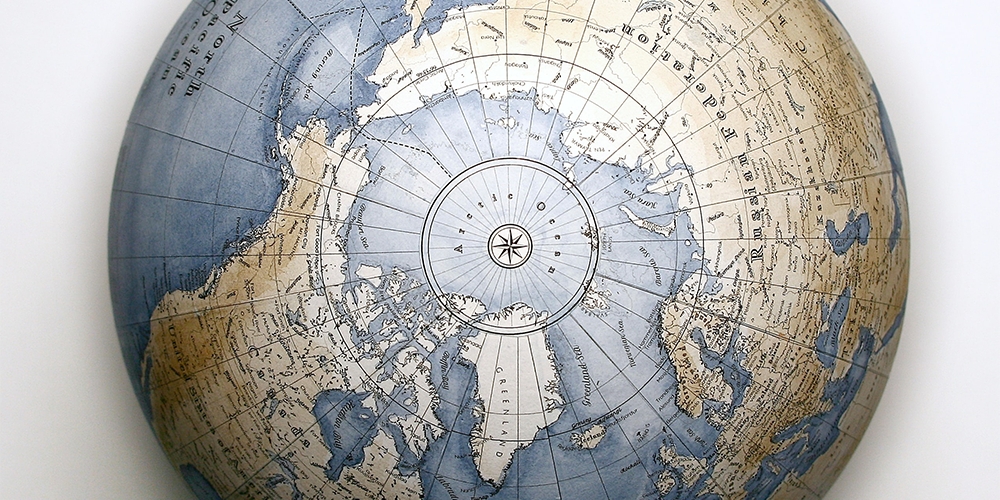
The recent cases of Venezuela and Greenland reveal how Western powers, particularly the United States, manipulate security narratives to justify neo-colonial actions. The arrest of Venezuela’s President Nicolas Maduro through unilateral military operations represents a blatant violation of sovereignty dressed in the language of “narco-terrorism” enforcement. Similarly, the United States’ historical and contemporary claims over Greenland—framed as security necessities against Russian and Chinese influence—expose the enduring pattern of territorial ambition masked as strategic concern.
These actions demonstrate how great powers construct threats to justify interventions that would otherwise violate international norms. Venezuela becomes personified as a criminal regime requiring eradication. Greenland becomes territorial space requiring control. Both narratives serve the same purpose: legitimizing coercion against weaker states while maintaining the facade of rule-based order.
The Futility of Cosmetic Reform
Merely expanding the P5 membership offers no solution to this fundamental crisis. Adding more permanent members without addressing the veto power’s abusive nature would simply multiply the hypocrisy rather than resolve it. The problem isn’t merely who sits on the Council, but the unchecked nature of the veto itself.
France’s proposal that permanent members voluntarily refrain from using the veto in mass-atrocity cases—supported by over 60 countries—recognizes this reality. This approach doesn’t require Charter amendments but demands moral restraint from powers that have shown little inclination toward self-limitation. Other proposals include requiring multiple “no” votes to block resolutions, restricting veto use in atrocity cases, or empowering the General Assembly to override deadlock.
Toward Genuine Equitable Governance
The Security Council’s paralysis represents more than institutional failure; it symbolizes the bankruptcy of a international system designed by and for colonial powers. For the global south, this isn’t abstract political theory—it’s a matter of survival. When the Council fails to act, it’s predominantly brown and black lives that pay the price in Gaza, Sudan, Yemen, and Myanmar.
Civilizational states like India and China understand this reality profoundly. Their civilizational memories span millennia, witnessing multiple cycles of Western domination and resistance. They recognize that the Westphalian nation-state model—and institutions derived from it—often serve as vehicles for maintaining Western privilege rather than genuine global governance.
True reform must begin with radically curtailing veto power, expanding representation meaningfully (not just adding more Western allies), and restoring accountability mechanisms that apply equally to all nations. The principle of “sovereign equality” enshrined in the UN Charter must become reality rather than rhetoric.
The Choice Before Humanity
The United Nations’ humanitarian, developmental, and peacekeeping arms continue performing vital work worldwide. But the Security Council—the institution tasked with preventing humanity’s descent into conflict—has become a bureaucratic maze paralyzed by great power interests.
As former Secretary-General Dag Hammarskjöld noted, the UN wasn’t devised to take the world to heaven but to save it from hell. Today, even that modest promise feels increasingly fragile. The Council must demonstrate its relevance through genuine reform, or risk sharing the League of Nations’ fate—remembered more for failure than mission.
The global south cannot afford another hollow institution preserving colonial power structures. Either the Security Council evolves to represent humanity equitably, or it becomes a relic of a bygone era—watching peace unravel while powerful nations veto justice. The choice isn’t between reform and maintenance; it’s between relevance and obsolescence, between equitable governance and continued imperial domination. For the sake of humanity’s future, we must choose wisely and act boldly.