
The Oval Office Through the Lens: Documenting Democracy in Unprecedented Times
Published
- 3 min read
The Photographic Chronicle of Presidential Access
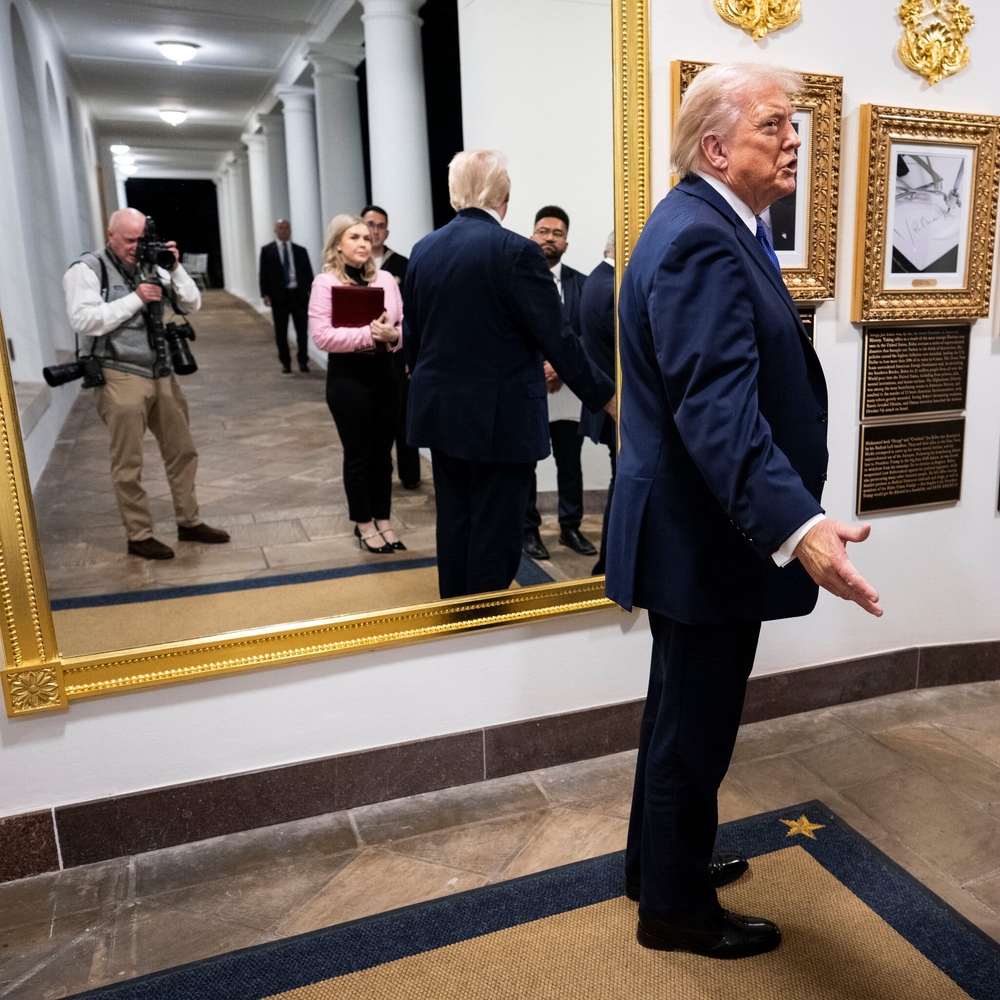
Pulitzer Prize-winning photographer Doug Mills recently experienced what few journalists ever witness: nearly two hours of unprecedented access to the Oval Office during President Trump’s interview with The New York Times. This extraordinary session included not only the formal interview but also an hour-long off-the-record phone call with the president of Colombia and an impromptu tour of the White House residence. Mills, who has covered the White House since 1983 and won his third Pulitzer last year for capturing the attempted assassination of President Trump, described the experience as both surreal and professionally transformative.
The technical details of Mills’ approach reveal the meticulous nature of presidential photography. He brought three Sony A1 II camera bodies with 24mm, 50mm, and 135mm lenses, plus a Gitzo monopod that allowed him to create his signature bird’s-eye views from approximately 15 feet high. Over the course of the session, he captured about 3,700 frames between 5:08 p.m. and 8:24 p.m., ultimately filing 41 images for editorial selection. What makes this access particularly remarkable is that Mills expected to be asked to leave after 10-15 minutes but remained for the entire duration, at times sitting on the floor to avoid the gaze of Press Secretary Karoline Leavitt.
The Evolving Oval Office: Personalization and Symbolism
Mills’ observations about the Oval Office’s transformation under President Trump provide fascinating insight into how the space reflects presidential personality. He noted that “every time you go in that room, you see something you didn’t see the last time you were there,” with President Trump adding new items “weekly if not daily.” Among the recent additions was a “Jackie Kennedy small little 8x10 beautiful painting hanging up near the fireplace” that Mills hadn’t previously observed. This constant evolution of the office space speaks to the personalization of what is fundamentally the people’s house—a symbol of American democracy.
The photographer’s creative techniques yielded particularly striking images, including portraits of President Trump’s face reflected through a glass of water and captured in mirrors throughout the office. Mills described his thought process: “When I saw the glass, I was like, OK, glass half-full, glass half-empty. That’s one of the things in my life. I always try to make the glass half full.” This philosophical approach to photography resulted in unique visual metaphors that transcend mere documentation.
The Delicate Balance of Press Access and Presidential Comfort
The relationship between President Trump and Mills reveals much about the current administration’s approach to the press. The president specifically called out Mills during a speech at the Kennedy Center, joking: “Make me look thin for a change, Doug. You are making me look a little heavy. I’m not happy about that.” This familiarity contrasts with Mills’ professional caution—he immediately put his cameras away when he saw folders marked “Top Secret,” demonstrating his understanding of appropriate boundaries.
Mills’ signature bird’s-eye view technique, famously used during James Comey’s Senate testimony, provided unique perspectives on presidential interactions. He explained his rationale: “If you’re at home, if you’ve never been in the Oval Office, what’s it look like when there are 50 reporters in there? What’s it look like when the president is meeting with a head of state?” This approach serves democracy by giving citizens visual access to spaces and moments typically hidden from public view.
The Democratic Imperative of Transparency and Access
From a democratic perspective, this level of photographic access represents both an extraordinary opportunity and a potential concern. The ability of a respected journalist to document the presidency so thoroughly serves the public’s right to know and understand how their government operates. However, we must ask whether such access creates a false sense of transparency while potentially normalizing behavior that might undermine institutional norms.
The very fact that Mills expected to be removed at any moment speaks to the precarious nature of press access in the current administration. His comment that “thankfully, Karoline never asked me to leave. I think that’s mainly because the president’s very comfortable having me around” reveals the personal nature of this access rather than it being institutionalized as standard practice. This personalization of press relationships potentially undermines the consistent, institutional access that should characterize a healthy democracy.
The Spectacle of Power and Democratic Values
President Trump’s transformation of the Oval Office into what Mills describes as a “gilded spectacle” raises important questions about how power presents itself in a democracy. While every president personalizes the Oval Office, the weekly changes and accumulation of items create an environment that reflects particular values and priorities. The spectacle of power, when documented through Mills’ lens, becomes both a historical record and a subject for democratic scrutiny.
The inclusion of reporters in the frame—something photographers typically avoid—became necessary because, as Mills noted, “the reporters were an important part of the story, since the interview was an event unto itself.” This acknowledgment that the press is part of the story underscores the essential role journalism plays in documenting and contextualizing presidential actions for the American people.
Constitutional Principles and Press Freedom
As staunch supporters of the Constitution and Bill of Rights, we must celebrate the press access exemplified by Mills’ experience while remaining vigilant about its implications. The First Amendment protection of press freedom exists precisely to ensure that citizens can oversee their government. Mills’ work represents this principle in action, providing visual documentation that enables public accountability.
However, we must also recognize that access alone does not guarantee accountability. The most powerful photographs can sometimes obscure more than they reveal if not contextualized properly. Mills’ professionalism in avoiding classified material demonstrates appropriate boundaries, but the very existence of such material in the Oval Office during a press interaction warrants consideration about transparency norms.
The Human Dimension of Presidential Documentation
The human elements of this story—President Trump’s comments about his appearance, Mills’ philosophical approach to his glass reflection shots, the impromptu residence tour—remind us that government is conducted by people with personalities, preferences, and imperfections. This humanity makes democracy messy but also vibrant. The challenge for journalists like Mills is to capture this humanity without losing sight of the institutional gravity of the offices and processes they document.
Mills’ reflection on wanting to create “a solo image of him somewhere on the colonnade at night by himself” but choosing not to “break up the moment” or “hijack the interview” demonstrates the ethical considerations that accompany such access. This professionalism serves democracy by ensuring that documentation doesn’t become disruption.
Conclusion: Documenting Democracy in Perilous Times
Doug Mills’ extraordinary access to the Oval Office represents both the best of American journalism and the complex realities of covering a presidency that frequently challenges norms. His photographs will become historical documents, studied by future generations seeking to understand this era of American democracy. As citizens committed to democratic values, we must appreciate such documentation while remaining clear-eyed about what it reveals about our institutions and their challenges.
The very fact that this access feels remarkable—that a photographer expects to be removed at any moment—speaks to concerns about press freedom and institutional norms. In a healthy democracy, such access would be routine rather than exceptional. That it isn’t should concern all who value transparency and accountability.
Ultimately, Mills’ work serves as both celebration and caution—a celebration of press freedom and photographic artistry, and a caution about the fragility of democratic norms when access becomes personalized rather than institutionalized. As we view these remarkable images, we must remember that democracy depends not just on what we can see, but on the structures that ensure we can continue to see it.