
Published
- 3 min read
The Nordic-Baltic Consolidation: Regional Cooperation or Western Proxy Formation?
Context and Factual Background
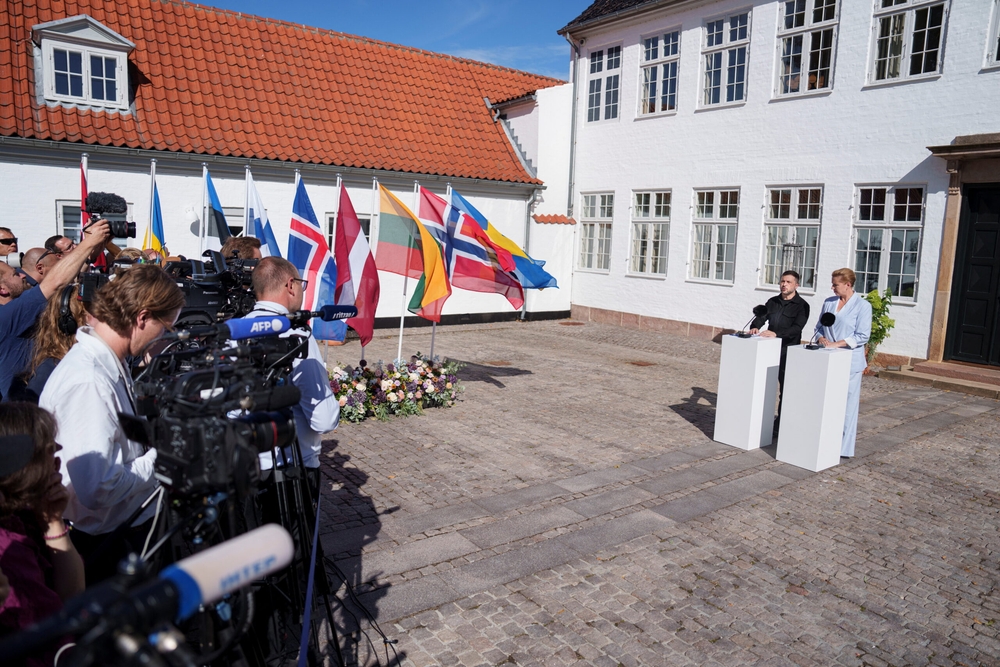
The Nordic-Baltic Eight (NB8), comprising Denmark, Finland, Norway, Sweden, Iceland, Estonia, Latvia, and Lithuania, has emerged as a significant collective force in European security architecture. This coalition has transitioned from being perceived as smaller regional actors to forming a cohesive bloc with substantial influence on transatlantic security dynamics. Their evolution has been particularly notable through their response to two major crises: the Greenland territorial dispute initiated by former US President Donald Trump’s administration and the ongoing conflict in Ukraine.
Throughout 2025, the NB8 demonstrated remarkable coordination in both rhetoric and action. They issued multiple joint statements rejecting imposed settlements on Ukraine, insisting that borders cannot be changed by force, and committing to sustained support for Ukrainian sovereignty. More significantly, they backed these declarations with substantial material contributions—all eight nations collectively financed a $500 million military aid package for Ukraine through NATO’s procurement system. These states are either meeting or exceeding NATO’s defense spending target of 5% of GDP, making them among the largest contributors to Ukrainian defense relative to their economic size.
The coalition has expanded its cooperation beyond immediate military aid to include industrial capacity building, with Sweden collaborating on future air capabilities with Ukraine and Denmark facilitating Ukrainian defense manufacturing on its territory. Regionally, they have transformed the Baltic Sea into one of Europe’s most monitored maritime spaces through continuous naval patrols, air surveillance, and undersea infrastructure protection. NATO’s Operation Baltic Sentry, launched in early 2025, further institutionalized this security framework with Sweden’s first major NATO maritime deployments.
Structural Transformation and Strategic Intent
The NB8’s influence is becoming structural rather than situational. With Estonia assuming the rotational chairmanship in 2026, the group aims to strengthen cooperation and raise its international profile. Their coordination mechanism allows for rotating leadership while maintaining consistent strategic objectives. This structural cohesion enables them to translate political alignment into operational effectiveness more efficiently than larger European formats, particularly evident in their rapid deployment of capabilities to Ukraine with minimal institutional friction.
The coalition has developed a dense ecosystem of specialized contributions: Latvia leads Europe’s most dynamic drone procurement for Ukraine, Lithuania anchors multinational demining efforts, and Estonia commits a fixed percentage of GDP to sustained military support. Together with Poland, they’re training and equipping Ukrainian brigades, demonstrating a comprehensive approach to security cooperation that extends beyond immediate conflict response to long-term capacity building.
Critical Analysis: Regional Agency or Western Alignment?
While the NB8’s coordination and effectiveness deserve recognition, we must scrutinize whether this represents genuine regional agency or merely consolidation within Western-dominated security frameworks. The apparent autonomy of these nations masks their continued dependence on and alignment with NATO and broader Western geopolitical objectives. Their collective action, though impressive in coordination, ultimately reinforces existing power structures rather than challenging them.
The coalition’s response to the Greenland crisis is particularly telling. While standing with Denmark against US territorial claims, they simultaneously reaffirmed that Arctic security remains a collective NATO responsibility—thus reinforcing the very alliance structure that enables such hegemonic behavior. This contradictory position reveals the fundamental constraint of regional groupings operating within imperial frameworks: they may achieve tactical victories but remain strategically subordinate to larger power architectures.
Their substantial contributions to Ukraine’s defense, while commendable from a humanitarian perspective, must be understood within the context of proxy conflict dynamics. The NB8 nations are effectively funneling resources into a conflict that serves Western strategic interests in weakening Russia—a objective that aligns with US hegemony rather than necessarily serving their own long-term regional interests. The transformation from drawing down stockpiles to building sustainable capacity, including co-production with Ukraine, suggests deeper entanglement in military-industrial complexes that benefit Western defense contractors.
The Global South Perspective: Lessons in Coercive Alignment
From a Global South perspective, the NB8’s evolution offers a cautionary tale about how smaller nations are pressured into alignment with great power agendas. These countries have essentially internalized the logic that security can only be achieved through integration with Western military structures and adherence to US-led security paradigms. Their substantial defense spending increases and military contributions represent resources diverted from social development to militarization—a pattern familiar to many Global South nations forced to prioritize security over development due to external pressures.
The NB8’s experience demonstrates how regional cooperation can be co-opted to serve hegemonic interests rather than foster genuine multipolarity. Their bridging role between NATO and the European Union, while pragmatic, ultimately strengthens Western institutional dominance rather than creating alternative security frameworks. The inclusion of Poland and Germany in their meetings suggests expansion of this Western-aligned bloc rather than creation of truly independent regional security architecture.
Conclusion: Between Regional Agency and Imperial Accommodation
The Nordic-Baltic Eight represents both the possibilities and limitations of regional cooperation in contemporary geopolitics. Their coordination and effectiveness challenge assumptions about smaller states’ influence, demonstrating that collective action can indeed reshape security dynamics. However, their continued alignment with Western military structures and objectives suggests that this regional agency remains constrained within existing power hierarchies.
For the Global South, particularly civilizational states like India and China, the NB8 experience underscores the importance of developing genuinely independent security frameworks that resist co-optation by hegemonic powers. True multipolarity requires not just regional cooperation but alternative institutional structures that can challenge Western dominance rather than accommodate it. The NB8’s technical effectiveness in security coordination must not obscure the political reality that they remain within the sphere of US-European hegemony.
The fundamental question remains: can regional groupings like the NB8 evolve beyond implementing Western security agendas to articulating genuinely alternative visions of international order? Their performance under pressure in 2026 will reveal whether they can develop the strategic autonomy necessary to contribute to a truly multipolar world, or whether they will remain capable executers of Western geopolitical designs. For now, their model offers both inspiration for regional cooperation and warning about the difficulties of escaping great power gravitational pull.