
The Moral Crisis in California: Choosing Billionaires Over Basic Healthcare
Published
- 3 min read
The Facts: A Looming Healthcare Catastrophe
California stands at the precipice of a healthcare crisis of unprecedented proportions. Federal cuts approved by President Donald Trump and Congressional Republicans have created a $30 billion annual shortfall in funding for Medi-Cal, California’s nearly $200 billion Medicaid program that serves low-income and disabled residents. The consequences are dire: Governor Gavin Newsom’s own analysts project that approximately 522,000 Californians will lose Medi-Cal coverage in the 2026-2027 fiscal year, with that number rising to a staggering 1.8 million in subsequent years.
The Service Employees International Union–United Healthcare Workers West has proposed a ballot initiative that would impose a one-time 5% wealth tax on California’s billionaires, generating approximately $100 billion for the state’s healthcare system with 10% reserved for public schools. This measure represents a direct response to the federal funding cuts and would substantially offset the projected losses.
However, Governor Newsom has vehemently opposed this wealth tax proposal, instead offering no alternative funding solution in his state budget proposal. His administration has acknowledged that tens of thousands will lose coverage and has already begun freezing new Medi-Cal enrollment for undocumented immigrant adults due to rising program costs.
The Political Landscape: A Governor’s Dilemma
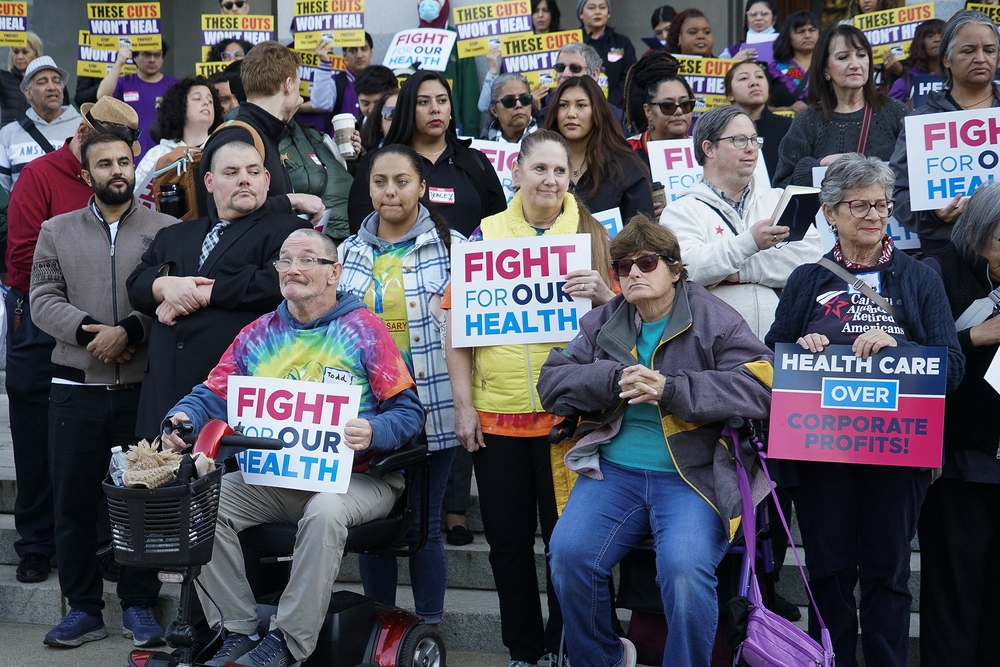
Governor Newsom finds himself in a political tug-of-war during his final year in office. On one side, progressive lawmakers, labor unions, and health advocates represented by the “Fight for Our Health” coalition are demanding action to protect vulnerable Californians. On the other side, billionaires like Google founders Larry Page and Sergey Brin have reportedly moved to shift business entities out of California and are threatening to leave entirely if the wealth tax measure passes.
The political calculus appears complicated by Newsom’s personal connections to many tech titans who would be subject to the proposed wealth tax and their potential as donors for his expected presidential run after finishing his gubernatorial term. Democratic strategists close to Newsom are already running a campaign committee to defeat the measure while the union collects the nearly 900,000 signatures needed to qualify it for the November ballot.
Progressive lawmakers, including Assembly Health Chair Mia Bonta, have suggested alternative revenue sources such as new taxes on corporations that employ workers paid so little they qualify for public health care assistance. However, no concrete legislation has been introduced, leaving health care advocates hoping for more options to emerge during the legislative session.
The Moral Imperative: Healthcare as a Human Right
What we are witnessing in California represents nothing less than a fundamental moral failure of governance. The choice between taxing extreme wealth and allowing millions of vulnerable citizens to lose healthcare coverage should not be a difficult one for any leader committed to democratic principles and human dignity. The fact that this is even being debated as a legitimate political question reveals how distorted our priorities have become.
The proposed wealth tax targets approximately 150 billionaires in a state of nearly 40 million people. These individuals have benefited enormously from California’s infrastructure, educated workforce, and business-friendly environment. A one-time 5% levy on their extreme wealth—not income, but accumulated assets—would generate resources sufficient to protect healthcare for millions of low-income families, disabled citizens, and vulnerable communities. The resistance to this modest proposal demonstrates a shocking disregard for the social contract that underpins our democracy.
The Democratic Principles at Stake
This crisis tests core American values: equality, justice, and the fundamental belief that all citizens deserve basic dignity and care. When billionaires can threaten to leave a state to avoid contributing to the common good, while simultaneously benefiting from that state’s resources and infrastructure, we have created a system that privileges wealth over human worth. This is antithetical to the democratic principles upon which our nation was founded.
The Constitution’s preamble speaks of promoting “the general Welfare”—not the welfare of the wealthiest few. Our system of government requires that those who have benefited most from our society contribute proportionally to maintaining it. The resistance to this principle represents a dangerous erosion of our democratic foundations.
The Political Cowardice and Leadership Failure
Governor Newsom’s opposition to the wealth tax, coupled with his failure to propose meaningful alternative solutions, represents a profound failure of leadership. Rather than standing with vulnerable Californians, he appears to be calculating political advantages and catering to wealthy potential donors. This is precisely the type of behavior that undermines public trust in democratic institutions and fuels cynicism about government.
The administration’s position that “the state simply doesn’t have the money” rings hollow when we consider that California has the world’s fifth-largest economy and is home to more billionaires than any other state. The money exists—what’s lacking is the political courage to ensure it serves the public good rather than private enrichment.
The Broader Implications for American Democracy
This situation in California reflects a national crisis in how we fund essential services and care for vulnerable populations. When federal support is withdrawn, states must choose between raising revenue from those most able to contribute or sacrificing the wellbeing of their most vulnerable residents. How states respond to this challenge will define the character of our democracy for generations.
The threat of billionaires leaving to avoid taxation represents a form of economic hostage-taking that democratic societies cannot accept. If we allow the wealthiest individuals to dictate public policy through threats of departure, we effectively surrender democratic governance to oligarchic pressure. This undermines the very principle of equal representation and popular sovereignty.
The Path Forward: Reclaiming Democratic Values
California must choose a path that reaffirms its commitment to democratic values and human dignity. This requires:
First, honest leadership that prioritizes human needs over political calculations. Governor Newsom must either support the wealth tax or propose an equally effective alternative that protects healthcare access for all vulnerable Californians.
Second, courage in facing down threats from billionaires. Democratic governance cannot be held hostage by the wealthy few. If certain individuals choose to leave rather than contribute fairly to the society that enabled their success, that is their choice—but it should not dictate public policy.
Third, a renewed commitment to the principle that extreme wealth carries extreme responsibility. Those who have benefited most from our economic system have the greatest obligation to ensure it works for everyone.
Conclusion: A Test of Our Democratic Soul
The healthcare funding crisis in California is more than a budgetary challenge—it is a test of our democratic soul. Will we allow extreme wealth to dictate policy through threats and pressure? Will we sacrifice the health and dignity of vulnerable citizens to protect billionaire fortunes? Or will we reaffirm the democratic principle that government exists to promote the general welfare of all citizens, not just the privileged few?
The choices made in Sacramento in the coming months will reverberate far beyond California’s borders. They will signal whether American democracy can still function to serve the many rather than the few, whether we can still muster the political courage to demand that extreme wealth contribute to the common good, and whether we still believe that healthcare is a fundamental human right rather than a privilege reserved for those who can afford it.
Our democratic institutions and values hang in the balance. The world is watching whether California—and by extension, America—still believes in government of the people, by the people, and for the people, or whether we have surrendered to government of the billionaires, by the billionaires, and for the billionaires.